
Supersonic Rail: Geely & CASIC’s Ambitious Venture
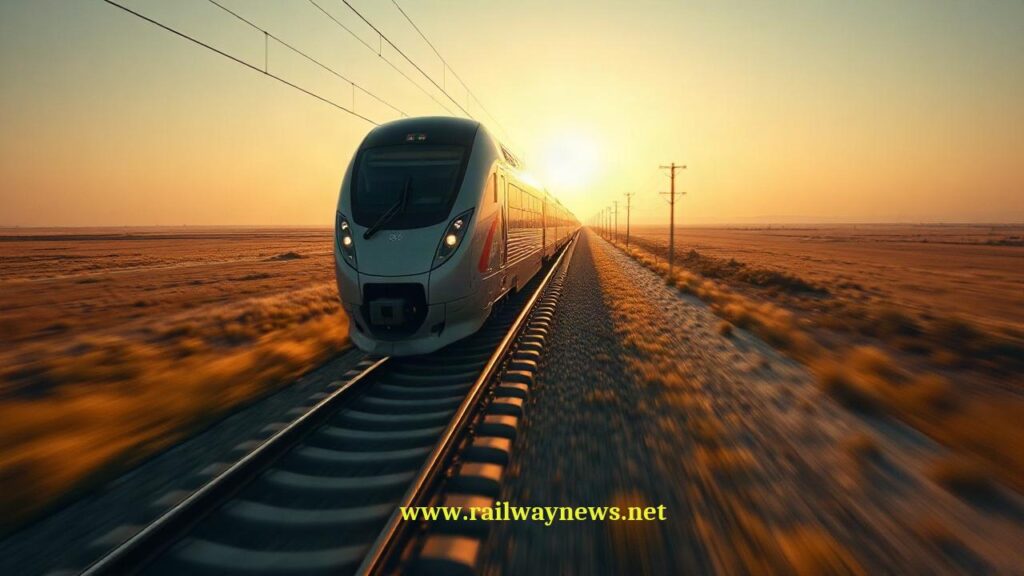
Witness the dawn of supersonic rail! Geely and CASIC are pioneering hypersonic train technology, merging automotive and aerospace expertise to redefine high-speed travel.
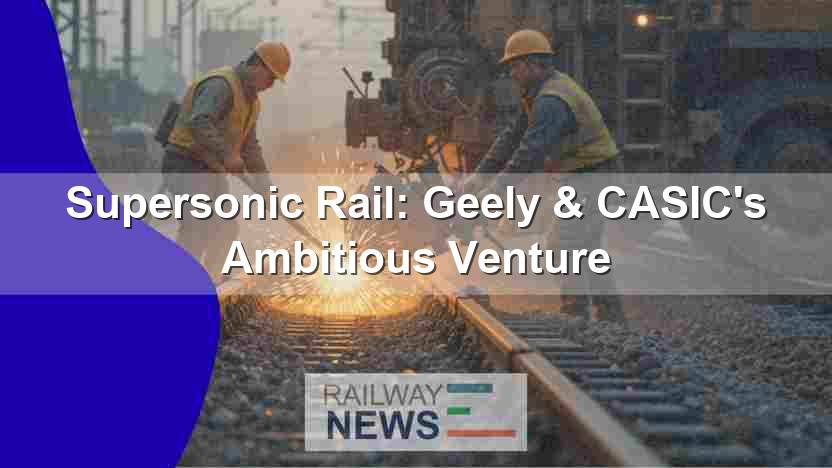
This article explores the groundbreaking partnership between Zhejiang Geely Holding Group (Geely), a prominent Chinese automotive manufacturer, and China Aerospace Science and Industry Corporation (CASIC), a state-owned aerospace and defense giant. Their collaboration focuses on the ambitious development of supersonic trains, a project poised to revolutionize high-speed rail transportation. The agreement, signed at an aerospace industry show in Zhuhai, China, marks a significant step towards achieving hypersonic rail travel, potentially exceeding speeds previously considered impossible. This venture blends Geely’s automotive engineering expertise with CASIC’s advanced aerospace technology, promising a synergistic approach to overcoming the considerable engineering challenges associated with such a project. The article will explore the technological hurdles, the potential benefits, and the broader implications of this ambitious undertaking for the future of transportation and related industries.
Technological Synergies and Challenges
The collaboration leverages the distinct strengths of both companies. Geely contributes its extensive experience in automotive design, manufacturing, and materials science, crucial for developing the high-speed train vehicles and ensuring passenger safety. CASIC, renowned for its advanced aerospace engineering capabilities, brings its expertise in high-performance systems, aerodynamics, and vacuum technologies necessary for reducing air resistance within a potential hyperloop system. The project aims to integrate magnetic levitation (Maglev) technology to eliminate friction with the ground, and a low-pressure, or vacuum, tube system to minimize aerodynamic drag. This combined approach is critical to achieving the targeted speeds of around 1000 kph (620 mph). However, significant engineering challenges remain, including the development of durable and lightweight materials capable of withstanding the extreme forces generated at such velocities, the creation of efficient and reliable vacuum tube systems, and the implementation of robust safety systems for high-speed passenger transport.
Vacuum Tube Technology and Maglev Integration
A crucial element of the project is the use of a vacuum tube system, reducing atmospheric resistance that severely limits the speeds achievable by conventional high-speed trains. Creating and maintaining a near-vacuum environment within a long tube poses substantial technical difficulties, requiring advanced sealing and pumping technology. This must be achieved while ensuring the structural integrity of the tube under immense pressure differentials. The integration of Maglev technology is equally crucial. Maglev systems utilize powerful electromagnets to lift and propel the train, eliminating friction with the track, thereby enabling significantly higher speeds. However, the precise control and stability of a Maglev system at supersonic speeds require advanced control systems and precise engineering tolerances.
Economic and Societal Implications
The successful development of supersonic trains holds immense economic and societal implications. Such a transportation system could dramatically reduce travel times between major cities, fostering economic growth and facilitating closer integration of regional economies. Reduced travel times also benefit commuters, boosting productivity and enhancing quality of life. Moreover, the technology developed through this project could have broader applications beyond high-speed rail, potentially impacting other sectors, including the automotive and aerospace industries. The development of advanced materials and energy-efficient technologies needed for supersonic train systems could lead to breakthroughs with far-reaching consequences.
Competition and Future Outlook
Geely and CASIC are not alone in pursuing hypersonic transportation. Companies like Virgin Hyperloop One and the Boring Company are also actively engaged in developing similar technologies. While Virgin Hyperloop One has already demonstrated functional prototypes, reaching speeds of 387 km/h (240 mph), the challenge of achieving supersonic speeds remains daunting. The Geely-CASIC collaboration, however, benefits from a unique combination of automotive and aerospace expertise, giving it a strong competitive edge. The success of this project will depend not only on technological breakthroughs but also on overcoming logistical and regulatory hurdles. The long-term economic viability of such systems also needs careful consideration. Nevertheless, the potential benefits of greatly improved transportation infrastructure warrant the investment and research dedicated to achieving this technological leap.
Conclusion
The joint venture between Geely and CASIC to develop supersonic trains represents a bold and ambitious undertaking with the potential to reshape the landscape of high-speed rail transport. The project successfully combines the strengths of two industrial giants, leveraging automotive engineering expertise with cutting-edge aerospace technology to tackle the immense challenges of hypersonic travel. The integration of magnetic levitation (Maglev) and vacuum tube technologies is key to achieving the targeted speeds and overcoming significant aerodynamic drag. While substantial technical hurdles remain, particularly concerning materials science, vacuum system engineering, and high-speed Maglev control, the potential benefits are immense, promising significant economic and societal advantages through reduced travel times, enhanced connectivity, and broader technological spin-offs. The success of this project, while not guaranteed, would mark a pivotal moment in transportation history. The competition in the hyperloop and supersonic rail sectors is fierce, but the unique combination of resources and expertise within the Geely-CASIC partnership positions them as a strong contender in the race towards a future of hypersonic travel. Further research and development are critical, along with careful economic analysis, to ensure the long-term viability and sustainability of this groundbreaking technology. The ultimate success of this project could redefine the future of long-distance passenger and freight transport globally.

Railway infrastructure, rolling stock and transport technologies specialist focused on global rail industry developments, high-speed rail systems, signaling technologies and freight transportation. Covering railway investments, public transport modernization, rail operations and international mobility projects across Europe, Asia and North America.
RELATED POSTS

October 8, 2026 12:18 pm
Siemens Mobility signed an agreement with VinSpeed to supply 350...
October 7, 2026 5:15 pm
Canada confirmed a $113 billion rail cost for the Quebec...
Huawei confirmed a fixed royalty rate of $0.50 per consumer...
October 4, 2026 4:09 pm
WSP expanded its UK infrastructure advocacy by joining the High...
October 11, 2026 11:16 am
Alberta launched an RFP for a 300 km high-speed rail...
October 11, 2026 5:16 am
UK Department for Transport approved level boarding for 4 Elizabeth...