
Stuttgart 21: Germany’s Rail Network Transformation, Dec 2026
Stuttgart 21, a new underground rail station, opens in Baden-Württemberg Dec. 2026. Reduced journey times and enhanced connectivity are key benefits, modernizing the railway sector.
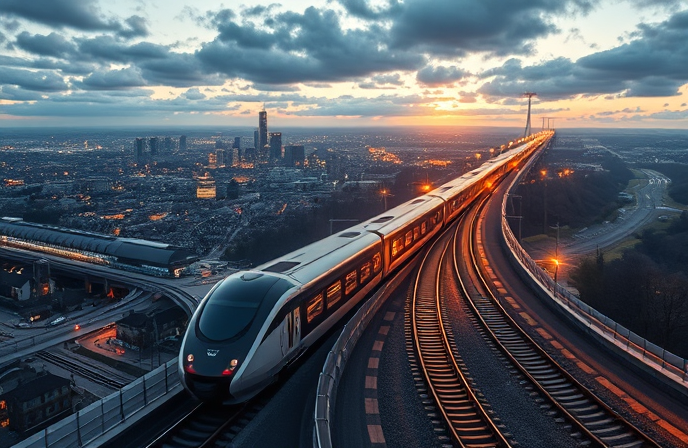
Stuttgart 21: A New Era for Baden-Württemberg’s Rail Network Begins December 2026
After years of planning and construction, Deutsche Bahn (DB) has announced the commencement of operations for Stuttgart’s new underground through-station, a pivotal component of the Stuttgart 21 project, slated for December 2026. This ambitious undertaking, located in the heart of Baden-Württemberg, aims to modernize and streamline the region’s rail infrastructure. The project seeks to enhance connectivity, reduce journey times, and facilitate a transition towards more sustainable transport solutions. The key players are DB, and its project partners, who have been working diligently to deliver a new integrated rail network. This article examines the phased rollout of the new infrastructure, its anticipated impact on passengers, and the broader implications for the railway industry.
Phased Rollout and Operational Design
The core of Stuttgart 21, the new underground through-station, will become operational in December 2026. Initially, the station will serve all long-distance trains, with the exception of those utilizing the Gäubahn route, along with approximately half of the regional services. Simultaneously, the new long-distance station at Stuttgart Airport and the train storage facility in Untertürkheim will also open. This phased approach, a revised strategy compared to the original plan, aims to minimize disruptions to passenger services. The existing terminus station will remain in operation until mid-2027, ensuring a smoother transition, particularly for regional services. The Gäubahn route will continue to use the Panoramabahn until March 2027. The final stages, including the integration of regional tracks from the new Neckar Bridge to Bad Cannstatt, are expected to be completed by November 2027, marking the near-completion of the core Stuttgart 21 project, with the exception of the future Gäubahn link via the airport.
Passenger Benefits: Reduced Journey Times and Enhanced Connectivity
One of the primary benefits of the Stuttgart 21 project is the significant reduction in journey times on key intercity routes. For instance, the ICE (Intercity-Express) travel time between Stuttgart and Ulm will be slashed to just 28 minutes, down from the current 43 minutes. Regional passengers will also experience improved connectivity, with a new six-minute journey between Stuttgart Hauptbahnhof (main station) and the airport, a substantial improvement over the present 27-minute trip. This enhancement in speed and efficiency is expected to encourage greater use of public transport, reducing reliance on private vehicles and contributing to a more sustainable transport ecosystem. The new infrastructure is specifically designed to increase the overall capacity of the rail network, providing a greater number of available services to accommodate the predicted growth of passenger traffic.
Infrastructure Upgrades and Technological Integration
Beyond the new through-station and the airport link, the Stuttgart 21 project encompasses a series of critical infrastructure upgrades. In 2027, with the closure of the old terminus station, the extended S-Bahn (suburban railway) tunnel via Mittnachtstraße will come online, further integrating regional and suburban services. Additional planned improvements include the rollout of digital signaling systems, which will improve the efficiency of train operations and increase network capacity, and phased platform closures in Bad Cannstatt, which is crucial for merging regional and suburban services. These improvements are essential to maximize the benefits of the project and offer improved capacity to reduce overcrowding.
Transitional Arrangements and Mitigation Strategies
To manage service disruptions during the transition period, DB will implement a detailed plan that includes operating replacement transport services, supported by Stuttgart’s public transport company, SSB. A joint taskforce is currently developing detailed traffic and schedule plans to ensure efficient operations throughout the transformation period. Initial studies conducted by the Verkehrswissenschaftliches Institut Stuttgart (VWI) have confirmed the feasibility of the planned temporary arrangements. DB is also actively working with its project partners to optimize the operational procedures to minimize any passenger inconvenience and offer continuous support. The project’s commitment to minimize disruptions reflects an understanding of the value of providing uninterrupted transport service during the period of upgrades.
Conclusion
The Stuttgart 21 project represents a significant milestone in the modernization of Germany’s railway infrastructure. The December 2026 launch of the new underground through-station and the subsequent phased implementation will deliver significant benefits for passengers, including reduced journey times and enhanced connectivity. The strategic deployment of infrastructure upgrades and the integration of advanced signaling systems are critical components of the project. Despite the inherent complexities of a project of this scale, DB and its partners have prioritized minimizing disruption and have demonstrated a commitment to a smooth transition. The success of Stuttgart 21 has broader industry implications, providing a model for other complex rail infrastructure projects, highlighting the importance of careful planning, phased implementation, and close collaboration between various stakeholders. The project’s emphasis on sustainability and its focus on facilitating a modal shift towards rail transport align with the broader industry trend, as rail projects become increasingly important to reduce congestion and emissions. With the final stages of construction progressing, the project aims for full completion in the coming years, promising a more efficient, modern, and passenger-focused rail network in Baden-Württemberg.
Company Summary
Deutsche Bahn (DB) is the primary railway operator in Germany and one of the largest transport and logistics companies in the world. DB’s core business includes passenger transport, infrastructure management, and logistics services. The company has been increasingly focused on expanding its high-speed rail network, modernizing its infrastructure, and implementing digital technologies to enhance efficiency and improve the passenger experience. The Stuttgart 21 project is an integral part of DB’s strategic vision for improving rail transport. It will have a lasting effect on the German railway sector.

Railway infrastructure, rolling stock and transport technologies specialist focused on global rail industry developments, high-speed rail systems, signaling technologies and freight transportation. Covering railway investments, public transport modernization, rail operations and international mobility projects across Europe, Asia and North America.
RELATED POSTS

October 1, 2026 7:09 am
United States regulators confirmed a September 30 deadline for the...

October 8, 2026 1:15 pm
Alstom secured a €1bn contract to build 13 automated trains,...

October 4, 2026 5:14 pm
Alstom secured a CA$4.7 billion order from VIA Rail Canada...

October 1, 2026 12:13 am
Illinois approved $1.5 billion annually for the Northern Illinois Transit...

October 6, 2026 2:14 am
Union Pacific launched export rail shipments with Ferromex to deliver...

October 1, 2026 6:10 am
Amtrak approved a System Expansion Committee on July 30 to...