
Spain Invests €170 Million Catalonia Storm Damaged Rail
Spain is investing €170 million in an emergency plan to restore and stabilize Catalonia’s storm-damaged rail network, deploying 400 specialists at over 100 sites.
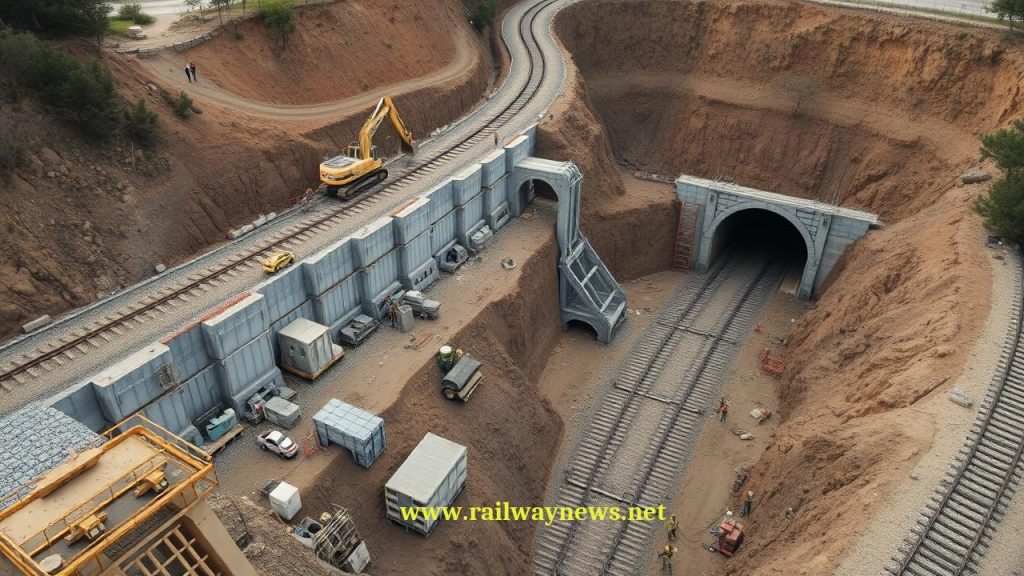
⚡ In Brief: Spain is investing €170 million in an emergency plan to restore and stabilize Catalonia’s storm-damaged rail network, with 400 specialists working at over 100 sites to improve infrastructure resilience and reduce service disruptions.
BARCELONA, SPAIN – Spanish authorities are proceeding on schedule with a €170 million emergency investment to repair and reinforce Catalonia’s railway infrastructure. The plan, confirmed by Secretary of State for Transport José Antonio Santano, involves over 400 specialists addressing damage from recent storms at more than 100 locations. Work includes significant tunnel and embankment stabilization, with one track of the key Rubí Tunnel already partially reopened for freight traffic.
What Is the Full Scope of This Project?
The emergency plan encompasses interventions at over 100 distinct points across 31 sections of Catalonia’s railway network. The total investment of €170 million is focused on rectifying and preventing damage from extreme weather, with a significant portion allocated to tunnel reinforcement, coastal protection, and ground stabilization. Major projects include consolidation of the Rubí Tunnel, protecting the Garraf and Aiguadolç structures from marine corrosion, and reinforcing tunnels in Ribes de Freser, Toses, and between Roda de Berà and Salomó. In addition to structural work, 65 sections of embankments, cuttings, and ditches have been stabilized since January to mitigate landslides and water infiltration.
Key Project Data
| Parameter | Value |
|---|---|
| Project / Contract Name | Catalonia Rail Network Emergency Plan |
| Total Value | €170 million |
| Parties Involved | Spain’s Ministry of Transport, Adif, Renfe, Generalitat de Catalunya |
| Timeline / Completion | Ongoing; final completion date for all works not disclosed. |
| Country / Corridor | Spain / Catalonia region |
How Does This Compare to Similar Projects?
Comparable data for emergency, climate-driven rail repair projects was not publicly available for a direct comparison, as such budgets are highly reactive to specific weather events. However, the €170 million figure represents a significant ad-hoc investment focused on resilience. For context, this is a fraction of the multi-billion euro strategic investments planned for major corridors like the Mediterranean Corridor, but it addresses the immediate operational viability of existing lines. The project’s focus on adapting infrastructure to coastal corrosion and landslides reflects a growing trend across European networks to budget for climate change adaptation alongside new construction.
Editor’s Analysis
This €170 million emergency plan highlights a critical challenge for European rail: adapting aging infrastructure to the increasing frequency of extreme weather events. While the EU pushes for simplified cross-border travel and enhanced passenger rights to boost ridership (Source: European Commission, 2024), such initiatives depend on the fundamental reliability of core national networks, which this project aims to restore. The concurrent expansion of transport advisory firms like Steer into Madrid signals that despite these operational challenges, the underlying Iberian infrastructure market is viewed as a strong area for investment and liberalization (Source: Steer, 2025).
FAQ
Q: Which specific railway lines are being repaired?
A: The work focuses on several key lines, including Barcelona–Mataró–Maçanet, Sant Vicenç de Calders–Manresa, Barcelona–Lleida via Valls and Reus, Barcelona–Móra la Nova–Ribaroja d’Ebre, and the Barcelona–Girona–Portbou corridor.
Q: What is the total cost and expected completion date?
A: The total investment for the emergency plan is €170 million. While work is ongoing and proceeding on schedule, a final completion date for all 100+ interventions has not been officially disclosed.
Q: How has this work impacted train services for passengers?
A: The project has led to numerous temporary speed restrictions, which numbered 157 as of early May, an improvement from 216 in March. Authorities state these will continue to decrease as work progresses, aiming to restore normal operating parameters and improve service quality.

Railway infrastructure, rolling stock and transport technologies specialist focused on global rail industry developments, high-speed rail systems, signaling technologies and freight transportation. Covering railway investments, public transport modernization, rail operations and international mobility projects across Europe, Asia and North America.
RELATED POSTS

October 8, 2026 1:15 pm
Alstom secured a €1bn contract to build 13 automated trains,...

October 1, 2026 7:09 am
United States regulators confirmed a September 30 deadline for the...

October 8, 2026 12:18 pm
Siemens Mobility signed an agreement with VinSpeed to supply 350...

October 4, 2026 5:14 pm
Alstom secured a CA$4.7 billion order from VIA Rail Canada...

October 5, 2026 6:12 pm
AECOM and Jacobs secured a contract in September 2026 to...

October 1, 2026 12:13 am
Illinois approved $1.5 billion annually for the Northern Illinois Transit...