
BNSF Launches Import Container Reload Service on West Coast
BNSF Railway launched its Reload program, reusing empty import marine boxes for West Coast domestic shipments amid a 23% weekly spike in container freight rates.
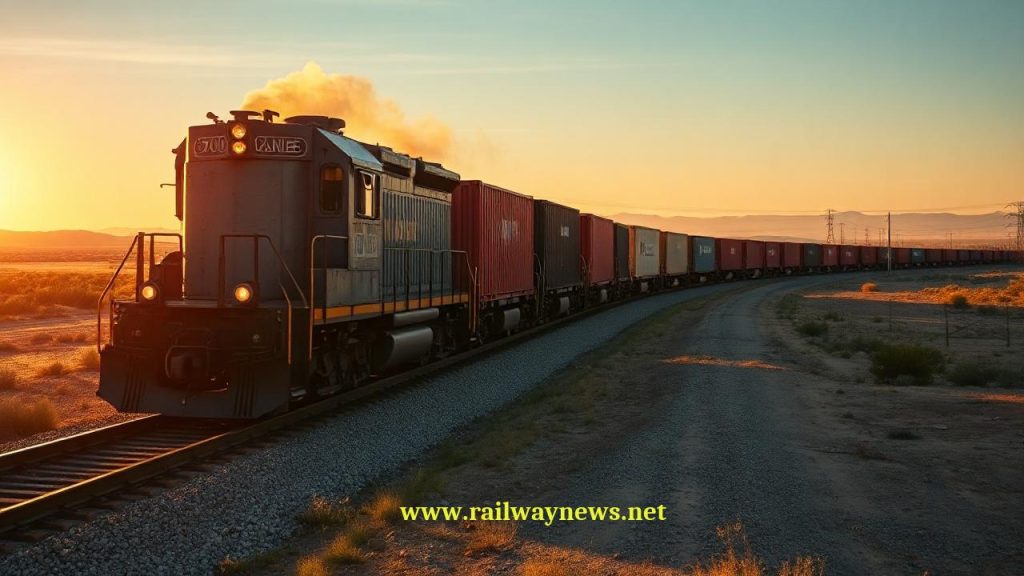
⚡ In Brief: BNSF Railway launched its Reload program to reuse import containers for US West Coast-bound shipments before overseas return, aiming to cut logistics costs amid a 23% weekly spike in global container freight rates.
FORT WORTH, USA – BNSF Railway has rolled out its “Reload” logistics service, enabling US shippers to use imported 20-foot and 40-foot containers for domestic West Coast-bound freight prior to their scheduled repositioning back overseas. The launch, targeting import-heavy corridors, arrives as the Drewry World Container Index recorded a 23% jump in spot freight rates in a single week, intensifying pressure on inland supply chain costs.
What Are the Technical Specifications?
The Reload program operates by intercepting empty import containers normally destined for immediate re-positioning to port terminals, instead routing them through BNSF’s domestic intermodal network. Group Vice President Jon Gabriel stated the service provides a “full network of empty containers,” specifically optimizing equipment balance for products suited to 20ft or 40ft boxes. Unlike general-purpose run-through trains, the system schedules domestic loading windows before the container’s mandatory vessel return cut-off, minimizing per-diem costs and empty miles.
Key Technical Data
| Parameter | Value |
|---|---|
| Technology / System Name | BNSF Reload Program |
| Total Value / Savings | Not disclosed |
| Parties Involved | BNSF Railway (Consumer Products Division), US Shippers, American Producers |
| Timeline / Completion | Active (Ongoing service launch in 2025) |
| Country / Corridor | United States (West Coast-bound domestic lanes) |
Where Does This Technology Stand in the Market?
BNSF’s Reload directly commercializes a “street turn” inefficiency at a network scale, segmenting it distinctly from its existing Matchback program, which matches empty imports with export bulk commodities like grain. Union Pacific offers a competing operational framework through its EMP (Empire Pool) and digital street-turn capabilities, though UP’s focus tends to center on regional drayage immediacy rather than BNSF’s lane-specific West Coast domestic network gravity. In the broader intermodal market, while the Drewry index signals severe rate volatility for maritime shipping, domestic highway competition remains tight; XPO reported a 0.5% increase in less-than-truckload (LTL) tonnage per day in North America in May 2026, indicating that rail services like Reload are aggressively targeting mode share against trucking by repurposing foundational global supply chain assets. (Sources: Drewry, 2025; XPO, 2026)
Editor’s Analysis
BNSF is productizing the “circular logistics” concept by decoupling domestic intermodal service from the traditional 53-foot domestic container standard, instead leveraging the vast fleet of marine boxes already moving inland. This strategy serves as a direct hedge against persistent drayage driver shortages and West Coast port chassis imbalances, effectively monetizing what was previously a pure repositioning cost. The segmentation between Reload (domestic retail/CPG) and Matchback (agriculture/export) signals that Class I railroads are applying a tiered-service model to empty inventory, mirroring the yield-management sophistication seen in parcel and LTL networks. (Sources: BNSF Press Release, 2025; Drewry, 2025)
FAQ
Q: How does the Reload program differ from BNSF’s Matchback service?
A: Matchback specifically matches empty import containers with export agricultural commodities like grain, while Reload repurposes those empties for US West Coast-bound domestic consumer product shipments before the box is returned overseas. Reload focuses entirely on the domestic outbound leg using 20ft or 40ft marine containers.
Q: What specific cost savings or incentives are available to shippers?
A: BNSF has not publicly disclosed the specific per-load savings or tariff adjustments tied to the Reload program. The company states it is “lowering costs for shippers” by maximizing equipment balance, indicating savings likely derive from reduced chassis splits, eliminated empty repositioning charges, and lower drayage costs.
Q: Are there container type restrictions for the Reload program?
A: The service is specifically optimized for 20-foot and 40-foot containers typically used in marine imports, distinguishing it from the standard 53-foot domestic intermodal containers. Jon Gabriel, Group Vice President of Consumer Products at BNSF, noted the program is best suited for products fitting those specific box sizes, primarily targeting consumer products and retail freight.

Railway infrastructure, rolling stock and transport technologies specialist focused on global rail industry developments, high-speed rail systems, signaling technologies and freight transportation. Covering railway investments, public transport modernization, rail operations and international mobility projects across Europe, Asia and North America.
RELATED POSTS

October 8, 2026 1:15 pm
Alstom secured a €1bn contract to build 13 automated trains,...

October 1, 2026 7:09 am
United States regulators confirmed a September 30 deadline for the...

October 4, 2026 5:14 pm
Alstom secured a CA$4.7 billion order from VIA Rail Canada...

October 1, 2026 12:13 am
Illinois approved $1.5 billion annually for the Northern Illinois Transit...

October 5, 2026 1:13 pm
New York MTA confirmed a late 2026 DEIS release for...

October 6, 2026 9:17 am
Illinois approved $1.1M in state funds to upgrade two McHenry...