
SNCB Reports 1078 GWh Energy Consumption in Belgium 2025
SNCB reported 1,078 GWh electricity consumption in 2025—over 1% of Belgium’s total—and committed to cut traction energy 10% and building energy 40% by 2032.
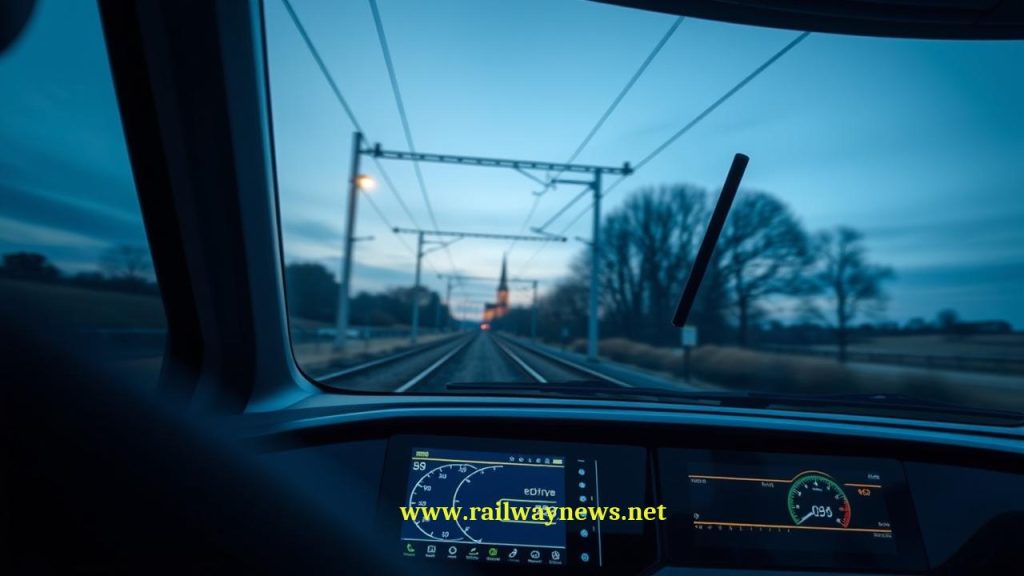
⚡ In Brief: SNCB consumed 1,078 GWh of electricity in 2025 — over 1% of Belgium’s total — and committed to cutting traction energy 10% and building energy 40% by 2032 while expanding solar capacity fivefold to 40 MWp.
BRUSSELS, BELGIUM – SNCB, Belgium’s national railway operator and the country’s single largest electricity consumer, drew 1,078 GWh in 2025 — equivalent to the annual consumption of a city the size of Namur or Mechelen. The operator has committed under its 2023–2032 public service contract to reduce traction energy consumption by 10% and building energy consumption by 40%, measured against a 2005 baseline. A fleetwide eco-driving programme, regenerative braking deployment, and a revised solar target of 40 MWp installed capacity by 2032 anchor the multi-pronged strategy.
What Are the Technical Specifications?
SNCB’s energy efficiency programme spans three integrated systems: real-time eco-driving advisory via the eDrive tablet platform, regenerative braking energy recovery on Desiro and M7 rolling stock, and a photovoltaic expansion targeting 40 MWp across 29-plus installations. The eDrive system calculates optimal speed in real time using schedule data, route characteristics, and live network conditions, displaying recommended velocity to drivers to eliminate unnecessary acceleration and braking. Regenerative braking on newer units feeds recovered energy back into the catenary for immediate reuse by other trains on the same section. On the solar side, SNCB produced nearly 8 GWh from 8.3 MWp of installed photovoltaic capacity in 2025, with plans to quintuple output by 2032.
Key Technical Data
| Parameter | Value |
|---|---|
| Technology / System Name | eDrive eco-driving platform; regenerative braking (Desiro & M7); photovoltaic installations |
| Total Value | Not disclosed |
| Parties Involved | SNCB; Belgian federal government (public service contract) |
| Timeline / Completion | 2023–2032 (public service contract period); solar target: 40 MWp by 2032 |
| Country / Corridor | Belgium, national network (~3,800 daily trains) |
Where Does This Technology Stand in the Market?
SNCB’s eDrive system enters a European rail market where eco-driving advisory platforms have demonstrated traction energy savings of 5–12% across multiple operators. SNCF’s Opti-Conduite system, deployed on TGV and regional services in France since 2018, reports average energy savings of 7–10% through real-time speed optimisation algorithms (Source: SNCF, 2021). Deutsche Bahn’s energy-efficient driving advisory, integrated into its EBuLa electronic timetable system across ICE and regional fleets, claims comparable reductions of 6–11% depending on route topology (Source: DB AG, 2022). SNCB’s regenerative braking capability — available on Desiro EMUs manufactured by Siemens Mobility and M7 double-deck cars from Alstom/Bombardier — mirrors technology deployed by NS in the Netherlands on its VIRM and SNG fleets, and by ÖBB on its Cityjet units in Austria. On solar generation, SNCB’s 40 MWp target by 2032 lags behind SNCF’s 1,000 MWp ambition for its station and technical building portfolio by 2030 (Source: SNCF Renouvelables, 2023) but exceeds the UK’s Network Rail target of 30 MWp across its non-traction estate by 2029 (Source: Network Rail, 2024). The broader European context is marked by accelerating grid-side investment: Q1 2026 saw Europe dominate the largest global construction deals by both deal count and value, driven substantially by grid modernisation and clean energy buildout linked to rail and urban transport infrastructure (Source: PitchBook, Q1 2026).
Stellantis, by comparison, targets on-site self-consumption to reach 31% of energy used across its European plants in 2026, with leading production sites aiming as high as 80% — a benchmark that illustrates the gap between industrial self-generation leaders and rail operators still scaling photovoltaic capacity from a low base (Source: Stellantis, 2025). SNCB’s current solar output of 8 GWh annually covers less than 0.75% of its total 1,078 GWh consumption, indicating that even the fivefold expansion to 40 MWp will address a single-digit percentage of total demand absent additional procurement from off-site renewable sources. The exact projected yield of the 40 MWp target in GWh terms was not disclosed by the operator.
Editor’s Analysis
SNCB’s energy strategy reflects a structural shift among European state-owned rail operators: efficiency is no longer confined to traction kilowatt-hours but spans buildings, stationary consumption, and self-generation. The operator’s building energy target — a 40% reduction from 2005 levels — is notably more aggressive than its 10% traction target, signalling that the quickest wins lie in estate rationalisation rather than rolling stock replacement cycles that span decades. Belgium’s rail investment aligns with a continent-wide surge in grid-adjacent construction; Europe’s dominance in Q1 2026 global construction deal flow, as tracked by PitchBook, underscores that rail operators are increasingly treated as anchor off-takers in national grid planning. Missing from SNCB’s disclosure is any reference to energy storage — battery or otherwise — which would enable time-shifting of regenerated braking energy and solar output, a gap that may become material as the 40 MWp solar target approaches.
FAQ
Q: How much energy does SNCB actually save through eco-driving?
A: SNCB has not published a specific GWh savings figure attributable to eco-driving alone. The operator’s public service contract commits to a 10% reduction in traction energy consumption by 2032 versus 2005 levels, with eco-driving, fleet modernisation, and regenerative braking all contributing to that aggregate target.
Q: Will SNCB’s 40 MWp solar target make the railway energy self-sufficient?
A: No. SNCB’s current 8 GWh of annual solar output covers less than 0.75% of its 1,078 GWh total consumption. Even at five times current capacity, solar generation will likely remain a single-digit percentage contributor unless supplemented by large-scale off-site renewable procurement, which the operator has not announced.
Q: Which trains on SNCB’s network can recover braking energy?
A: The Desiro electric multiple units (manufactured by Siemens Mobility) and the M7 double-deck passenger cars (produced by a consortium of Alstom and Bombardier, now Alstom) are equipped with regenerative braking systems that feed recovered energy back into the overhead catenary for use by other trains on the same electrical section.

Transport and railway industry editor covering global rail infrastructure, sustainable mobility, urban transit systems and next-generation railway technologies with a focus on accessible and industry-focused reporting.
RELATED POSTS

October 8, 2026 1:15 pm
Alstom secured a €1bn contract to build 13 automated trains,...

October 1, 2026 7:09 am
United States regulators confirmed a September 30 deadline for the...

October 8, 2026 12:18 pm
Siemens Mobility signed an agreement with VinSpeed to supply 350...

October 4, 2026 5:14 pm
Alstom secured a CA$4.7 billion order from VIA Rail Canada...

October 5, 2026 6:12 pm
AECOM and Jacobs secured a contract in September 2026 to...

October 1, 2026 12:13 am
Illinois approved $1.5 billion annually for the Northern Illinois Transit...