
Škoda Group Secures EUR 270M Uppsala Tram Contract
Škoda Group secured a EUR 270 million contract to supply 20 trams for Uppsala’s new tram network, with an option for 18 more and 12 years of maintenance.
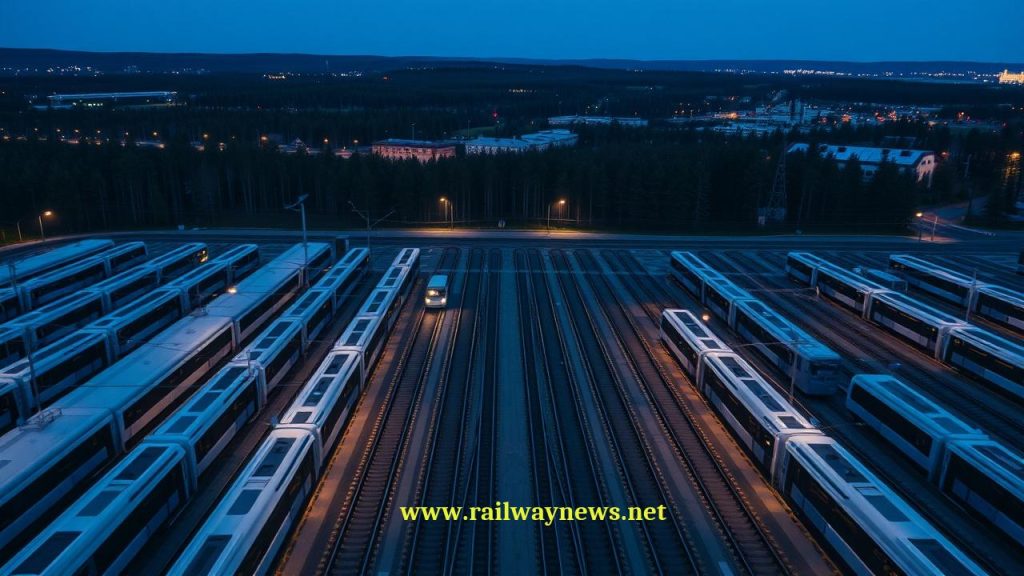
⚡ In Brief: Škoda Group will supply 20 bidirectional trams for Uppsala’s new tram network, with an option for 18 more, under a contract worth up to EUR 270 million including 12 years of maintenance.
UPPSALA, SWEDEN – Škoda Group has been awarded a contract to deliver trams for Uppsala’s first urban tram network. The agreement covers an initial 20 bidirectional vehicles and includes an option for 18 additional trams, along with 12 years of maintenance and overhaul services. The total potential value of the deal reaches EUR 270 million.
What Does This Contract Cover?
The contract encompasses the supply of 38-meter fully low-floor trams capable of carrying up to 186 passengers with 80 fixed seats, as well as a 12-year maintenance package for both the vehicles and critical components. The trams are based on the platform already proven in Tampere, Finland, but tailored for Uppsala’s requirements, and include digital safety systems such as a Škoda-developed collision-avoidance system and intelligent speed‑limiting technology.
Key Contract Data
| Parameter | Value |
|---|---|
| Contract Name | Uppsala Tram Fleet Supply and Maintenance Contract |
| Total Value | Up to EUR 270 million (incl. options and services) |
| Parties Involved | Škoda Group (supplier) and Uppsala regional transport authority |
| Timeline / Completion | Not disclosed |
| Country / Corridor | Sweden, Uppsala city tram network (17 km, 22 stations) |
How Does This Compare to Similar Contracts?
The Uppsala order mirrors Škoda’s earlier tram supply for Tampere, Finland, where the operator initially ordered 19 ForCity Smart Artic trams in 2016 at a cost of approximately EUR 75 million (Source: Tampereen Raitiotie Oy, 2016). Uppsala’s contract, with a base of 20 trams and a total value up to EUR 270 million, is significantly larger because it includes a 12‑year maintenance component and digital safety equipment. The Finnish railway signalling market, closely linked to such infrastructure projects, is expected to expand in the coming years due to accelerating railway digitalization and 5G‑private‑network investments (Source: industry analysis, 2025).
Editor’s Analysis
Uppsala’s decision to build a tram network from scratch and bundle rolling stock with long‑term maintenance reflects a Nordic pattern of lifecycle‑oriented procurement, pioneered by Tampere. The inclusion of active collision‑avoidance technology and automated speed control in a greenfield urban system signals a demand shift toward software‑defined safety, paralleling the autonomous and sensor‑driven trends now reducing derailments in freight rail. This contract positions Škoda Group to replicate the model across other Swedish cities evaluating tram systems.
FAQ
Q: What technical features do the Škoda trams for Uppsala include?
A: Each 38‑meter bidirectional low‑floor tram accommodates 186 passengers (80 seats), provides USB ports, digital information systems, designated wheelchair and stroller zones, and emits improved audio‑visual announcements. Safety technology encompasses a collision‑avoidance system that detects vehicles, pedestrians and obstacles, as well as automatic speed restriction on curves.
Q: When will the Uppsala tram network start operating?
A: The contracting parties have not disclosed a delivery or service commencement date. The network is being built entirely from scratch, and the 12‑year maintenance period suggests a service start within the vehicle delivery window; however, no official timeline was provided at contract announcement.
Q: How will the contract impact local public transport in Uppsala?
A: The 17‑km double‑track line with 22 stations will connect major urban development areas, university campuses, hospitals, transit hubs and the central train station, creating a high‑capacity backbone for the city’s future public transport system. The maintenance package aims to keep fleet reliability and availability high, directly benefiting daily commuters.

Railway infrastructure, rolling stock and transport technologies specialist focused on global rail industry developments, high-speed rail systems, signaling technologies and freight transportation. Covering railway investments, public transport modernization, rail operations and international mobility projects across Europe, Asia and North America.
RELATED POSTS

October 8, 2026 1:15 pm
Alstom secured a €1bn contract to build 13 automated trains,...

October 1, 2026 7:09 am
United States regulators confirmed a September 30 deadline for the...

October 8, 2026 12:18 pm
Siemens Mobility signed an agreement with VinSpeed to supply 350...

October 4, 2026 5:14 pm
Alstom secured a CA$4.7 billion order from VIA Rail Canada...

October 5, 2026 6:12 pm
AECOM and Jacobs secured a contract in September 2026 to...

October 1, 2026 12:13 am
Illinois approved $1.5 billion annually for the Northern Illinois Transit...