
Six Rail Operators Sign Rotterdam Shunting Deal
6 rail freight operators signed a shunting deal for fixed-rate train handovers on the Kijfhoek–Maasvlakte line, the Track Together pilot runs through Oct 2025.
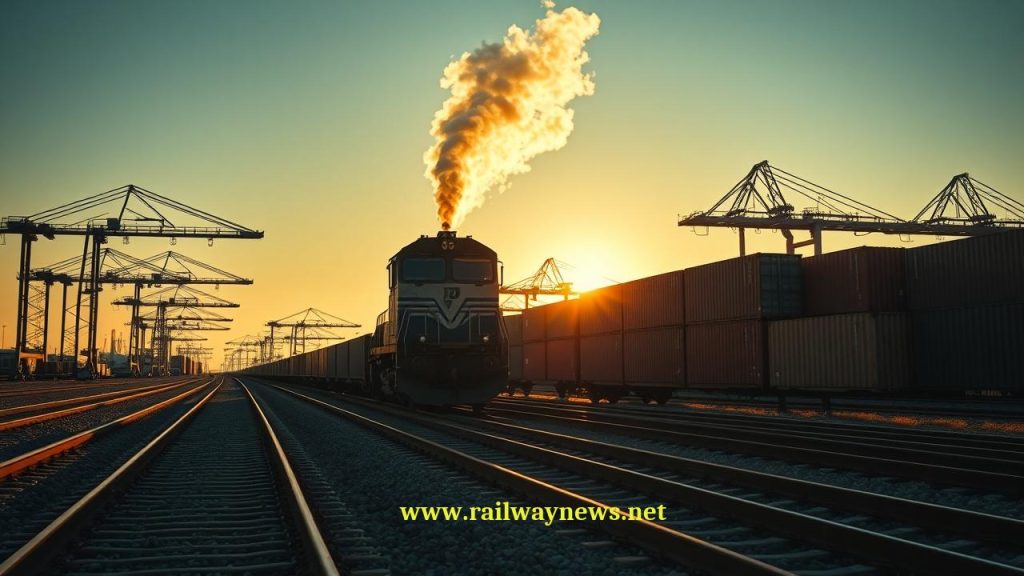
⚡ In Brief: Six rail freight operators at Rotterdam Port have signed a shunting cooperation agreement under the ‘Track Together’ pilot, running through October 2025, to reduce train cancellations and improve reliability on the Kijfhoek–Maasvlakte corridor.
ROTTERDAM, NETHERLANDS – Six rail freight operators serving the Rotterdam Port Railway Line recently signed a cooperation agreement enabling them to take over each other’s trains at fixed rates during capacity disruptions, the Port of Rotterdam Authority announced. The pilot, set to run through October, targets a reduction in train cancellations and delays across the Kijfhoek–Maasvlakte route, covering all intermediate terminals. Financial terms were not disclosed.
What Does This Contract Cover?
The agreement establishes a formal shunting framework — called the “Track Together” initiative — that defines clear administrative and operational rules for train handovers among the six signatories. Whenever schedule deviations occur, an immediately applicable contingency plan allows one operator to move another’s train at a pre‑agreed rate, with responsibilities split between client and contractor. The entire Rotterdam Port Railway Line, including terminals, falls under the arrangement, and all coordination is managed through the PortFlow app, built to book and assign train runs among the operators. Port terminals benefit directly because tracks can be cleared faster, maintaining transport schedules and improving overall network reliability.
Key Contract Data
| Parameter | Value |
|---|---|
| Contract Name | Track Together Shunting Agreement |
| Total Value | Not disclosed |
| Parties Involved | Rail Force One, HSL Netherlands, DB Cargo Nederland, RTB Cargo, LTE, Rail Cargo Group |
| Timeline / Completion | Pilot runs through October 2025 |
| Country / Corridor | Netherlands, Rotterdam Port Railway Line (Kijfhoek–Maasvlakte) |
How Does This Compare to Similar Contracts?
Multi‑operator shunting alliances exist at other major European ports such as Antwerp and Hamburg, but Rotterdam’s model is the first to embed fixed‑rate train takeovers with a single digital coordination point — the PortFlow app — at this scale. While those earlier collaborations often rely on bilateral agreements or terminal‑by‑terminal rules, Track Together standardises the process across the entire port railway.
Broader intermodal volume trends reinforce the need for such efficiency: U.S. intermodal volumes rose 8.5% in May 2025 year‑on‑year, according to the Intermodal Association of North America (IANA), and Netherlands rail freight data point to a similar upward intermodal share. In contrast, Brazil’s railway agenda is stalled by a government‑Vale standoff that is delaying logistics and supply chains, underscoring that port‑rail cooperation like Rotterdam’s is not happening everywhere. Comparable data on fixed‑rate shunting agreements with integrated app‑based dispatching in other European ports was not publicly available at time of publication.
Editor’s Analysis
The Track Together pilot arrives at a moment when transportation dealmaking activity is increasingly focused on premium, efficiency‑enhancing assets, as observed in PwC’s mid‑year outlook (Source: PwC, 2025). For Rotterdam, the agreement reduces a key friction point in rail freight — bilateral train handover delays — by turning competitors into operational partners under a single digital workflow. If the pilot proves successful, it could become a template for other congested port rail networks in Europe, particularly those where multiple operators share infrastructure and terminals. The missing piece remains the commercial terms: without disclosed fixed rates or volume commitments, the market cannot yet gauge the full incentive alignment among the six operators.
FAQ
Q: What is the Track Together initiative?
A: It is a Port of Rotterdam Authority‑coordinated project that introduces a structured shunting agreement among six rail freight operators, running as a pilot through October 2025, to cut down train cancellations and delays.
Q: Which operators signed the shunting agreement?
A: Rail Force One, HSL Netherlands, DB Cargo Nederland, RTB Cargo, LTE, and Rail Cargo Group are the six signatories.
Q: How does the PortFlow app support the agreement?
A: PortFlow is a digital platform developed to manage the booking and assignment of train runs among the operators, enabling real‑time coordination and rapid implementation of the contingency plan when schedule deviations occur.
Q: What happens when one operator cannot run a scheduled train?
A: Under the shunting agreement, another operator can take over the train at a pre‑agreed fixed rate, following clearly defined administrative and operational responsibilities, so that the transport schedule is maintained and terminal tracks are cleared faster.
Note: Independent verification of the fixed handover rates and the projected number of train transfers was not available at time of publication.

Railway infrastructure, rolling stock and transport technologies specialist focused on global rail industry developments, high-speed rail systems, signaling technologies and freight transportation. Covering railway investments, public transport modernization, rail operations and international mobility projects across Europe, Asia and North America.
RELATED POSTS

October 8, 2026 1:15 pm
Alstom secured a €1bn contract to build 13 automated trains,...

October 1, 2026 7:09 am
United States regulators confirmed a September 30 deadline for the...

October 8, 2026 12:18 pm
Siemens Mobility signed an agreement with VinSpeed to supply 350...

October 4, 2026 5:14 pm
Alstom secured a CA$4.7 billion order from VIA Rail Canada...

October 5, 2026 6:12 pm
AECOM and Jacobs secured a contract in September 2026 to...

October 1, 2026 12:13 am
Illinois approved $1.5 billion annually for the Northern Illinois Transit...