
Singapore’s JRL: New MRT Stations & Urban Growth
The Singapore Land Transport Authority (LTA) recently awarded S$265.4 million contracts to build three key stations on the Jurong Region Line (JRL), demonstrating LTA’s commitment to expanding and improving Singapore’s public transportation network, particularly focusing on enhancing accessibility within the Jurong region through integrated urban planning and advanced technology such as fully automated driverless trains.
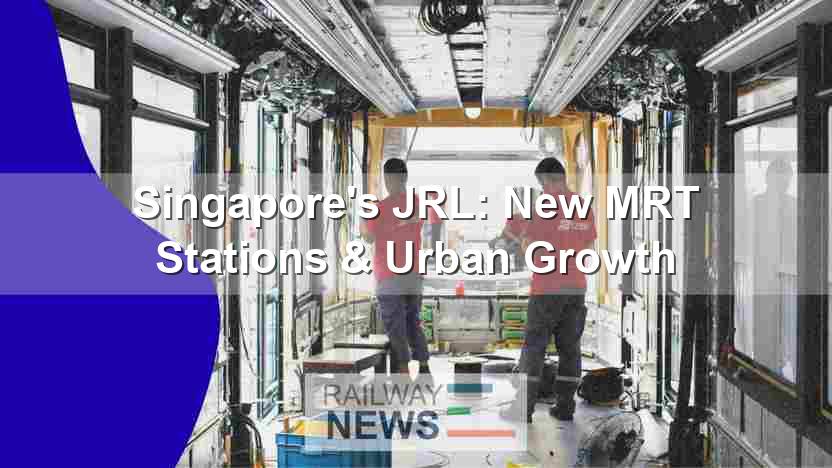
This article explores the significant infrastructure development underway in Singapore with the construction of the Jurong Region Line (JRL), a crucial addition to the country’s already extensive Mass Rapid Transit (MRT) network. The focus will be on the recent contract awards for the construction of three key JRL stations – Tengah Plantation, Tengah Park, and Bukit Batok West – and the broader implications of this project for Singapore’s urban development and transportation strategy. We will examine the project’s scope, the technological advancements incorporated into the JRL system, the economic impact of the construction, and the long-term benefits for commuters and the overall urban landscape of the Jurong region. The analysis will also consider the project within the context of Singapore’s broader commitment to sustainable transportation solutions and its ongoing efforts to enhance connectivity across its diverse urban areas. By examining these aspects, we aim to provide a detailed understanding of the importance of the JRL expansion and its contribution to Singapore’s future.
JRL Station Construction: A Major Undertaking
The Singapore Land Transport Authority (LTA) awarded a substantial S$265.4 million (approximately $186.1 million USD) contract to the John Holland – McConnell Dowell South East Asia Joint Venture (JV) for the construction of three stations on the Jurong Region Line (JRL): Tengah Plantation, Tengah Park, and Bukit Batok West. This contract encompasses not only the construction of the stations themselves but also the development of 2.3 kilometers of associated viaducts. This significant investment highlights the LTA’s commitment to expanding Singapore’s public transportation network and improving accessibility to key areas within the Jurong region. The project underscores the LTA’s strategic vision for integrated urban planning, where new transit infrastructure aligns seamlessly with planned residential developments and existing communities.
Technological Advancements and Operational Efficiency
The JRL is notable for its adoption of fully automated and driverless train technology. A separate contract, awarded to Hyundai Rotem (HRC), encompasses the design, manufacture, and supply of 62 three-car trains for the JRL. This signifies a move towards a more efficient and technologically advanced MRT system, reducing operational costs and improving the overall passenger experience. The implementation of driverless technology requires robust signaling and control systems, demanding high levels of engineering precision and rigorous testing to ensure safe and reliable operations. This investment demonstrates Singapore’s commitment to utilizing cutting-edge technology to enhance public transportation.
Economic Impact and Job Creation
The substantial investment in the JRL construction projects has a significant ripple effect on the Singaporean economy. The awarded contracts not only directly create jobs for construction workers and engineers but also stimulate economic activity across various related sectors, such as materials supply, equipment rental, and project management. Additionally, the improved connectivity facilitated by the JRL is expected to boost economic growth in the Jurong region, attracting new businesses and investments. The long-term economic benefits of this project extend beyond immediate job creation, contributing to Singapore’s overall economic prosperity.
Urban Development and Community Benefits
The JRL’s strategic alignment with planned residential developments, particularly in the Tengah New Town, exemplifies a holistic approach to urban planning. The Tengah Plantation station, for instance, is poised to significantly benefit residents of the new town, improving access to employment centers and other amenities. Similarly, the Tengah Park station will cater to existing residential areas and educational institutions, such as Dulwich College, enhancing connectivity and accessibility for students and staff. This integrated approach to infrastructure development demonstrates a commitment to improving the quality of life for residents and fostering vibrant communities.
Conclusions
The construction of the three JRL stations – Tengah Plantation, Tengah Park, and Bukit Batok West – represents a substantial investment in Singapore’s public transportation infrastructure, signifying a commitment to enhancing connectivity and accessibility within the Jurong region. The S$265.4 million contract awarded to the John Holland – McConnell Dowell South East Asia Joint Venture for the construction of these stations and associated viaducts underscores the scale of this project. Further emphasizing the commitment to technological advancement, the separate contract with Hyundai Rotem for the provision of 62 fully automated and driverless trains highlights Singapore’s progressive approach to public transport operations. The economic implications are substantial, with widespread job creation and stimulation of related industries. Finally, the project’s alignment with urban development plans, particularly in the burgeoning Tengah New Town, clearly illustrates the benefits of integrated urban planning, leading to improved community access and enhanced quality of life. The Jurong Region Line (JRL), once fully operational, promises to transform the transportation landscape of the Jurong region, contributing significantly to Singapore’s overall economic vitality and the betterment of its citizens’ daily lives. The successful completion of this project will serve as a model for future infrastructure developments, demonstrating the potential for strategic investments to drive economic growth, enhance urban living, and promote sustainable transportation practices.

Railway infrastructure, rolling stock and transport technologies specialist focused on global rail industry developments, high-speed rail systems, signaling technologies and freight transportation. Covering railway investments, public transport modernization, rail operations and international mobility projects across Europe, Asia and North America.
RELATED POSTS

October 8, 2026 1:15 pm
Alstom secured a €1bn contract to build 13 automated trains,...

October 1, 2026 7:09 am
United States regulators confirmed a September 30 deadline for the...

October 8, 2026 12:18 pm
Siemens Mobility signed an agreement with VinSpeed to supply 350...

October 4, 2026 5:14 pm
Alstom secured a CA$4.7 billion order from VIA Rail Canada...

October 5, 2026 6:12 pm
AECOM and Jacobs secured a contract in September 2026 to...

October 4, 2026 11:08 pm
Sound Transit confirmed the September 30 opening of Seattle Pinehurst...