
Singapore Thomson-East Coast Line MRT Project: Technology, Costs
Singapore’s S$749m TEL: 43km, 32-station driverless MRT with 91 four-car trains & Urbalis CBTC. Fully underground. Completed 2026, serving ~1m daily commuters.
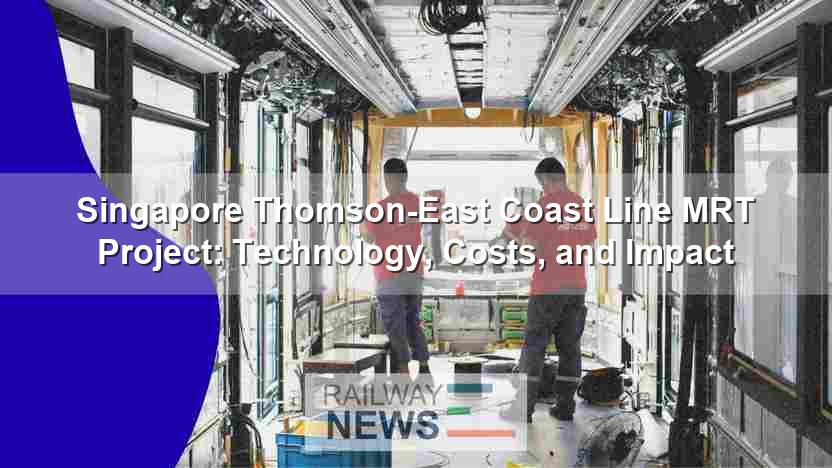
This article focuses to the technological advancements and infrastructural complexities of the Thomson-East Coast Line (TEL), a significant addition to Singapore’s Mass Rapid Transit (MRT) network. The project, encompassing a 43km route, represents a substantial investment in enhancing public transportation, aiming to alleviate congestion, improve connectivity across the island, and significantly increase daily ridership. This analysis will explore the phased rollout, technological specifications of the rolling stock (trains), the intricate civil engineering feats involved in constructing the underground stations and tunnels, and the substantial financial investment required for this ambitious undertaking. The ultimate goal is to assess the effectiveness of the project’s design and execution in meeting its projected targets for improved commuter experience and overall network efficiency. The project’s successful completion is crucial for Singapore’s continued economic growth and its commitment to providing world-class public transportation.
Phased Implementation and Network Integration
The TEL’s construction was strategically divided into five phases, executed sequentially to minimize disruption and optimize resource allocation. Phase 1 (2019) included three stations in the Woodlands area. Phase 2 (2020) added six stations, extending the line further north. Phase 3 (2021) provided crucial connections to the Central Business District (CBD) and Marina Bay, significantly reducing travel times. Phase 4 (2023) extended the line eastward, opening stations towards the city’s eastern reaches. Finally, Phase 5 (2024) concluded the project with the addition of two further stations, including a vital interchange. This phased approach allowed for gradual integration into the existing MRT network, minimizing operational challenges during the construction period.
Rolling Stock and Technological Innovations
The TEL utilizes cutting-edge, fully automated, driverless trains. A consortium comprising Kawasaki Heavy Industries, CSR Qingdao Sifang, and Kawasaki Heavy Industries Singapore, was contracted to supply 91 four-car trains. These trains boast five doors per side, optimizing passenger boarding and alighting efficiency. Additionally, the trains incorporate enhanced electric current regeneration, contributing to energy savings and environmental sustainability. The trains operate on a 750V DC third rail power supply system, a standard widely adopted for its reliability and efficiency in high-density urban environments.
Civil Engineering Challenges and Solutions
Constructing an extensive underground rail network presented significant engineering challenges. The project involved the excavation of extensive tunnels and the construction of numerous underground stations. Multiple contractors, including international firms such as Penta-Ocean Construction, Gammon Construction, Taisei Corporation, and Samsung C&T Corporation, were engaged in various stages of the project. To enhance accessibility and pedestrian flow, station designs incorporated multiple entrances and exits, complemented by extensive underpasses in certain areas to improve first/last mile connectivity. The subterranean nature of many stations offers protection from inclement weather, reducing passenger inconvenience and enhancing safety, particularly for children and the elderly. The project’s scale and the complex nature of underground construction demanded meticulous planning, sophisticated engineering techniques, and rigorous quality control.
Project Costs and Funding
The TEL project involved a substantial financial investment. The cost of the train procurement alone was S$749 million (approximately $530 million USD). Civil construction contracts awarded across various phases totaled billions of Singapore dollars, reflecting the magnitude of the undertaking. The project’s substantial budget underscores the government’s commitment to upgrading Singapore’s public transport infrastructure to meet the growing demands of its expanding population and its economic ambitions.
| Project Parameter | Value |
|---|---|
| Line Length | 43 km |
| Thomson Line Length | 30 km |
| East Coast Line Length | 13 km |
| Number of Stations | 31 |
| Number of Interchange Stations | 7 |
| Interchange Lines | East-West Line, North-South Line, North-East Line, Circle Line, Downtown Line |
| Estimated Daily Ridership (post-completion) | ~1 million commuters |
| Approximate Total Project Cost (excluding land acquisition) | Billions of Singapore Dollars (Specific figures vary depending on reporting and phase) |
Conclusions
The Thomson-East Coast Line stands as a testament to Singapore’s dedication to developing a world-class, high-capacity public transportation system. The project successfully integrated cutting-edge railway technology, including fully automated driverless trains, enhancing efficiency and passenger experience. The phased implementation strategy, while complex, proved effective in minimizing disruption and allowing for gradual integration into the existing MRT network. The extensive civil engineering works, undertaken by a consortium of international and local contractors, demonstrate the scale and complexity of the project. While the overall project cost was substantial, the anticipated increase in daily ridership and improved connectivity to key areas like the CBD and Marina Bay justify the investment in terms of economic benefits and improved quality of life for residents. The project’s successful completion highlights Singapore’s ability to manage large-scale infrastructure projects and underscores its commitment to providing efficient and reliable public transportation for its citizens. The lessons learned from the TEL project’s design, construction, and operational phases can inform future infrastructure developments, both within Singapore and internationally. Future research could focus on analyzing the long-term impacts of the TEL on traffic congestion, real estate values in the served areas, and the overall sustainability of the system, considering energy consumption and maintenance costs. The ongoing monitoring of passenger satisfaction and operational efficiency will be crucial for continuously optimizing the TEL’s performance and its contribution to Singapore’s transportation network.
Company Information:
Kawasaki Heavy Industries: A major Japanese manufacturer of rolling stock and heavy machinery.
CSR Qingdao Sifang: A leading Chinese manufacturer of railway equipment.
Kawasaki Heavy Industries Singapore: The Singaporean branch of Kawasaki Heavy Industries.
Penta-Ocean Construction: A Japanese construction company.
Gammon Construction: A major construction company with operations in Asia.
Taisei Corporation: A large Japanese general contractor.
KTC Civil Engineering & Construction: A Singaporean construction company.
Tiong Seng Contractor: A Singaporean construction company.
Dongah Geological Engineering: A South Korean construction company.
Daelim Industrial: A South Korean construction and engineering conglomerate.
Shanghai Tunnel Engineering: A Chinese company specializing in tunnel construction.
Bachy Soletanche Singapore: A geotechnical and foundation engineering company.
Sinohydro Corporation: A major Chinese hydropower and infrastructure contractor.
Sembcorp Design and Construction: A Singaporean construction company.
Nishimatsu Construction: A Japanese construction company.
Samsung C&T Corporation: A South Korean construction and engineering company.

Transport and railway industry editor covering global rail infrastructure, sustainable mobility, urban transit systems and next-generation railway technologies with a focus on accessible and industry-focused reporting.
RELATED POSTS
October 6, 2026 5:13 am
Irish Rail awarded a €600 million rail design framework to...
October 5, 2026 2:13 am
Britain confirmed a £1.75 billion rail link in Birmingham to...
October 16, 2026 4:15 am
SYMCA launched a transit survey across 4 Yorkshire boroughs on...
October 21, 2026 9:16 pm
Utah Transit Authority launched its 30-year Moves 2055 transit plan...

October 23, 2026 9:11 pm
SDDOT launched a rail safety study across 4 Sioux Falls...