
SIM Factor Signs 14 Simulators for 500km Greek Routes
SIM Factor signed two contracts to supply Hellenic Railways 14 train driver and traffic control simulators covering over 500 km of Greek routes by end-2026.
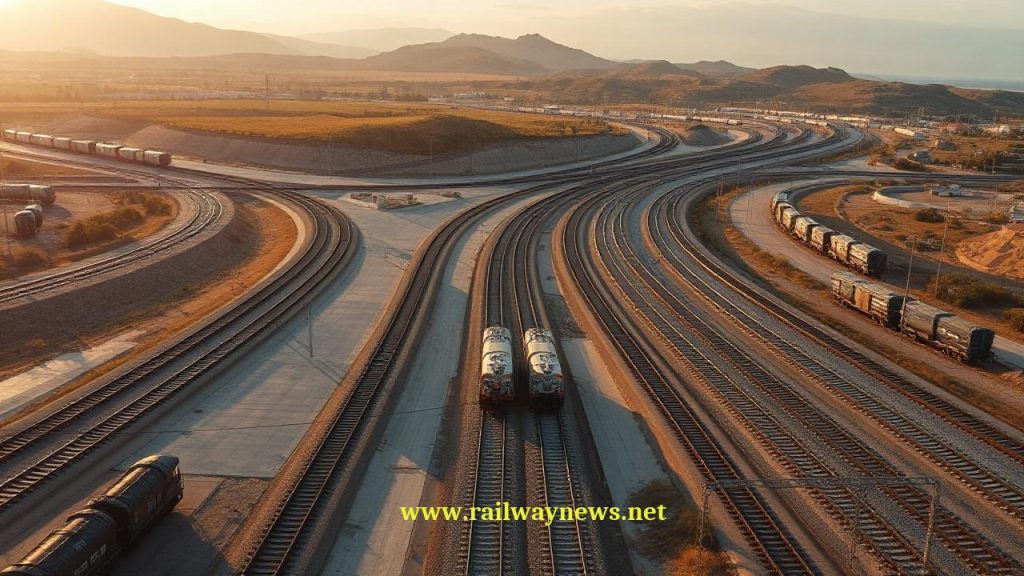
⚡ In Brief: Polish manufacturer SIM Factor signed two contracts to supply Hellenic Railways with 14 simulators covering over 500 km of Greek railway routes by end-2026, marking the company’s entry into its 11th foreign market.
ATHENS, Greece – SIM Factor S.A. has signed two contracts with Hellenic Railways Organisation to deliver 14 railway simulators — 6 train driver units plus an instructor station and 8 traffic control operator systems — by the end of 2026. The contract value was not disclosed by either party. The deal represents the first procurement of railway simulators in Greek railway history.
What Does This Contract Cover?
The contracts cover delivery of 14 simulation systems that will replicate over 500 km of major Greek railway routes, enabling both normal-operations and emergency-scenario training for train drivers and traffic control personnel. A dedicated instructor station will provide centralized management and supervision across all six driver simulators. The software platform, developed by SIM Factor, incorporates interactive degraded-mode and emergency scenarios designed for certification, recurrent skills assessment, and development of a common operational culture across Hellenic Railways staff. The simulator package will support the newly planned Railway Academy, aligning workforce competencies with the ongoing rollout of modern signalling, remote control, and ETCS systems across the Greek network.
Key Contract Data
| Parameter | Value |
|---|---|
| Contract Name | Hellenic Railways Simulator Procurement (two contracts) |
| Total Value | Not disclosed |
| Parties Involved | SIM Factor S.A. (supplier) and Hellenic Railways Organisation (buyer) |
| Timeline / Completion | Delivery by end of 2026 |
| Country / Corridor | Greece; 500+ km of major national railway routes |
How Does This Compare to Similar Contracts?
The SIM Factor award fits a pattern of Greek cross-modal transport procurement modernization visible in other 2025–2026 decisions. In a parallel process, a Greek parliamentary committee approved the acquisition of three Embraer C-390 multi-role military transport aircraft at a disclosed value of approximately €600 million (US$694 million), replacing six Lockheed Martin C-130 Hercules transports — a similarly structured modernization-for-safety procurement (Source: FlightGlobal, June 2026). While the rail simulator contract value remains undisclosed, both deals share a common structure: first-time Greek adoption of specialized training systems tied to broader infrastructure and fleet upgrades. On the European scale, PitchBook’s Q1 2026 Construction & Engineering Report recorded that Europe accounted for seven of the 10 largest global infrastructure deals in the quarter, with both deal count and deal value rising year-over-year — a trend that positions Greek rail signalling and training investment within a continent-wide capital expenditure upcycle (Source: PitchBook, Q1 2026). SIM Factor’s entry into Greece as its 11th foreign market also mirrors the internationalization trajectory of mid-sized European simulation specialists, though comparable rail simulator procurement data for Greece specifically does not exist, as this is the country’s first such acquisition.
Note: The contract value and per-unit simulator cost were not publicly disclosed by either Hellenic Railways or SIM Factor at time of publication. Independent verification of the specific 500+ km route list was not available.
Editor’s Analysis
Greece is executing a deliberate, multi-agency procurement strategy that prioritizes training infrastructure alongside physical network upgrades — an approach that breaks from the historical pattern of separating capital investment from workforce development. The SIM Factor contract, the parallel C-390 airlift acquisition, and the European-wide infrastructure surge documented by PitchBook collectively indicate that Athens is timing its transport modernization to coincide with favorable EU-level funding cycles. The choice of a Polish specialist rather than a legacy Western European supplier also signals that Hellenic Railways is willing to evaluate suppliers on software capability and total cost of ownership rather than incumbent relationships — a dynamic worth monitoring as the Greek Railway Academy takes shape post-2026.
FAQ
Q: How many simulators is Greece acquiring and what types?
A: The order covers 14 systems: 6 train driver simulators, one dedicated instructor station for centralized supervision, and 8 rail traffic control operator simulators. All units will run on SIM Factor’s software platform.
Q: When will the simulators be operational?
A: Delivery is scheduled by the end of 2026. An official operational launch date for training and certification use beyond delivery has not been separately announced.
Q: Why did Greece choose a Polish manufacturer for its first railway simulators?
A: Neither Hellenic Railways nor SIM Factor has publicly detailed the procurement criteria. SIM Factor stated that its continuously updated software — incorporating experience from its existing 10 European markets — was a factor in the selection.
Q: Is this connected to Greece’s ETCS and signalling upgrades?
A: Yes. Hellenic Railways explicitly linked the simulator acquisition to its rollout of modern signalling, remote control, and ETCS systems, with the simulators intended to ensure staff skills align with the technological modernization of the network.

Railway infrastructure, rolling stock and transport technologies specialist focused on global rail industry developments, high-speed rail systems, signaling technologies and freight transportation. Covering railway investments, public transport modernization, rail operations and international mobility projects across Europe, Asia and North America.
RELATED POSTS

October 8, 2026 1:15 pm
Alstom secured a €1bn contract to build 13 automated trains,...

October 1, 2026 7:09 am
United States regulators confirmed a September 30 deadline for the...

October 8, 2026 12:18 pm
Siemens Mobility signed an agreement with VinSpeed to supply 350...

October 4, 2026 5:14 pm
Alstom secured a CA$4.7 billion order from VIA Rail Canada...

October 5, 2026 6:12 pm
AECOM and Jacobs secured a contract in September 2026 to...

October 1, 2026 12:13 am
Illinois approved $1.5 billion annually for the Northern Illinois Transit...