
Schwandorf PCT Facility: German Rail’s Modernization
This article examines the strategic significance of the newly established prestressed concrete turnout sleeper (PCT) production facility in Schwandorf, Germany, a joint venture between Deutsche Bahn (DB) (German Federal Railway) and Rail.One.
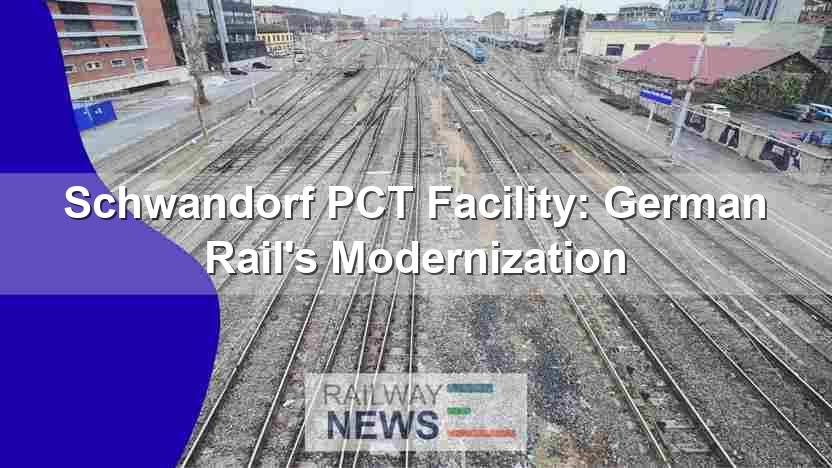
This article examines the strategic significance of the newly established prestressed concrete turnout sleeper (PCT) production facility in Schwandorf, Germany, a joint venture between Deutsche Bahn (DB) (German Federal Railway) and Rail.One. The facility represents a significant investment in modernizing German railway infrastructure, emphasizing efficiency, quality, and logistical optimization. We will explore the factors driving this development, the technological advancements incorporated into the plant’s design, the logistical implications of its location, and the broader impact on the German railway network’s performance and sustainability. The analysis will delve into the economic and operational benefits of this investment, highlighting the collaboration between DB and Rail.One and its implications for future infrastructure projects.
Modern Production Techniques and Automation
The Schwandorf plant boasts a state-of-the-art production process, leveraging automated systems to enhance efficiency and product quality. The core of the operation is an automated carousel system incorporating end anchoring technology. This sophisticated system enables the plant to produce an impressive 180,000 linear meters of PCTs annually. The automation minimizes human error, ensures consistent product quality, and optimizes production throughput. This represents a significant advancement compared to traditional methods, leading to improved cost-effectiveness and reduced production time. The high production volume also addresses the substantial demand for PCTs within the Deutsche Bahn network.
Strategic Location and Logistical Advantages
The selection of Schwandorf as the plant’s location reflects a strategic decision based on logistical considerations. Situated in Southern Germany, the plant is ideally positioned to serve the regional divisions of DB Netz AG (DB Network AG), specifically the South and Southeast regions. This strategic placement minimizes transportation costs and time, ensuring a timely supply of PCTs to crucial areas of the railway network. The location also takes into account the existing distribution of similar facilities across Germany, optimizing the overall network of sleeper production and distribution.
Collaboration and Partnership between DB and Rail.One
The Schwandorf facility exemplifies a successful collaboration between DB and Rail.One. DB, as the primary customer and operator of the German railway network, benefits from a reliable supply of high-quality PCTs. Rail.One, a leading provider of railway infrastructure components, leverages its expertise in manufacturing and logistics to meet the demands of this significant contract. This public-private partnership model demonstrates a strategic approach to infrastructure development, combining the resources and expertise of both public and private entities to achieve optimal outcomes. The 15-year operational agreement further highlights the long-term commitment and mutual benefits of this collaborative venture.
Quality Control and Regulatory Compliance
Before commencing full-scale production, the Schwandorf plant underwent rigorous testing and quality control procedures. This involved a trial run to secure necessary approvals from both the Federal Railway Authority (EBA) and the DB AG Quality Inspection Service. This commitment to strict quality standards and regulatory compliance is crucial for ensuring the safety and reliability of the German railway network. The rigorous testing and approvals process underline the importance placed on quality and safety, vital for maintaining the high standards of German railway infrastructure.
Conclusion
The inauguration of the Schwandorf prestressed concrete turnout sleeper facility marks a significant milestone in the modernization of the German railway infrastructure. The plant’s advanced technology, strategic location, and the successful collaboration between DB and Rail.One represent a model for efficient and effective infrastructure development. The utilization of automated production processes not only increases efficiency and reduces costs, but also improves the consistency and quality of the sleepers, enhancing the overall reliability and safety of the railway network. The strategic location of the plant optimizes logistics, ensuring a timely supply of PCTs to the key regions of the DB Netz AG. The stringent quality control measures undertaken before commencing full-scale production highlight the commitment to safety and adherence to regulatory standards. This project underscores the importance of strategic partnerships between public and private entities in the development of modern and sustainable railway infrastructure, paving the way for similar collaborative ventures in the future. The facility’s success exemplifies a detailed approach, seamlessly integrating technological advancements, logistical efficiency, and robust quality control measures to strengthen the backbone of German rail transport. This model offers valuable insights for other railway systems globally, showcasing a pathway toward achieving sustainable and resilient infrastructure development.

Transport and railway industry editor covering global rail infrastructure, sustainable mobility, urban transit systems and next-generation railway technologies with a focus on accessible and industry-focused reporting.
RELATED POSTS

October 1, 2026 7:09 am
United States regulators confirmed a September 30 deadline for the...

October 8, 2026 1:15 pm
Alstom secured a €1bn contract to build 13 automated trains,...

October 4, 2026 5:14 pm
Alstom secured a CA$4.7 billion order from VIA Rail Canada...

October 1, 2026 10:14 am
HS2 installed a 55-metre steel span in Birmingham, completing phase...

October 4, 2026 11:08 pm
Sound Transit confirmed the September 30 opening of Seattle Pinehurst...

October 5, 2026 6:12 pm
AECOM and Jacobs secured a contract in September 2026 to...