
SafeRail: Revolutionizing Rail Crossing Safety
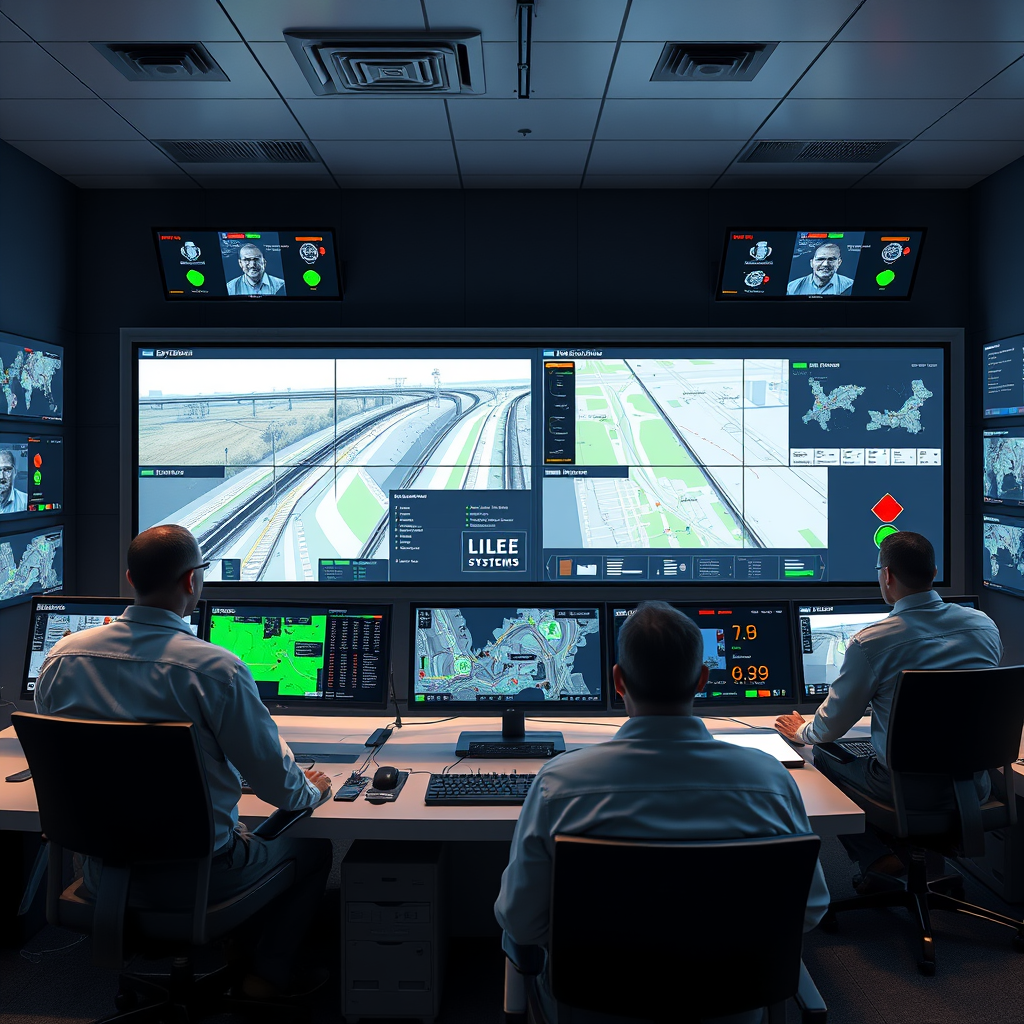
SafeRail wireless grade crossing activation system addresses critical issues in railway safety by providing a reliable, cost-effective solution for activating grade crossings using advanced AI and sensor fusion technologies, enhancing accuracy and reducing risks associated with traditional wired systems.
Introduction
The North American rail network, spanning tens of thousands of miles, faces ongoing challenges in ensuring optimal safety and efficiency. Grade crossing accidents, service disruptions due to system failures, and limitations on train speeds significantly impact operational costs and public safety. Positive Train Control (PTC) systems have been implemented to address these issues, but advancements are continuously sought to enhance performance and reliability. This article explores LILEE Systems’ SafeRail wireless grade crossing activation system, a solution designed to improve the safety and efficiency of railway operations within the context of PTC 2.0 initiatives. We will examine the technological underpinnings of SafeRail, its implementation strategy, and its potential to revolutionize grade crossing safety and overall network performance, addressing critical issues surrounding system redundancy, speed optimization, and the integration of advanced technologies like Artificial Intelligence (AI) and sensor fusion. The analysis will focus on the practical implications of this technology within the context of existing rail infrastructure and the challenges associated with its widespread adoption.
SafeRail: A Wireless Solution for Enhanced Grade Crossing Safety
LILEE Systems’ SafeRail system represents a significant advancement in grade crossing safety technology. Unlike traditional wired systems, SafeRail utilizes a wireless architecture, reducing installation costs and simplifying maintenance. This wireless approach significantly minimizes the risks associated with damaged or compromised wiring, a common cause of system failures and associated safety hazards. The system’s core functionality centers around providing a reliable and redundant mechanism for activating grade crossing signals. This is especially crucial in instances of primary system malfunctions or during periods of high traffic volume.
AI and Sensor Fusion: Enhancing Accuracy and Reliability
SafeRail’s integration of AI and sensor fusion technologies is a key differentiator. Utilizing Light Detection and Ranging (LiDAR) and camera imaging, the system can accurately detect approaching locomotives and maintenance-of-way vehicles. This advanced detection capability significantly improves the timing and accuracy of crossing activations, minimizing the risk of accidents and optimizing traffic flow. The AI algorithms continuously analyze sensor data, adapting to varying environmental conditions and ensuring consistent performance, even in challenging situations such as adverse weather or low visibility. This level of redundancy and responsiveness addresses limitations often encountered with older, less sophisticated systems.
Addressing PTC 2.0 Objectives: Safety, Efficiency, and Speed
SafeRail directly addresses the core objectives of PTC 2.0 initiatives. By providing a robust backup system for grade crossing activations, it significantly enhances safety, reducing the likelihood of collisions between trains and other vehicles or pedestrians. The system’s reliability minimizes service interruptions, improving operational efficiency and reducing costly delays. Additionally, by enabling the safe operation of longer freight trains at higher speeds, SafeRail contributes to the overall enhancement of network efficiency and productivity. The improved timing and accuracy of crossing activations allows for optimized train schedules and reduced dwell times at crossings.
Implementation and Future Outlook
The ongoing field trials with a major Class I freight railroad demonstrate the practicality and scalability of the SafeRail system. The use of the AAR S-9202-compliant LILEE TransAir STS-2025 gateway, incorporating Wayside Message Server capabilities, underscores a commitment to interoperability and seamless integration with existing rail infrastructure. The success of these trials will pave the way for wider adoption across the North American rail network, potentially transforming how grade crossings are managed and monitored. Future developments could see the integration of additional sensor modalities and advancements in AI algorithms, further enhancing the system’s capabilities and adaptability.
Conclusions
LILEE Systems’ SafeRail wireless grade crossing activation system offers a compelling solution to enhance safety, efficiency, and speed within the North American rail network. The system’s core strengths lie in its wireless architecture, which minimizes installation and maintenance challenges, and its sophisticated integration of AI and sensor fusion technologies, which ensures accurate and reliable crossing activations. By addressing the limitations of traditional systems and providing a robust backup mechanism, SafeRail directly contributes to the goals of PTC 2.0 initiatives. The ongoing field trials with a major Class I freight railroad demonstrate the system’s practical viability and its potential to transform rail operations. The successful implementation of SafeRail, with its emphasis on redundancy and advanced technologies, could significantly reduce the risk of grade crossing accidents, minimize service disruptions, and optimize train speeds, ultimately leading to a safer and more efficient rail transportation system. The use of AAR S-9202 compliant gateways further emphasizes its commitment to industry standards and seamless integration within the existing railway infrastructure. The future development and wider adoption of SafeRail promise to significantly improve the safety and efficiency of the North American rail network, benefiting both railway operators and the public alike. Further research and development could explore the incorporation of additional advanced technologies and functionalities to further enhance the system’s capabilities and address emerging challenges within the railway industry.

Railway infrastructure, rolling stock and transport technologies specialist focused on global rail industry developments, high-speed rail systems, signaling technologies and freight transportation. Covering railway investments, public transport modernization, rail operations and international mobility projects across Europe, Asia and North America.
RELATED POSTS

October 1, 2026 7:09 am
United States regulators confirmed a September 30 deadline for the...

October 8, 2026 1:15 pm
Alstom secured a €1bn contract to build 13 automated trains,...

October 4, 2026 5:14 pm
Alstom secured a CA$4.7 billion order from VIA Rail Canada...

October 8, 2026 12:18 pm
Siemens Mobility signed an agreement with VinSpeed to supply 350...

October 1, 2026 12:13 am
Illinois approved $1.5 billion annually for the Northern Illinois Transit...

October 6, 2026 2:14 am
Union Pacific launched export rail shipments with Ferromex to deliver...