
RZD Crisis: Russia’s Railways Face 4 Trillion Ruble Debt
Russian Railways faces a 4 trillion ruble debt crisis due to war and sanctions, forcing emergency state intervention to prevent collapse and impacting global trade.
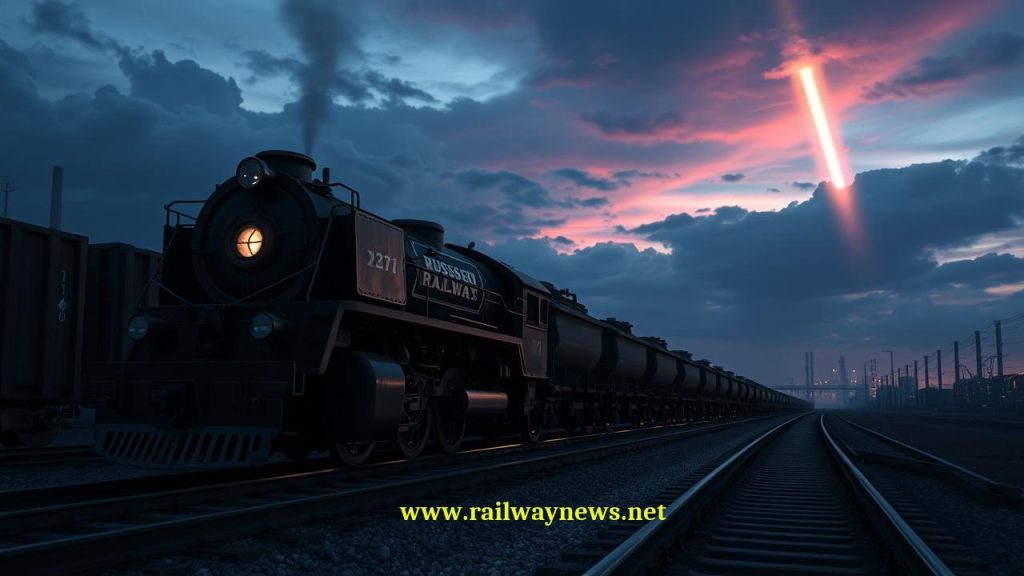
Russian Railways (RZD) is facing a severe financial crisis, burdened by a staggering 4 trillion ruble debt and crippled by the operational demands of the war in Ukraine, prompting emergency state intervention to prevent a systemic collapse. The state-owned behemoth’s struggles are a direct result of Western sanctions, soaring financing costs, and a slowing wartime economy that is increasingly straining Russia’s national budget.
| Category | Details |
|---|---|
| Company | Russian Railways (RZD) |
| Total Debt | ~4 trillion rubles (approx. USD 50-51 billion / EUR 43 billion) |
| Primary Drivers of Crisis | War in Ukraine, Western sanctions, rising interest rates, slowing economy |
| Freight Volume Impact | Down 4% since 2021 (pre-invasion); decline accelerated to 6.7% in 2025 |
| Proposed Government Bailout | Potential 400 billion ruble debt-for-capital conversion; forced asset sales |
Main Body:
Russia’s state railway operator, Russian Railways (RZD), an entity considered “too big to fail” and accounting for roughly 2.5% of the nation’s GDP, is teetering on the edge of default. The company’s debt has ballooned to an unprecedented 4 trillion rubles, creating a significant risk to state-owned lenders like VTB and the broader Russian banking system. To generate immediate liquidity, the Kremlin has ordered an emergency sale of the Moscow Towers office complex, a prime asset RZD acquired in 2024. This desperate measure is intended to stave off sharp increases in rail freight tariffs, which would further damage an already fragile economy. Russian authorities are also actively discussing a 400 billion ruble debt-for-equity swap, a move that would effectively nationalize a portion of the company’s debt to reduce its crippling interest payments.
The crisis at RZD is not an isolated event but a direct consequence of Russia’s prolonged war in Ukraine and the resulting international backlash. Western and Ukrainian sanctions have severely complicated RZD’s supply chains and access to international capital markets, while the government’s prioritization of military transport has thrown commercial logistics into chaos. This operational pivot, mandated in 2024, consistently sidelines civilian and commercial cargo, causing widespread delays and eroding customer confidence. The broader economic context, as highlighted by President Putin’s recent demands for more aggressive tax collection and persistently low oil prices, shows a national war chest under immense pressure, leaving little room for organic growth to rescue its state-owned enterprises.
The operational fallout is stark. Freight volumes in 2024 were 4% lower than in 2021, marking the worst performance since the 2009 global financial crisis. The decline has since accelerated, with cargo volumes plummeting by 6.7% in the first nine months of 2025. Commercial clients increasingly report significant delays, with the official explanation almost always citing the overriding priority of military convoys. This disruption is not only strangling trade flows but also fueling inflationary pressure on goods that depend on the country’s 85,000 km rail network, directly impacting Russian businesses and the general population.
Key Takeaways
- RZD’s 4 trillion ruble debt poses a systemic risk to Russia’s state-owned banking sector and the wider economy.
- The prioritization of military logistics over commercial freight is causing a significant decline in cargo volumes and severe disruptions to supply chains.
- The Russian government is employing emergency measures, including forced asset sales and potential debt-for-equity swaps, underscoring the railway’s critical “too big to fail” status.
Editor’s Analysis
The crisis engulfing Russian Railways is a powerful indicator of the hollowing out of the Russian civilian economy to sustain its war machine. RZD, once a symbol of national connectivity and industrial might, has been transformed into a logistics arm of the military, with its commercial viability sacrificed for strategic objectives. The need for emergency state bailouts reveals a fundamental weakness: the wartime economy is not self-sustaining and is cannibalizing its most critical infrastructure assets. For the global rail industry, this serves as a stark warning about the profound operational and financial risks in sanctioned states, where commercial logic is subordinated to geopolitical imperatives. Without a fundamental change in Russia’s economic and political trajectory, RZD will remain on life support, a ward of a state that is itself facing mounting financial pressures.
Frequently Asked Questions
Why is Russian Railways (RZD) in financial trouble?
RZD is facing a severe crisis due to a combination of factors: a massive 4 trillion ruble debt, high financing costs, falling freight revenues, operational disruptions caused by the prioritization of military transport for the war in Ukraine, and the impact of Western sanctions.
How is the Russian government responding to the RZD crisis?
The government is taking emergency measures to prevent a default. These include ordering the sale of a major real estate asset (the Moscow Towers) to raise cash and considering a 400 billion ruble debt-for-equity swap to reduce interest burdens.
How has the war in Ukraine affected RZD’s operations?
The war has forced RZD to give absolute priority to military transports. This has severely disrupted civilian and commercial freight schedules, leading to significant delays and a sharp decline in cargo volumes to their lowest levels since 2009.

Railway infrastructure, rolling stock and transport technologies specialist focused on global rail industry developments, high-speed rail systems, signaling technologies and freight transportation. Covering railway investments, public transport modernization, rail operations and international mobility projects across Europe, Asia and North America.
RELATED POSTS

October 1, 2026 7:09 am
United States regulators confirmed a September 30 deadline for the...

October 4, 2026 5:14 pm
Alstom secured a CA$4.7 billion order from VIA Rail Canada...

October 6, 2026 2:14 am
Union Pacific launched export rail shipments with Ferromex to deliver...

October 1, 2026 12:13 am
Illinois approved $1.5 billion annually for the Northern Illinois Transit...

October 1, 2026 6:10 am
Amtrak approved a System Expansion Committee on July 30 to...

October 1, 2026 3:12 am
Greenbrier confirmed Brian Comstock as new president and CEO effective...