
Rome’s Light Rail Modernization Project: A Case Study
Rome’s railway sector sees progress with its light rail modernization. Network expansion and new rolling stock improve efficiency and passenger experience.
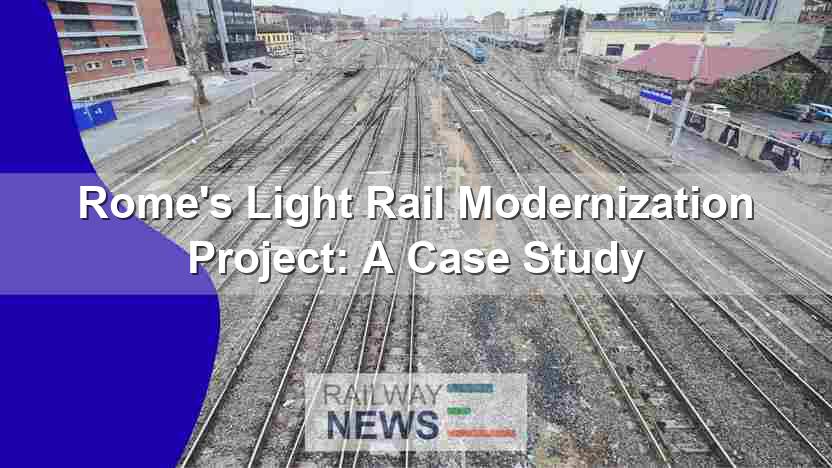
This article examines the evolution of Rome’s light rail system, focusing on the challenges, strategies, and technological advancements employed in its modernization. The project aims to analyze the historical context of the system’s decline and subsequent revitalization, detailing the infrastructure upgrades, rolling stock improvements, and operational strategies implemented to enhance efficiency, capacity, and passenger experience. This analysis will highlight the key decision-making processes, technological choices, and their overall impact on the city’s public transportation network. Additionally, we will assess the long-term implications of these modernization efforts, considering their contribution to sustainable urban mobility and their potential as a model for other cities facing similar challenges in upgrading their light rail infrastructure. The success or failure of these projects offers valuable insights into effective urban planning and transportation strategies.
The Decline and Rebirth of Rome’s Tram Network
By the early 2000s, Rome’s once extensive tram network had dwindled to a single 18km line, stretching from near Stazione Termini (the main railway station) to the eastern suburb of Pantano Borghese. This drastic reduction was the result of decades of neglect and a shift towards other modes of transportation. However, a turning point arrived in 1998 with a 5.4km extension to Route 8, connecting Casaletto to Largo di Torre Argentina, a vital square in the city center. This signaled the beginning of a significant modernization effort.
Modernization Efforts: Rolling Stock and Infrastructure
The modernization process involved a multifaceted approach encompassing both infrastructure upgrades and the introduction of new rolling stock. Early attempts at modernization, involving the procurement of six-axle, partially low-floor trams from SOCIMI (Società Costruzioni Impianti Mobili Industriali), proved problematic due to reliability issues and technical limitations. Only 35 of the planned 60 trams were delivered before SOCIMI’s bankruptcy, creating a significant shortage. A subsequent order placed with FIAT in 1997 yielded better results, with 28 articulated, double-ended trams featuring 70% low-floor access entering service. These FIAT-I class trams, based on the Torino 5000 series, provided a substantial improvement in passenger comfort and accessibility. Further enhancing the system, 50 new 9200-series trams, boasting a 100% low-floor design and modular construction in 41.5m and 33m lengths, were introduced from the early 2000s.
Network Expansion and Integration
Beyond rolling stock improvements, the modernization included strategic network expansion. The extension of Metro line A to Valle Aurelia in 2000 created a crucial interchange with the Roma-Cesano suburban heavy rail line. Route 8 is undergoing phased extensions, aiming to establish it as the backbone of the tram system. Future plans include the construction of Metro line 3, a significant east-west route traversing the city center. These expansions are largely designed with track segregation from road traffic, enhancing safety and efficiency. The new 9200-series trams incorporate advanced technology including closed-circuit television (CCTV) for passenger monitoring, Automatic Train Protection (ATP) systems, and Vehicle Display Units (VDUs) providing real-time track status information to drivers.
Project Summary and Conclusion
The modernization of Rome’s light rail system represents a complex and evolving project. The initial phase tackled the critical issue of ageing and inadequate rolling stock, while the subsequent phase focused on expanding and integrating the network for improved connectivity and efficiency. The use of advanced technology in the newest trams significantly enhances safety and operational efficiency. The project’s success hinges on effective coordination between various stakeholders, careful financial planning, and consistent commitment to modernization. Challenges encountered along the way, such as the initial problems with SOCIMI trams, highlight the importance of rigorous testing and supplier selection. The seamless integration of different transport modes – tram, metro, and heavy rail – remains a key target, necessitating continued investment in infrastructure improvements and optimized scheduling. The long-term success depends on sustained investment in maintenance and upgrades to ensure the long-term reliability and viability of the system.
| Project Details | Description |
|---|---|
| Project Type | Light Rail Modernization and Expansion |
| Project Length | Ongoing, with various phases and extensions. Metro Line 3 planned at nearly 30km. |
| Project Budget | Not explicitly stated in the provided text. Likely substantial and spread across multiple phases. |
| Connection of Cities | Within Rome, connecting various districts and suburbs. |
| Number of Stations | Not explicitly stated, but likely increased with each expansion phase. |
| Tram Route Length (early 2000s) | 48.1km (36km double-track) |
Company Information:
SOCIMI (Società Costruzioni Impianti Mobili Industriali): An Italian company involved in the construction of railway infrastructure and rolling stock. Known for its involvement in the initial, less successful phase of Rome’s tram modernization.
FIAT: A major Italian multinational corporation with a history in automotive manufacturing. Its contribution involved the production of the FIAT-I class trams for Rome’s tram network.

Railway infrastructure, rolling stock and transport technologies specialist focused on global rail industry developments, high-speed rail systems, signaling technologies and freight transportation. Covering railway investments, public transport modernization, rail operations and international mobility projects across Europe, Asia and North America.