
Richmond Pacific: Tier IV Repower Boosts Rail Efficiency
Richmond Pacific Railroad upgrades its fleet to Tier IV emission standards, a move toward environmental responsibility and operational efficiency.
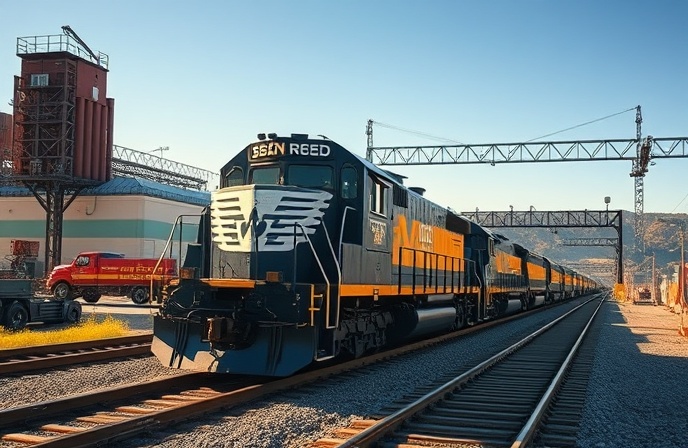
Richmond Pacific Railroad Upgrades Fleet to Tier IV Emission Standards with Innovative Repower
In a move signaling a commitment to environmental stewardship, the Richmond Pacific Railroad Corp. (RPRC), a division of Levin Richmond Terminal Corp., has completed the repowering of an MP15CC locomotive, bringing its entire active fleet to the stringent Tier IV emission standards. This project, undertaken in partnership with Western Rail Inc., represents a significant step forward for the rail operator. The repowering, made possible by grant funding from the Bay Area Air Quality Management District, replaces a legacy Electro-Motive Diesel (EMD) unit with a more efficient and environmentally friendly solution. The project, taking place in Richmond, California, aims to improve operational efficiency and significantly reduce emissions. This article will explore the details of the repowering project, the technology employed, and its broader implications for the industry, focusing on how RPRC has integrated advanced technology to meet environmental regulations and improve operational efficiency.
Advancements in Locomotive Technology
The core of the upgrade centers on the installation of a Cummins QST30 engine within the MP15CC locomotive. This engine meets the rigorous Tier IV emission standards, which are mandated by the U.S. Environmental Protection Agency (EPA) to limit the emission of particulate matter and nitrogen oxides (NOx) from locomotives. Western Rail Inc., selected by RPRC, managed the repowering process, showcasing its expertise in locomotive modernization. The new engine is coupled with a Kato Engineering alternator, ensuring reliable power generation to operate the locomotive. Crucially, the project also incorporated a custom electrical system designed by TMV Control Systems, optimizing the performance of the new powertrain and integrating advanced control features for improved fuel efficiency and operational flexibility.
Grant Funding and Environmental Impact
The Bay Area Air Quality Management District’s (BAAQMD) grant provided crucial financial support for the project, illustrating the growing recognition of the environmental benefits of repowering programs. These grants are designed to incentivize railroads to replace older, less efficient locomotives with modern alternatives. The environmental impact of the repowering is significant. By switching to a Tier IV compliant engine, RPRC will dramatically reduce emissions of both particulate matter, a major contributor to air pollution, and NOx, a greenhouse gas. This initiative aligns with broader sustainability goals within the transportation sector and supports the Port of Richmond’s overall commitment to environmental responsibility. The precise amount of the grant was not disclosed.
Operational Benefits and Improved Efficiency
Beyond the environmental benefits, the repowering project promises several operational advantages. The upgraded locomotive is expected to offer improved fuel efficiency, leading to reduced operational costs. The advanced control systems implemented also provide enhanced diagnostics and monitoring capabilities, allowing for more proactive maintenance and fewer unexpected service interruptions. These improvements contribute to a more reliable and efficient rail operation, further strengthening the rail network’s role in moving goods and services to and from the Port of Richmond and surrounding industrial areas. This, in turn, supports the local economy by enabling efficient movement of rail cars and other services.
Conclusion
The Richmond Pacific Railroad’s repowering of its MP15CC locomotive is a model for how the railway industry can embrace both environmental responsibility and operational efficiency. By strategically leveraging grant funding and collaborating with experienced partners like Western Rail and TMV Control Systems, RPRC has successfully modernized its fleet, paving the way for lower emissions and enhanced performance. This project underscores the growing importance of environmental sustainability in the rail sector and demonstrates a commitment to cleaner air and reduced operational costs. The wider implication for the industry is the potential for other short-line and regional railroads to replicate this model, thereby contributing to a cleaner, more efficient freight transportation network. The adoption of similar technologies across the industry will play a crucial role in meeting future emissions regulations and ensuring the long-term viability of rail transportation.
Company Summary
Richmond Pacific Railroad Corp. (RPRC), a division of Levin Richmond Terminal Corp., provides critical rail services in the San Francisco Bay Area. RPRC specializes in switching, rail-car storage, and transloading services, supporting industries throughout the Port of Richmond and surrounding industrial areas. The company’s commitment to upgrading its infrastructure and adopting environmentally sound practices demonstrates its dedication to responsible operations within the freight transportation sector.

Railway infrastructure, rolling stock and transport technologies specialist focused on global rail industry developments, high-speed rail systems, signaling technologies and freight transportation. Covering railway investments, public transport modernization, rail operations and international mobility projects across Europe, Asia and North America.
RELATED POSTS

October 1, 2026 7:09 am
United States regulators confirmed a September 30 deadline for the...

October 8, 2026 1:15 pm
Alstom secured a €1bn contract to build 13 automated trains,...

October 4, 2026 5:14 pm
Alstom secured a CA$4.7 billion order from VIA Rail Canada...

October 1, 2026 12:13 am
Illinois approved $1.5 billion annually for the Northern Illinois Transit...

October 6, 2026 2:14 am
Union Pacific launched export rail shipments with Ferromex to deliver...

October 1, 2026 6:10 am
Amtrak approved a System Expansion Committee on July 30 to...