
RFI Opens 15.6km Naples-Cancello High-Speed Section
RFI opened a 15.6 km high-speed section between Naples and Cancello on the Naples–Bari line, reducing Naples–Bari travel time to 3 hours 30 minutes.
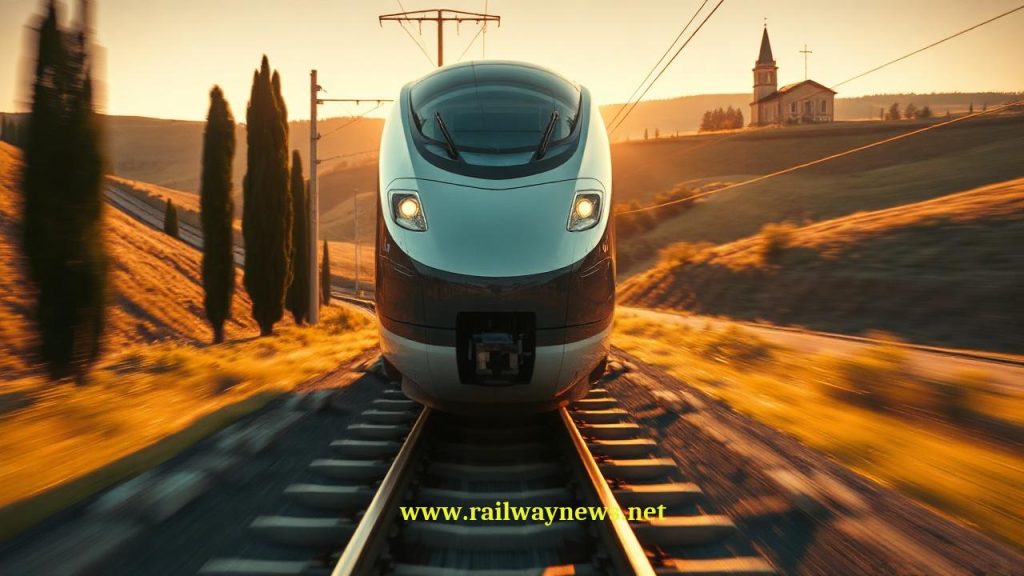
⚡ In Brief: RFI (FS Italiane Group) opened the 15.6‑km Naples–Cancello high-speed section on the Naples–Bari line, built by Webuild, cutting Naples–Bari travel to 3h 30min as a first step toward 2h.
NAPLES, Italy – The infrastructure manager Rete Ferroviaria Italiana (FS Italiane Group) inaugurated the 15.6-kilometre Naples–Cancello high‑speed section, the first completed segment of the Naples–Bari high‑speed, high‑capacity line. Built by Webuild, the infrastructure connects the southern network to the national high‑speed system via the Afragola hub and introduces a direct Naples–Lecce service of about 5 hours. The opening reduces the Naples–Bari journey to approximately 3 hours 30 minutes, moving toward an eventual 2‑hour target.
What Is the Full Scope of This Project?
The Naples–Cancello section crosses a densely urbanised area of the Naples metropolitan region and serves as the link between the Naples–Bari line and the Naples Afragola station, the future gateway to Italy’s north–south high‑speed network. The section spans 15.6 km and includes 12 road connections, the elimination of grade crossings, four viaducts totalling about 4 km, and the Casalnuovo Tunnel. The 650‑metre tunnel was excavated using a hyperbaric method—a first for Italy and one of only a handful of such applications in Europe—under complex hydrogeological conditions. The broader Naples–Bari line, part of the Scandinavian–Mediterranean TEN‑T Corridor, will ultimately deliver 145 km of new track, 15 tunnels, 25 viaducts, and 20 stations, serving 32 municipalities. More than 5 million residents are set to benefit from improved mobility along the Adriatic–Tyrrhenian corridor. The project supports about 10,200 direct and indirect jobs and a supply chain of over 7,500 companies.
Key Project Data
| Parameter | Value |
|---|---|
| Project / Contract Name | Naples–Cancello section, Naples–Bari high‑speed/high‑capacity line |
| Total Value | Not disclosed (full Naples–Bari line estimated at approx. €5.8 billion) |
| Parties Involved | RFI (FS Italiane Group) – infrastructure manager; Webuild – main contractor |
| Timeline / Completion | Section opened in 2025; full line completion date not officially disclosed |
| Country / Corridor | Italy; Scandinavian–Mediterranean Core Corridor (TEN‑T) |
How Does This Compare to Similar Projects?
Italian high‑speed investment is accelerating. Industry data shows metro and urban rail capital expenditure in Italy reached €2.35 billion in 2025, a 27 % year‑on‑year increase (Source: Market analysis, 2025). By contrast, the 49‑km Brescia–Verona high‑speed section, also on the TEN‑T network, required €2.7 billion (Source: RFI, 2020). The Naples–Cancello segment differs in its extreme urban density and the use of hyperbaric excavation—a technique previously confined in Europe to isolated sections of London’s Crossrail and Amsterdam’s North/South metro. Concurrently, private infrastructure capital is being deployed into Italian transport assets: Partners Group, which manages over USD 185 billion in assets, backs the NGI infrastructure platform, signalling institutional confidence in the sector (Source: Business Insider, 2025).
Editor’s Analysis
Commissioning the first Naples–Bari segment turns Afragola into a genuine high‑speed junction and strengthens the Adriatic–Tyrrhenian link within the Mediterranean Corridor. The 27 % jump in metro spending suggests a broader political and financial commitment to rail modernisation, which may insulate the programme from short‑term economic volatility. The lack of a confirmed completion date for the full Naples–Bari line, however, leaves operators without a firm horizon for fleet planning and service design. The hyperbaric tunnelling milestone also demonstrates that complex urban brownfield construction can be executed within Italian regulatory and technical constraints, potentially reducing perceived risk for future urban high‑speed projects elsewhere in southern Europe.
FAQ
Q: How much time does the new section save on the Naples–Bari route?
A: Before the opening, the journey exceeded 4 hours; it is now about 3 hours 30 minutes. The ultimate goal is a 2‑hour trip when the full line is in service.
Q: What is the hyperbaric excavation method and why is it notable?
A: The technique maintains higher air pressure in the tunnel to stabilise water‑bearing ground. The 650‑metre Casalnuovo Tunnel marks the first Italian application and one of only about three such deployments in Europe.
Q: Has the cost of the Naples–Cancello section been made public?
A: Neither RFI nor Webuild has disclosed a specific capital cost for the 15.6‑km segment. The entire Naples–Bari line is independently estimated at roughly €5.8 billion.

Railway infrastructure, rolling stock and transport technologies specialist focused on global rail industry developments, high-speed rail systems, signaling technologies and freight transportation. Covering railway investments, public transport modernization, rail operations and international mobility projects across Europe, Asia and North America.
RELATED POSTS

October 8, 2026 12:18 pm
Siemens Mobility signed an agreement with VinSpeed to supply 350...

October 5, 2026 6:12 pm
AECOM and Jacobs secured a contract in September 2026 to...

October 4, 2026 11:08 pm
Sound Transit confirmed the September 30 opening of Seattle Pinehurst...
October 5, 2026 1:13 pm
New York MTA confirmed a late 2026 DEIS release for...

October 6, 2026 9:17 am
Illinois approved $1.1M in state funds to upgrade two McHenry...
October 6, 2026 5:12 pm
Cleveland RTA confirmed the deferral of planned bus and rail...