
Hungary Rail Freight Reports 11% Decline VÁGTA Program
Hungary’s rail freight declined 11% in 2025 due to a 9.8% pricing gap, prompting industry leaders to propose the VÁGTA stabilization program.
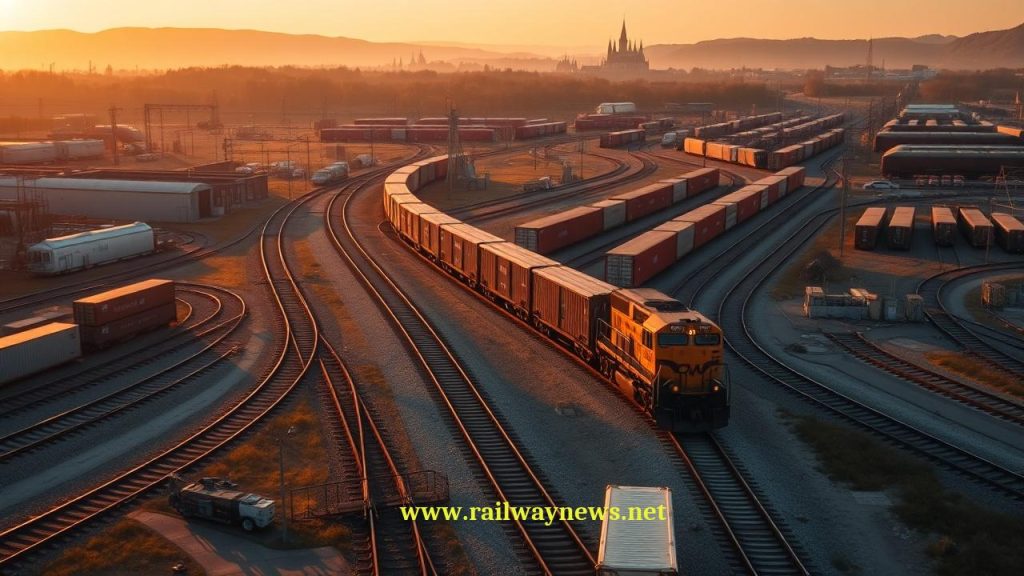
⚡ In Brief: Hungary’s rail freight sector experienced an 11% decline in ton-kilometer performance in 2025 due to a widening 9.8% pricing gap and structural competition from road transport, prompting industry calls for the emergency VÁGTA policy stabilization program.
BUDAPEST, HUNGARY – The Hungarian rail freight sector recorded an 11% year-on-year decline in ton-kilometer performance in 2025, driven by a widening gap between an 11.8% unit cost surge and a nominal tariff increase of just 2%. In response, Hungarian rail association leaders have petitioned the government for emergency regulatory relief under the proposed VÁGTA policy framework. The decline has left operators facing an unsustainable real-term rate reduction of 4.7% amid high traction electricity prices.
What Does This Regulation Cover?
The proposed VÁGTA policy framework aims to stabilize Hungary’s declining rail logistics sector through targeted financial subsidies, energy price caps, and infrastructure fee adjustments. The program focuses on reviving single-car rail transport and providing direct state support for combined intermodal transport. To address “last-mile” bottlenecks, the policy aims to reactivate a portion of the country’s 944 industrial sidings, of which fewer than 50% are currently active. Additionally, the regulation seeks to eliminate a legal anomaly to grant rail operators access to protected fuel prices and reduce system usage fees for traction electricity, which remains three times higher than pre-2022 levels. The policy also targets the recovery of the mandatory feed-in tariff (KÁT) for renewable energy, which currently levies an extra burden of 3 billion to 5 billion Hungarian forints (€7.7 million to €12.8 million) annually on the sector.
Key Regulatory Data
| Parameter | Value |
|---|---|
| Regulation / Policy Name | VÁGTA Program (Proposed) |
| Total Value | Not disclosed |
| Parties Involved | Hungarian Ministry of Transport, Association of Hungarian Rail Freight Operators (Hungrail) |
| Timeline / Completion | Not disclosed |
| Country / Corridor | Hungary |
How Does This Compare to Global Standards?
Hungary’s 11% drop in rail freight performance contrasts with broader European Union initiatives aimed at doubling rail freight market share to 30% by 2030. While Western European nations like Germany have heavily subsidized track access charges to maintain rail competitiveness, Hungary’s infrastructure usage fees have risen, leaving operators unable to pass on an estimated 9.8% required fare hike to match inflation. Furthermore, the financial distress in the Hungarian rail market is mirrored in the associated commercial insurance sector, where railway-related commercial combined and combined liability lines saw year-on-year Gross Written Premium (GWP) drops of 13.9% and 12.3% respectively in Q1 2026 (Source: Insurance Times, 2026). This structural downturn challenges optimistic market forecasts that predicted immediate growth in the Hungarian green logistics sector driven by low-carbon manufacturing investments (Source: IndexBox, 2025).
Editor’s Analysis
The current crisis indicates that Hungary’s ambition to become a major Central European logistics hub is highly vulnerable without immediate state-level track access and energy subsidies. If the VÁGTA program remains unfunded, the resulting modal shift to road transport will undermine Hungary’s long-term emissions targets and weaken its industrial supply chains. This structural decline reflects a wider regional trend where rail operators struggle to compete with more agile road freight networks amid fluctuating energy markets (Source: Railway Age, 2025).
FAQ
Q: What is the primary cause of the decline in Hungarian rail freight?
A: The decline is driven by an 11.8% increase in operating and handling costs in 2025, which operators could not offset due to intense competition from road transport. This created a severe pricing gap, as nominal freight rates rose by only 2% against a 6.7% service inflation rate.
Q: What is the VÁGTA program and what does it propose?
A: The VÁGTA program is a short-term policy package designed to stabilize Hungary’s rail freight sector through targeted government support. It proposes relaunching single-car rail subsidies, reviewing infrastructure fees, and extending protected fuel pricing to rail operators.
Q: How many industrial sidings in Hungary are currently active?
A: Out of approximately 944 industrial sidings across Hungary, fewer than half are actively utilized for rail logistics. The VÁGTA program seeks to reactivate these “last-mile” connections to increase industrial rail integration.

Railway infrastructure, rolling stock and transport technologies specialist focused on global rail industry developments, high-speed rail systems, signaling technologies and freight transportation. Covering railway investments, public transport modernization, rail operations and international mobility projects across Europe, Asia and North America.
RELATED POSTS

October 1, 2026 7:09 am
United States regulators confirmed a September 30 deadline for the...

October 1, 2026 12:13 am
Illinois approved $1.5 billion annually for the Northern Illinois Transit...

October 4, 2026 5:14 pm
Alstom secured a CA$4.7 billion order from VIA Rail Canada...

October 6, 2026 2:14 am
Union Pacific launched export rail shipments with Ferromex to deliver...

October 1, 2026 6:10 am
Amtrak approved a System Expansion Committee on July 30 to...

October 1, 2026 3:12 am
Greenbrier confirmed Brian Comstock as new president and CEO effective...