
Recycled Tyres for Rail Track: EcoFlex-Bridgestone Innovation
Recycled tires revolutionize railway track maintenance, offering cost savings and environmental benefits. Sydney Trains and partners tested the system, showing significant track stability improvements.
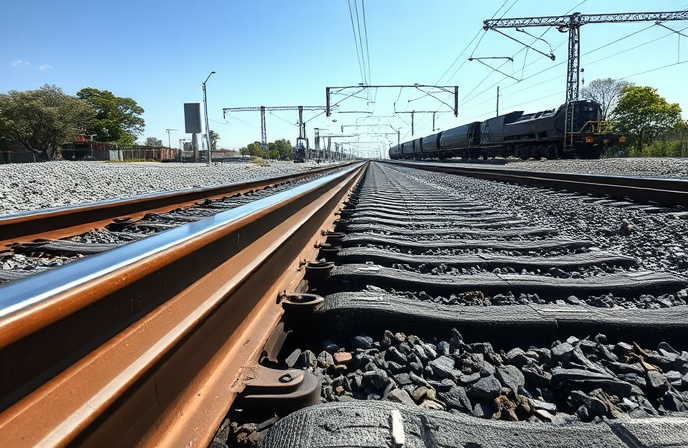
Recycled Tyres Revolutionize Railway Track Maintenance
Across the globe, railway operators face the perennial challenge of maintaining track infrastructure, a costly and resource-intensive endeavor. A groundbreaking innovation, employing recycled tyres as shock absorbers, is now poised to transform track maintenance, offering significant cost savings and environmental benefits. Developed by a collaborative team from the University of Technology Sydney (UTS), Sydney Trains, Transport for NSW, and industry partners EcoFlex and Bridgestone, the technology has undergone rigorous testing and demonstrated remarkable effectiveness. This article explores the development, implementation, and impact of this pioneering approach to railway track stabilization, revealing how recycled tyres are paving the way for a more sustainable and efficient future for rail transport. The project, tested at a freight line in Chullora, showcases a new engineering solution to combat track degradation, reduce maintenance costs, and address a significant environmental concern: tyre waste.
Innovations in Track Maintenance
The core of this revolutionary technology lies in the strategic use of recycled tyres to absorb shock and vibration, mitigating track degradation. The system involves installing a rubber underlay made from recycled tyres beneath the ballast, the crushed stone aggregate that supports the railway tracks. This underlay, strategically placed, acts as a shock absorber, reducing the impact of passing trains on the track structure. To further enhance performance, recycled rubber grids, often sourced from worn-out conveyor belts from mining sites, are placed directly beneath the ballast. These elements work in concert to protect the ballast from pulverization, a major cause of track deterioration, thereby extending the lifespan of the track and reducing the frequency of costly maintenance interventions. The system addresses a longstanding engineering problem: the high cost associated with traditional track maintenance methods.
Field Testing and Results
The effectiveness of the recycled tyre system has been validated through extensive field testing. Over a two-year period, researchers installed track sections equipped with the rubber underlay alongside conventional track sections on a live Sydney Trains freight line in Chullora. This direct comparison allowed for meticulous monitoring of key performance indicators, including vibration levels, track settlement, and ballast degradation. The results were compelling. The sections incorporating the rubber underlay demonstrated “significantly less degradation and greater stability” compared to conventional tracks. These findings underscore the ability of the recycled tyre system to effectively protect the track infrastructure from the damaging effects of train traffic. The data directly correlates to an improved life expectancy of the track components and a reduction in operational expenditure (OPEX).
Environmental and Economic Benefits
Beyond its engineering merits, the recycled tyre technology offers compelling environmental and economic advantages. By utilizing a readily available waste stream – end-of-life tyres – the project addresses a pressing environmental challenge. Over 50 million tyres are discarded annually in Australia alone. This innovation provides a sustainable solution by diverting a significant portion of this waste from landfills and transforming it into a valuable resource. Additionally, the reduced need for freshly quarried rock for ballast contributes to lower material costs and minimizes the environmental impact associated with aggregate production and transportation. Dr. Richard Kelly, Chief Technical Principal for Geotechnical Engineering at SMEC Australia, highlights that widespread adoption of this technology could save the Australian rail industry millions of dollars annually.
Future Developments
The research team is now poised to expand its work through a $740,000 Australian Research Council Linkage Project grant. The next phase of testing will focus on more challenging environments, such as bridge approaches and track junctions, where abrupt changes in track stiffness can create high-impact zones susceptible to rapid degradation. These locations are of high importance in rail systems due to higher stresses. The goal is to further refine and validate the technology’s performance in these critical areas, paving the way for broader implementation across the rail network. This research seeks to further enhance the durability of rail infrastructure and contribute to the development of more sustainable and cost-effective railway systems worldwide. The study will also assess the applicability of the system in various soil conditions.
Conclusion
The application of recycled tyres in railway track maintenance represents a significant leap forward in engineering innovation and sustainable practice. The research team, comprising UTS, Sydney Trains, Transport for NSW, EcoFlex, and Bridgestone, has demonstrated that the technology effectively mitigates track degradation, reduces maintenance costs, and promotes environmental responsibility. The two-year testing period at Chullora yielded promising results, showing that tracks with the recycled rubber underlay experienced significantly less degradation and greater stability. The technology’s ability to use a major waste stream, the 50 million end-of-life tyres generated annually in Australia, as a building material underlines its potential for a circular economy. The team is now scaling their research via a $740,000 grant, investigating bridge approaches and track junctions. The industry implications are significant. If widely adopted, it could revolutionize track maintenance, saving significant amounts of money and lowering our carbon footprint. The future outlook is bright, as this pioneering technology sets a new standard for railway track resilience, sustainability, and cost-effectiveness.
Company Summary
EcoFlex: EcoFlex is a prominent player in the sustainable infrastructure sector. They are specialists in providing innovative solutions using recycled materials, particularly in the rail and civil engineering industries. They are involved in manufacturing and supply of products made from recycled rubber and plastic, including underlay for rail tracks, that improve performance and reduce the environmental impact of infrastructure.
Bridgestone: Bridgestone is one of the world’s largest tyre and rubber companies. They actively engage in recycling, and are a source for some of the materials used in this innovation.

Railway infrastructure, rolling stock and transport technologies specialist focused on global rail industry developments, high-speed rail systems, signaling technologies and freight transportation. Covering railway investments, public transport modernization, rail operations and international mobility projects across Europe, Asia and North America.
RELATED POSTS

October 1, 2026 7:09 am
United States regulators confirmed a September 30 deadline for the...

October 8, 2026 1:15 pm
Alstom secured a €1bn contract to build 13 automated trains,...

October 4, 2026 5:14 pm
Alstom secured a CA$4.7 billion order from VIA Rail Canada...

October 1, 2026 12:13 am
Illinois approved $1.5 billion annually for the Northern Illinois Transit...

October 6, 2026 2:14 am
Union Pacific launched export rail shipments with Ferromex to deliver...

October 1, 2026 6:10 am
Amtrak approved a System Expansion Committee on July 30 to...