
Raritan River Bridge: NJ Transit’s Vital Upgrade
The replacement of the Raritan River swing bridge on the North Jersey Coast Line with a modern vertical lift design is essential for enhancing operational efficiency, resiliency against climate impacts, and reducing environmental and land requirements compared to an outdated structure.
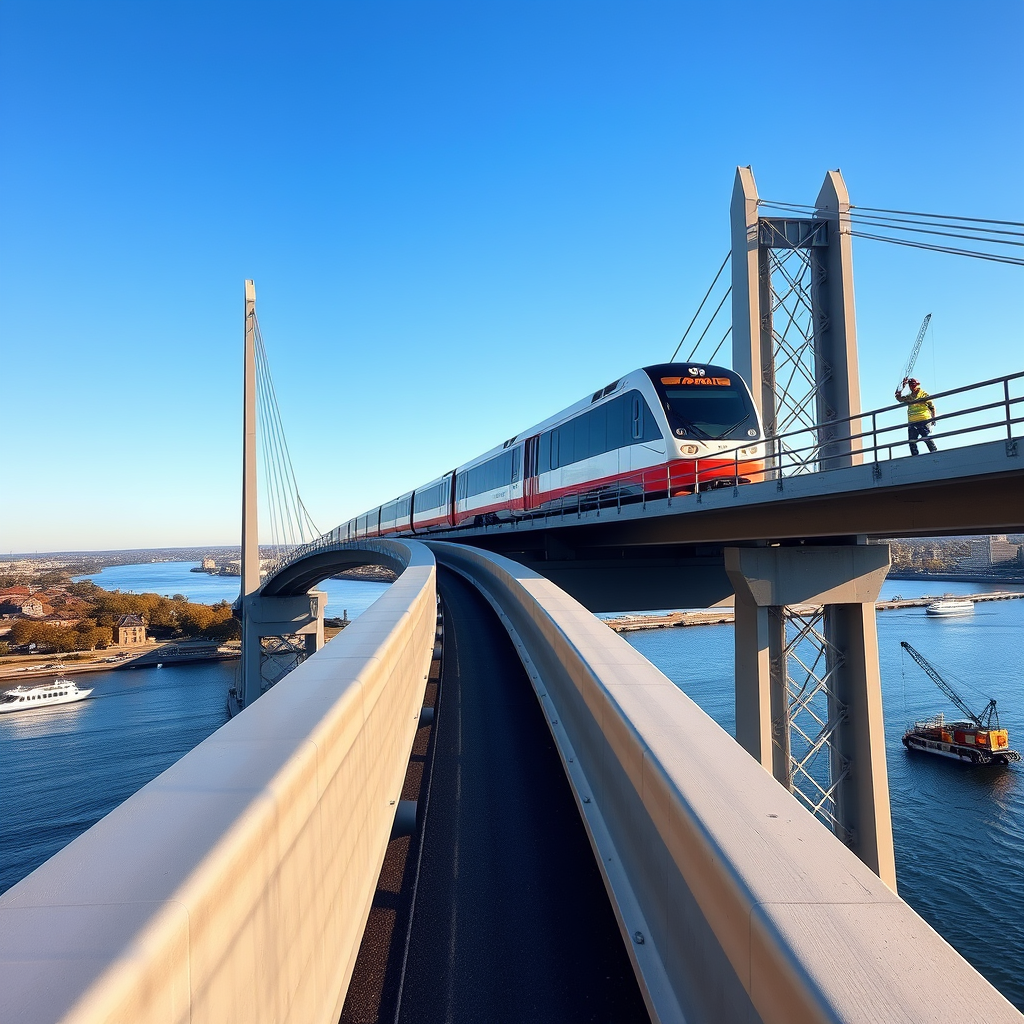
This article explores the crucial replacement of the Raritan River Bridge on the North Jersey Coast Line (NJCL), a project vital for the resilience and operational efficiency of New Jersey Transit (NJT). The existing swing bridge, operational since 1908, has reached the end of its serviceable life, proving vulnerable to extreme weather events as evidenced by the damage sustained during Superstorm Sandy in 2012. This necessitates a complete replacement with a modern, robust structure capable of withstanding future challenges. This analysis will explore the project’s scope, the technological advancements incorporated into the new design, the economic considerations, and the broader implications for the NJCL and the surrounding communities. The article will also highlight the importance of such infrastructure projects in ensuring reliable and efficient rail transportation within a rapidly changing climate.
The Urgent Need for Bridge Replacement
The aging Raritan River swing bridge, a critical component of the NJCL, has demonstrably reached its functional limit. Its design, dating back to 1908, lacks the structural capacity to withstand the increasingly frequent and intense weather events predicted by climate models. Superstorm Sandy exposed this vulnerability, causing significant damage and resulting in a three-week service disruption impacting both rail and marine traffic. The temporary repairs implemented post-Sandy only address immediate concerns; a permanent solution is crucial for long-term operational reliability and public safety. The new bridge will not only replace a century-old structure but fundamentally enhance the resiliency of the NJCL, a vital transportation artery for thousands of daily commuters.
Technological Advancements in Bridge Design
The replacement project utilizes a state-of-the-art vertical lift design, contrasting sharply with the outdated swing bridge mechanism. This offers several key advantages. Firstly, a vertical lift mechanism is generally more efficient in terms of opening and closing times, minimizing disruption to both rail and marine traffic. Secondly, this design generally has a smaller footprint, reducing environmental impact and land requirements. Thirdly, the vertical lift mechanism is intrinsically more robust and less susceptible to damage from extreme weather conditions, fulfilling the necessity of greater resilience against future storm surges and high winds. The integration of advanced materials and construction techniques further enhances the bridge’s longevity and load-bearing capacity.
Economic Considerations and Funding
The project’s substantial cost, estimated at up to $444 million (including a 5% contingency), highlights the significant investment required for essential infrastructure upgrades. However, the economic benefits outweigh the initial expenditure. The enhanced operational efficiency, reduced maintenance costs, and avoided disruption costs associated with future failures significantly contribute to long-term cost savings. The project’s funding secured through a significant Federal Transit Administration (FTA) grant of over $446 million underscores the federal government’s recognition of the project’s national importance and its commitment to supporting critical transportation infrastructure.
Project Scope and Contractor Selection
Skanska Koch, a reputable firm with experience in large-scale infrastructure projects, has been awarded the contract for the construction of the lift bridge and flanking spans. Their responsibilities encompass the entire construction process, including the installation of essential supporting infrastructure such as communication systems, signaling, and overhead catenary (OCS) systems. The project also involves the construction of the bridge approaches, which is a separate contract awarded earlier. The project’s detailed scope ensures seamless integration into the existing NJCL infrastructure, minimizing disruption during construction and ensuring a smooth transition to the new bridge upon completion.
Conclusions
The replacement of the Raritan River Bridge represents a significant investment in New Jersey’s transportation infrastructure, addressing a critical need for a more resilient and efficient rail link. The project’s scope encompasses not only the construction of a modern vertical lift bridge, superior in design and resilience to its predecessor, but also the complete overhaul of related infrastructure, including communication systems, signaling, and overhead catenary systems. The economic considerations, while substantial, are justified by the long-term operational efficiency, decreased maintenance costs and the avoidance of potentially catastrophic disruptions due to future failures. The involvement of a highly experienced contractor, Skanska Koch, along with the substantial federal funding secured through the FTA grant, ensures the project’s successful execution. This initiative significantly enhances the capacity and resilience of the NJCL, benefiting thousands of daily commuters and solidifying the North Jersey Coast Line’s position as a vital transportation corridor, ultimately contributing to the economic growth and stability of the region. The project serves as a model for future infrastructure improvements, demonstrating the importance of proactively addressing aging infrastructure vulnerabilities to ensure robust and reliable transportation systems for future generations. The updated design, leveraging technological advancements, will ensure the efficient and reliable movement of passengers and freight, contributing significantly to the overall economic health of the state. The completion of this project will not only improve commuter experience but will also enhance the region’s preparedness for future extreme weather events, ensuring the long-term viability of a critical transportation artery.

Railway infrastructure, rolling stock and transport technologies specialist focused on global rail industry developments, high-speed rail systems, signaling technologies and freight transportation. Covering railway investments, public transport modernization, rail operations and international mobility projects across Europe, Asia and North America.
RELATED POSTS

October 8, 2026 1:15 pm
Alstom secured a €1bn contract to build 13 automated trains,...

October 1, 2026 7:09 am
United States regulators confirmed a September 30 deadline for the...

October 8, 2026 12:18 pm
Siemens Mobility signed an agreement with VinSpeed to supply 350...

October 4, 2026 5:14 pm
Alstom secured a CA$4.7 billion order from VIA Rail Canada...

October 5, 2026 6:12 pm
AECOM and Jacobs secured a contract in September 2026 to...

October 4, 2026 11:08 pm
Sound Transit confirmed the September 30 opening of Seattle Pinehurst...