
Rail’s Future: Infrastructure, Tech, and Sustainability Trends
Here are a few voiceover-friendly excerpt options for railway professionals, focusing on different aspects:
**Option 1 (Focus on Innovation):**
> The modern railway: it’s a network of advanced technologies. From cutting-edge signaling to data-driven efficiency, explore the future of **rail transport**.
**Option 2 (Focus on Challenges):**
> Facing the future of **rail transport**? Infrastructure upgrades, embracing new tech, and sustainable practices are key. Learn how we’re tackling tomorrow’s challenges.
**Option 3 (Focus on Technology):**
> Automation and data analytics are reshaping the **railway** landscape. Discover how these innovations are driving efficiency, safety, and reliability across the network.
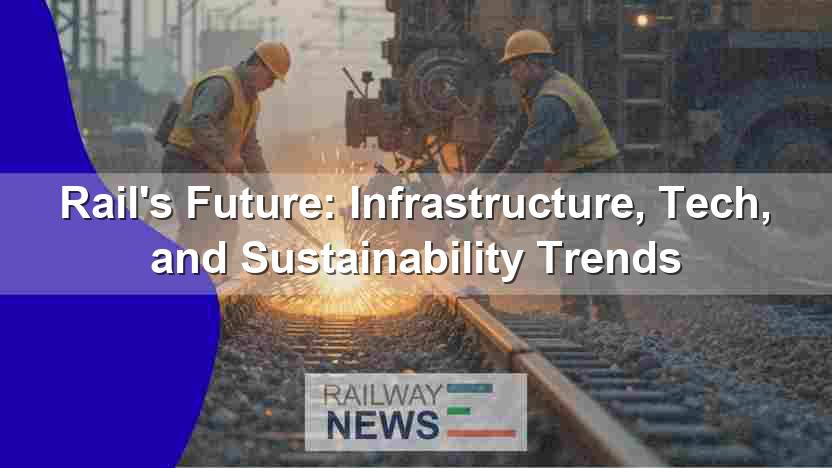
Understanding the intricacies of modern rail transport is crucial for optimizing efficiency, safety, and sustainability within the global transportation network. This article explores the critical elements that underpin the successful operation of railways, examining the interconnected systems that ensure smooth and reliable passenger and freight transit. We’ll explore the evolution of railway technology, from the fundamental principles of track and signal design to the advanced applications of automation and data analytics. Additionally, we’ll analyze the challenges faced by railway operators in a rapidly changing world, including the need for infrastructure upgrades, the integration of new technologies, and the imperative of environmental responsibility. This detailed overview will provide readers with a deeper understanding of the complexities and innovations that shape the railway industry today.
## The Foundation of Rail: Infrastructure and Signaling
The cornerstone of any railway system is its infrastructure. This encompasses the track, the supporting structures (bridges, tunnels, and embankments), and the signaling systems that govern train movements. Modern track construction employs advanced materials and techniques, such as continuously welded rails and concrete sleepers, to minimize maintenance requirements and enhance ride quality. The design of the track geometry, including curves and gradients, is meticulously planned to optimize train speed and capacity.
Signaling systems play a pivotal role in ensuring the safety and efficiency of rail operations. These systems utilize a combination of signals, interlocking devices, and communication networks to control train movements, prevent collisions, and manage traffic flow. Traditional signaling systems, such as semaphore signals and mechanical interlocking, have been progressively replaced by more advanced technologies, including:
- Electronic Interlocking: Provides centralized control and monitoring of signals and trackside equipment.
- Automatic Train Protection (ATP): Enforces speed restrictions and automatically stops trains if they exceed safe limits.
- European Train Control System (ETCS): A standardized, interoperable train control system designed to enhance safety and capacity across European railway networks.
You might be interested in:
Last October 2018, we published an article about Hitachi’s strategic acquisition and its impact on rail signaling. Click here to read – Hitachi’s Rail Signaling Strategy: Ansaldo Acquisition Insights
## Rolling Stock and Propulsion Systems
The performance of a railway system is also heavily influenced by the design and capabilities of its rolling stock (trains). Modern trains are engineered for high speed, energy efficiency, and passenger comfort.
Key aspects of rolling stock design include:
- Carbody Design: Aerodynamic shapes and lightweight materials reduce air resistance and improve fuel efficiency.
- Bogies: The wheelsets are mounted on bogies (a structural frame) with advanced suspension systems provide a smooth ride.
- Braking Systems: High-performance braking systems, such as disc brakes and regenerative braking (which recovers energy during deceleration), are essential for safe operation.
The propulsion systems that power trains have evolved significantly over time. Steam locomotives, once the dominant technology, have been largely replaced by diesel-electric and electric locomotives. Electric locomotives offer advantages such as higher efficiency, lower emissions (when powered by renewable energy sources), and reduced noise pollution. Diesel-electric locomotives remain a viable option, especially in areas where electrification is not feasible. The electrification of railways involves constructing overhead lines or a third rail to supply electricity to the trains.
## The Role of Technology: Automation and Data Analytics
Technology is playing an increasingly important role in the railway industry, driving improvements in efficiency, safety, and reliability. Automation is being implemented in various areas, including:
- Automatic Train Operation (ATO): Controls train speed and stopping at stations, reducing the workload of train drivers.
- Condition-Based Maintenance (CBM): Uses sensors and data analytics to monitor the condition of railway assets (tracks, signals, and rolling stock), allowing for predictive maintenance and minimizing downtime.
- Predictive Maintenance: Utilizes data analytics to anticipate equipment failures and schedule maintenance proactively.
Data analytics is becoming an indispensable tool for railway operators. The vast amounts of data generated by sensors, signaling systems, and passenger information systems can be analyzed to identify patterns, optimize operations, and improve decision-making. This includes:
- Real-Time Traffic Management: Monitoring and managing train movements in real-time to optimize schedules and minimize delays.
- Demand Forecasting: Predicting passenger demand to optimize train scheduling and resource allocation.
- Performance Analysis: Evaluating the performance of different aspects of the railway system to identify areas for improvement.
## Challenges and Future Trends
The railway industry faces several challenges, including the need to upgrade aging infrastructure, integrate new technologies, and adapt to changing passenger and freight transport demands.
Key challenges and future trends include:
- Infrastructure Investment: Significant investment is required to modernize existing infrastructure and expand railway networks to accommodate growing transport needs.
- Digitalization: The adoption of digital technologies, such as the Internet of Things (IoT) and artificial intelligence (AI), will be crucial for enhancing efficiency, safety, and sustainability.
- Sustainability: Reducing the environmental impact of railways is a priority. This includes using renewable energy sources, optimizing energy consumption, and reducing noise pollution.
- High-Speed Rail: The continued development of high-speed rail (HSR) networks is transforming long-distance travel, offering a fast, efficient, and environmentally friendly alternative to air travel.
- Capacity Enhancements: Implementing strategies to increase track capacity, such as advanced signaling systems, optimized train spacing, and grade separation, is essential to accommodate growing passenger and freight volumes.
In the realm of rolling stock, manufacturers are focused on developing innovative solutions to meet the evolving needs of the industry. For example, *Alstom train modernisation* initiatives are focused on enhancing existing fleets with advanced technologies to improve performance and passenger experience. This includes upgrading propulsion systems, implementing advanced onboard diagnostics, and incorporating modern passenger amenities.
## Conclusion
To summarize, the railway industry is a complex and dynamic ecosystem, continually evolving to meet the demands of modern transportation. From the fundamental principles of infrastructure and signaling to the latest advancements in automation and data analytics, the railway system relies on a multitude of interconnected components working in harmony. The ongoing challenges of infrastructure investment, digitalization, and sustainability require innovative solutions and strategic planning.
The integration of advanced technologies, such as real-time traffic management systems, predictive maintenance, and data analytics, holds the key to unlocking greater efficiency, reliability, and safety. The pursuit of sustainable practices, including the adoption of renewable energy and the reduction of emissions, is essential for mitigating the environmental impact of rail transport. As we look to the future, the continued development of high-speed rail networks and the implementation of capacity enhancements are crucial for accommodating growing passenger and freight volumes.
The railway industry is poised for further transformation, driven by innovation, investment, and a commitment to providing safe, efficient, and sustainable transportation solutions. The successful evolution of railways will depend on the collaboration of industry stakeholders, including railway operators, manufacturers, and policymakers, to create a future where rail transport plays an even greater role in connecting communities and driving economic growth.

Railway infrastructure, rolling stock and transport technologies specialist focused on global rail industry developments, high-speed rail systems, signaling technologies and freight transportation. Covering railway investments, public transport modernization, rail operations and international mobility projects across Europe, Asia and North America.
RELATED POSTS

October 8, 2026 1:15 pm
Alstom secured a €1bn contract to build 13 automated trains,...

October 1, 2026 7:09 am
United States regulators confirmed a September 30 deadline for the...

October 8, 2026 12:18 pm
Siemens Mobility signed an agreement with VinSpeed to supply 350...

October 4, 2026 5:14 pm
Alstom secured a CA$4.7 billion order from VIA Rail Canada...

October 5, 2026 6:12 pm
AECOM and Jacobs secured a contract in September 2026 to...

October 1, 2026 12:13 am
Illinois approved $1.5 billion annually for the Northern Illinois Transit...