
Australian Rail Safety Innovations for High-Speed Infrastructure
PRM Engineering launches enhanced railway safety system, Sentinel, for height and slew limiting. The system prevents accidents near power lines and tunnels.
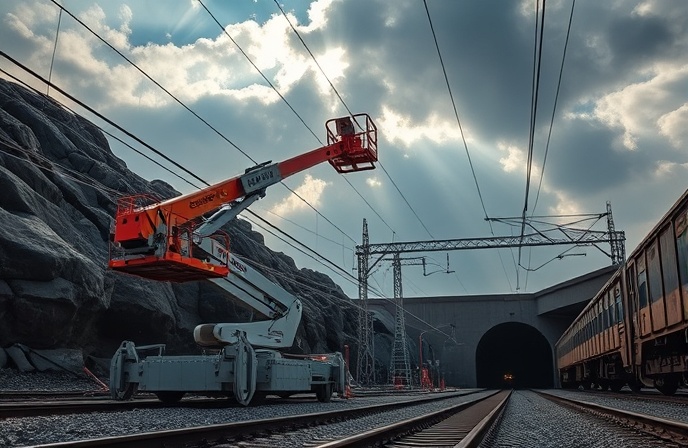
PRM Engineering Services Launches Enhanced Sentinel Height and Slew Limiting Systems for Railway Safety
Working in proximity to power lines, around bridges, and within tunnels presents significant safety challenges for railway operators. To address these risks, PRM Engineering Services has recently released an updated version of its Sentinel Height and Slew Limiting Systems. This advanced technology, applicable to both new and existing railway vehicles, provides critical protection against operator error while maximizing the safe use of equipment in diverse operating conditions. This article will explore the innovative features of the Sentinel system, its operational advantages, and its crucial role in enhancing safety standards across the railway industry, considering the product’s “Who, What, When, Where, Why, and How” elements. Specifically, Who: PRM Engineering Services, What: Sentinel Height and Slew Limiting Systems, When: Recently updated release, Where: Applicable to railway sites across Australia, Why: Enhance safety and prevent accidents, and How: Incorporating angle sensors and sophisticated safety features.
Innovations in Track Maintenance Safety
The core function of the Sentinel systems lies in their ability to prevent equipment from exceeding safe operating limits. Employing angle sensors attached to the boom of the machinery, the system precisely measures the height reached. This data is then integrated with on-screen displays and audible alerts, immediately warning operators when approaching a dangerous threshold. This integrated approach is particularly vital when working near overhead power lines or in restricted spaces like tunnels. Once the limits are approached, the system can activate several types of stops, including a “slow-stop” option that prevents sudden jolts and bucket spillage. This feature decelerates the boom smoothly before the height limit is reached, mitigating the risks associated with fast-moving equipment. The system can also incorporate predictive stops, which account for the machine’s speed to prevent overshooting, ensuring precise positioning within safe operating parameters.
Supervisory Control and Site-Specific Adjustments
A key advantage of the Sentinel system is its supervisory control features. Site supervisors can define specific height limits via a key switch and password, preventing unauthorized modifications by operators. This is particularly crucial in situations like those found within Queensland Rail and Aurizon, who already employ the Sentinel system with defined height restrictions, often between 3 and 3.4 meters, varying by site requirements. The system allows for individual height limitations for each machine arm, optimizing operating space. Moreover, the Sentinel can accommodate diverse machine attachments, automatically adjusting height settings through the user interface. This saves time and streamlines operations for those using a variety of attachments, ultimately enhancing efficiency on-site.
Advanced Safety Features and Data Recording
The Sentinel system is designed to enhance safety while also improving operational efficiency and equipment longevity. It features a safety lock level input that reduces current draw when the machinery is not in use, extending battery life. Simultaneously, a “black box” functionality records all system events. This internal logging captures every system start, limit reached, and operator setting change, providing a detailed record for safety audits and operational analysis. Additionally, the system is built for robustness, withstanding harsh weather conditions and constructed with industry-standard screens and sensor protection. In some cases, sensors are protected by five-millimeter-thick steel plates. Its robust construction makes it ideally suited for railway and construction environments.
Meeting Stringent Safety Integrity Levels
A significant advancement in the updated Sentinel system is its SIL 2/ PLd (Safety Integrity Level 2/ Performance Level d) certification, particularly important when working near high-voltage rail power lines. It is currently the only system designed in Australia that meets these rigorous safety requirements. SIL 2 certification demands system redundancies to minimize the risk of failure. As the design engineer explained, “When you’re working with rail power lines, there is inherently a greater risk, with high voltage which can jump, leading to injuries and even loss of life, so you need to achieve SIL 2. We use two angle sensors in redundancy to measure the angle of the boom. If one of them is giving us the wrong angle, we can stop the machine, get it out of harm’s way and repair it before we end up in a dangerous situation.” This design mitigates the inherent risks of human error, offering a consistent and real-time protection layer for railway and construction workers.
Conclusion
The updated PRM Engineering Services Sentinel Height and Slew Limiting Systems represents a significant step forward in railway safety technology. By combining advanced sensor technology, user-friendly interfaces, and robust safety features, the system offers a detailed solution for mitigating risks associated with operating heavy machinery near power lines, bridges, and within tunnels. The system’s SIL 2/ PLd certification demonstrates PRM’s commitment to the highest safety standards, offering peace of mind to operators and supervisors. Additionally, the system’s ability to adapt to different machine types, attachment configurations, and site-specific requirements makes it a versatile tool for a wide range of railway applications. The Sentinel’s ability to meet stringent safety integrity levels, and incorporating features like the ‘slow-stop’ and predictive stops, contribute to an environment with increased safety. Looking ahead, the increased focus on railway safety standards, and the rising demand for technologies that can prevent human error, suggest a promising future for the Sentinel systems. The system’s local design, manufacture, and support network also position PRM Engineering Services to play a leading role in the evolving landscape of railway safety in Australia and beyond.
Company Summary
PRM Engineering Services, an Australian-based company, specializes in designing and manufacturing safety systems for the heavy machinery sector, with a strong focus on railway applications. The company’s commitment to local manufacturing, engineering, and support ensures rapid response and adaptation to the specific challenges faced by Australian railway operators. The recent updates to its Sentinel Height and Slew Limiting Systems demonstrate the company’s continuous investment in cutting-edge safety technologies and its dedication to improving safety outcomes within the railway industry.

Railway infrastructure, rolling stock and transport technologies specialist focused on global rail industry developments, high-speed rail systems, signaling technologies and freight transportation. Covering railway investments, public transport modernization, rail operations and international mobility projects across Europe, Asia and North America.
RELATED POSTS

October 1, 2026 7:09 am
United States regulators confirmed a September 30 deadline for the...

October 1, 2026 12:13 am
Illinois approved $1.5 billion annually for the Northern Illinois Transit...

October 1, 2026 6:10 am
Amtrak approved a System Expansion Committee on July 30 to...

October 4, 2026 5:14 pm
Alstom secured a CA$4.7 billion order from VIA Rail Canada...
October 1, 2026 3:12 am
Greenbrier confirmed Brian Comstock as new president and CEO effective...

October 6, 2026 2:14 am
Union Pacific launched export rail shipments with Ferromex to deliver...