
Poland’s Rail Modernization: Thales ERTMS Insights
Modernizing rail infrastructure: ERTMS deployment and beyond—discover how cutting-edge signaling systems are revolutionizing safety and efficiency!
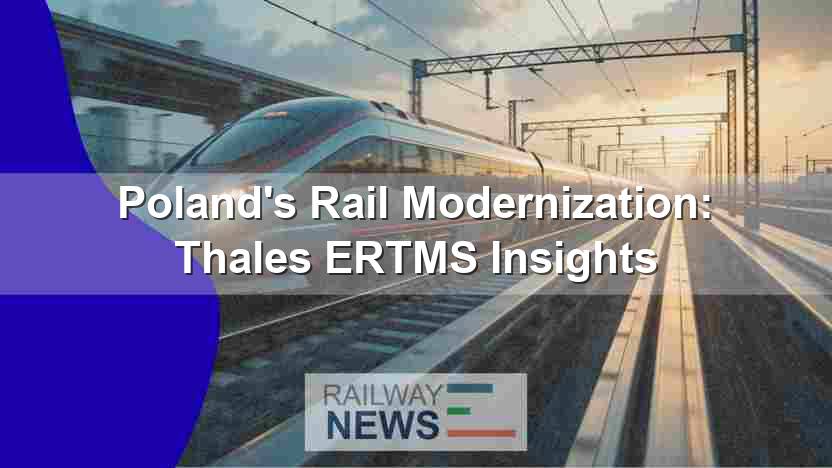
The global railway industry is undergoing a significant transformation, driven by the need for increased safety, efficiency, and capacity. This article explores several recent major contracts awarded to prominent players in the sector, highlighting the trends shaping modern railway infrastructure development. We will examine the modernization projects undertaken by Polskie Linie Kolejowe (PKP PLK) in Poland, Bane NOR in Norway, and SNCF Rail in France, focusing on the adoption of advanced signaling and control systems like the European Rail Traffic Management System (ERTMS) and the associated technological and logistical challenges. The analysis will also touch upon the broader context of infrastructure maintenance and restoration, exemplified by the Churchill rail line acquisition. These case studies provide valuable insights into the strategic investment decisions, technological advancements, and operational considerations impacting the future of railway operations worldwide. The focus will be on the technological advancements, economic implications, and long-term effects these projects have on rail transport systems.
Thales’ ERTMS/ETCS Deployment in Poland
PKP PLK’s award of a €182 million contract to Thales for the modernization of the E20 Kunowice-Terespol (650 km) and E30 Kraków-Rzeszów (135 km) lines signifies a substantial commitment to upgrading Poland’s railway signaling infrastructure. This project involves the implementation of Level 2 ERTMS/ETCS (European Rail Traffic Management System/European Train Control System), a crucial step towards interoperability and enhanced safety. The adoption of ERTMS/ETCS allows for increased train speeds and capacity, improved safety through automatic train protection, and reduced operational costs. The successful completion of this project will significantly enhance the efficiency and safety of rail transportation in Southern Poland, fostering economic growth and improving passenger and freight services. The long-term impact includes reduced accidents due to improved safety systems and higher operational efficiency.
Alstom’s ERTMS Implementation in Norway
Alstom’s contract with Bane NOR for the implementation of onboard train control systems based on its Atlas ERTMS solution underscores the growing adoption of this technology across Europe. The project’s goal is to upgrade the Norwegian rail fleet with ERTMS compatibility, allowing for interoperability with both ATC-2 (Automatic Train Control) and ERTMS Level 2 systems. This modernization is critical for improving operational efficiency by reducing delays and enhancing safety. Completing this project by September 2026 presents significant logistical challenges, requiring careful planning and coordination of various aspects of the project to deliver the planned improvements in time. The long-term implications include improved scheduling and reliability of train services across Norway.
SNCF Rail’s Escalator and Moving Walkway Upgrades
SNCF Rail’s contract with Otis France demonstrates the importance of ongoing maintenance and modernization of railway infrastructure beyond just signaling and train control systems. The installation of 171 escalators and moving walkways at key stations highlights the focus on improving passenger experience and accessibility. This project, encompassing new installations, maintenance, and mid-life renovations, underscores the need for continuous investment in station infrastructure to ensure smooth and efficient passenger flow. The 15-year maintenance agreement showcases the long-term commitment to the upkeep of these essential passenger facilities. The seven-year timeline for installation will require close coordination with station operations to minimize disruption to rail services.
OmniTRAX and the Churchill Rail Line Restoration
The acquisition of the damaged Churchill rail line by a consortium including Fairfax Financial Holdings illustrates the challenges and opportunities in restoring critical infrastructure after major events like the 2017 floods. This demonstrates that rail infrastructure maintenance and restoration extend beyond new construction to include responses to unexpected disruptions. The restoration of the line is not only a significant infrastructure project but also has economic implications for the region. The involvement of multiple stakeholders highlights the collaborative efforts required for such large-scale recovery initiatives. This example highlights the need for resilience planning and the complexities involved in recovering rail lines after significant damage.
Conclusions
The projects detailed above showcase the dynamic nature of the railway industry and its commitment to continuous improvement. From large-scale signaling system upgrades employing advanced technologies like ERTMS/ETCS to the essential maintenance and modernization of passenger infrastructure, these initiatives demonstrate the multifaceted approach needed for a thriving and efficient railway network. The emphasis on safety, interoperability, and passenger experience is clear. The successful execution of such projects requires careful planning, substantial investment, and collaborative efforts between various stakeholders, including governmental agencies, infrastructure managers, technology providers, and contractors. The long-term impacts of these investments will be substantial, enhancing both the economic vitality and the quality of life within the served regions. The challenges presented by these projects, such as managing complex timelines, integrating new technologies, and ensuring minimal disruption to services, are significant but ultimately overcome through effective planning, project management, and technological expertise. The future of railways rests not only on new construction but also on the continuous maintenance, upgrading, and restoration of existing infrastructure to ensure a safe, reliable, and efficient transportation system for years to come.

Railway infrastructure, rolling stock and transport technologies specialist focused on global rail industry developments, high-speed rail systems, signaling technologies and freight transportation. Covering railway investments, public transport modernization, rail operations and international mobility projects across Europe, Asia and North America.
RELATED POSTS

October 8, 2026 1:15 pm
Alstom secured a €1bn contract to build 13 automated trains,...

October 4, 2026 5:14 pm
Alstom secured a CA$4.7 billion order from VIA Rail Canada...

October 1, 2026 12:13 am
Illinois approved $1.5 billion annually for the Northern Illinois Transit...

October 4, 2026 11:08 pm
Sound Transit confirmed the September 30 opening of Seattle Pinehurst...
October 1, 2026 10:14 am
HS2 installed a 55-metre steel span in Birmingham, completing phase...

October 5, 2026 6:12 pm
AECOM and Jacobs secured a contract in September 2026 to...