
Poland’s Rail Freight: Baltic Port Upgrades & PLK Projects
Polish rail upgrades boost Baltic Sea port freight capacity, expanding rail infrastructure between 2025-2030.
Introduction
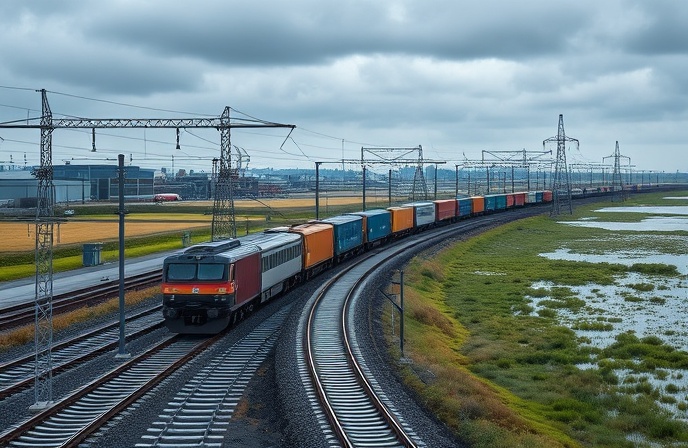
Upgrades to rail access have enabled longer and heavier freight trains to reach the Baltic Sea ports of Gdańsk and Gdynia. Further enhancements are planned to continue increasing rail freight capacity.
Last June 2025, we published an article about Renfe’s cutting-edge Aranjuez maintenance hub and its impact on Cercanías efficiency. Click here to read – Future of Rail: Renfe’s Railway Technology Hub, Aranjuez: Essential Guide
Upcoming Rail Projects
Work is scheduled from 2025–2032 on two key sections: Gdańsk Osowa–Gdynia Główna and Kościerzyna–Maksymilianowo. These upgrades aim to boost line capacity and freight throughput at Gdynia’s port, fostering growth across the Tricity region.
Tczew–Gdynia Corridor Enhancements
Preparations are also underway for a design-and-build tender focused on enhancing capacity along the Tczew–Gdynia corridor, significantly between Pszczółki and Pruszcz Gdański. The project plans for a four-track layout to facilitate both freight access to Gdańsk’s port and improved passenger connectivity within the Tricity and beyond. Construction is slated for 2028–2030.
Completed Infrastructure Improvements
Completed projects from 2019–2022 in Gdańsk and Gdynia have already enhanced station capacity, enabling longer and heavier trains. This has strengthened rail’s competitiveness with road freight, reducing heavy goods vehicles traffic and environmental impact. The upgrades comprised track and turnout renewals, electrification, advanced traffic-control systems, and engineering works, supported by approximately PLN 3.3 billion (EUR 775 million) in investment, partly funded by the EU’s Connecting Europe Facility (CEF).
Bydgoszcz to Tricity Modernization
A flagship initiative for Gdynia is the modernisation of railway line 201 between Bydgoszcz and the Tricity. Beginning in 2021, this project is on course for completion by 2028.
Conclusion
Investments led by Polish State Railways (PLK) are crucial to expanding rail freight capacity at the Baltic Sea ports of Gdańsk and Gdynia.
Company Summary
Polish State Railways (PLK): The entity leading infrastructure investments to expand rail freight capacity.

Railway infrastructure, rolling stock and transport technologies specialist focused on global rail industry developments, high-speed rail systems, signaling technologies and freight transportation. Covering railway investments, public transport modernization, rail operations and international mobility projects across Europe, Asia and North America.
RELATED POSTS

October 6, 2026 2:14 am
Union Pacific launched export rail shipments with Ferromex to deliver...

October 4, 2026 11:08 pm
Sound Transit confirmed the September 30 opening of Seattle Pinehurst...

October 1, 2026 10:14 am
HS2 installed a 55-metre steel span in Birmingham, completing phase...

October 5, 2026 6:12 pm
AECOM and Jacobs secured a contract in September 2026 to...

October 1, 2026 3:12 am
Greenbrier confirmed Brian Comstock as new president and CEO effective...

October 6, 2026 12:16 am
FTA awarded $233 million in grants to eight US rail...