
Podłęże–Piekiełko Project Completes First 3.75 km Tunnel Poland
€4 billion Podłęże–Piekiełko railway project in Poland completed its first 3.75 km tunnel by PKP Polskie Linie Kolejowe.
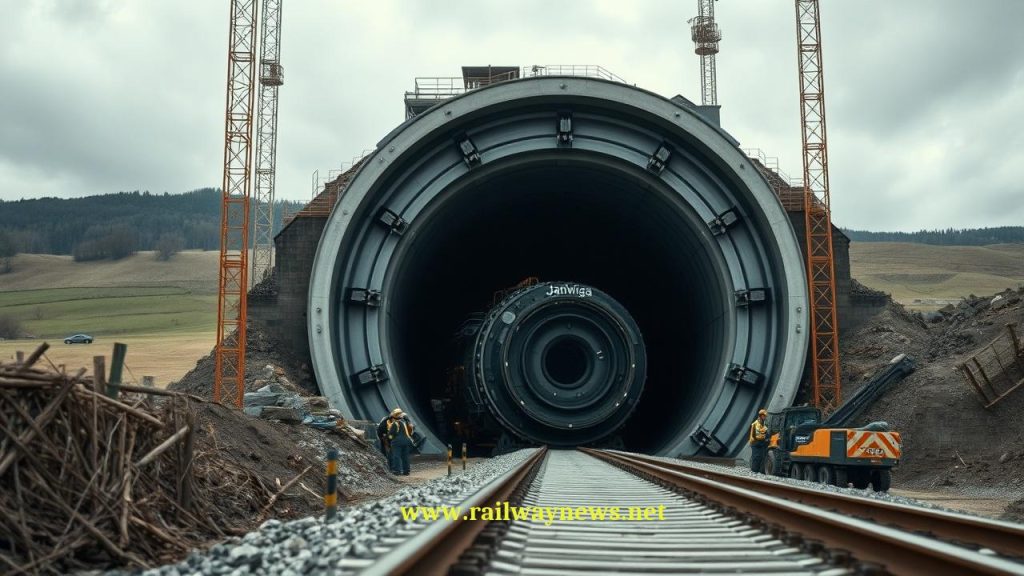
⚡ In Brief: In southern Poland, a 2,500-ton Tunnel Boring Machine has completed excavating the 3.75-kilometer Męcina-Mordarka tunnel, the first of 20 planned tunnels for PKP Polskie Linie Kolejowe’s €4 billion Podłęże–Piekiełko railway project.
WARSAW, POLAND – State-owned operator PKP Polskie Linie Kolejowe has announced the completion of boring for the first railway tunnel in southern Poland after 10 months of work. The 3.75-kilometer tunnel, excavated by the TBM “Jadwiga,” is a key component of the new Podłęże–Piekiełko line, which aims to significantly reduce travel times in the Małopolska region.
What Is the Full Scope of This Project?
The Podłęże–Piekiełko project is the largest single investment by PKP Polskie Linie Kolejowe, with a total estimated cost of approximately €4 billion (17 billion zlotys). The initiative involves modernizing 75 km of existing track on Railway Line No. 104 (Chabówka–Nowy Sącz) and constructing 58 km of entirely new, double-track electrified line designed for speeds up to 160 km/h. The project’s most complex element is the creation of over 31 km of underground structures, comprising 16 railway tunnels and 4 evacuation tunnels.
Key Project Data
| Parameter | Value |
|---|---|
| Project / Contract Name | Podłęże–Piekiełko Project (Line No. 104 Modernization) |
| Total Value | Approx. 17 billion zlotys (EUR 4 billion) |
| Parties Involved | PKP Polskie Linie Kolejowe, Polish Ministry of Infrastructure, European Union (National Recovery and Resilience Plan) |
| Timeline / Completion | First tunnel boring complete; final project completion date not disclosed. |
| Country / Corridor | Poland / Kraków–Nowy Sącz |
How Does This Compare to Similar Projects?
The scale of the Podłęże–Piekiełko project places it among Europe’s major new-build railway infrastructure works. For comparison, the UK’s East West Rail project, which involves constructing a new line between Oxford and Cambridge, is a similarly ambitious undertaking aimed at establishing a new strategic corridor. While the Polish project focuses on mountainous terrain requiring extensive tunneling, the UK project involves significant land acquisition and civil works across flatter topography, with a projected completion for the full line in the mid to late 2030s (Source: Construction News, 2026). The specific completion date for the entire Podłęże–Piekiełko line has not yet been announced, making direct timeline comparisons preliminary.
Editor’s Analysis
This milestone confirms Poland’s commitment to leveraging national and EU funds for transformative infrastructure, aligning with a national strategy to expand and modernize its core rail network. The project not only addresses passenger needs by cutting journey times to southern tourist destinations like Zakopane but also enhances freight capacity, which supports the wider national economy, including efforts by state-backed industrial firms like KGHM to reduce domestic logistics costs (Source: Mining.com). The reuse of the TBM on subsequent sections demonstrates a capital-efficient approach to tackling the project’s most challenging engineering elements.
FAQ
Q: What are the main benefits for passengers once the project is complete?
A: The primary benefit will be a significant reduction in travel times. The journey between Kraków and Nowy Sącz is projected to take approximately 60 minutes, while the Kraków to Zakopane route will be reduced to about 90 minutes.
Q: What is the next step for the completed tunnel?
A: With the boring finished, work will now focus on connecting the main and escape tunnels, followed by laying tracks, installing the overhead power line, and implementing safety and traffic control systems before testing and certification can begin.
Q: When will the entire Podłęże–Piekiełko line be open for service?
A: A final commissioning date for the entire 58 km new line has not been officially disclosed. The completion of this first tunnel is a major step, but work is still required on 19 other tunnels and multiple sections of the route.

Railway infrastructure, rolling stock and transport technologies specialist focused on global rail industry developments, high-speed rail systems, signaling technologies and freight transportation. Covering railway investments, public transport modernization, rail operations and international mobility projects across Europe, Asia and North America.
RELATED POSTS

October 1, 2026 7:09 am
United States regulators confirmed a September 30 deadline for the...

October 4, 2026 5:14 pm
Alstom secured a CA$4.7 billion order from VIA Rail Canada...

October 6, 2026 2:14 am
Union Pacific launched export rail shipments with Ferromex to deliver...

October 1, 2026 12:13 am
Illinois approved $1.5 billion annually for the Northern Illinois Transit...

October 1, 2026 6:10 am
Amtrak approved a System Expansion Committee on July 30 to...
October 1, 2026 3:12 am
Greenbrier confirmed Brian Comstock as new president and CEO effective...