
Webuild Completes 1.7 km Novi Ligure Tunnel Excavation
Webuild confirmed excavation completion for the 1.7 km Novi Ligure rail tunnels, advancing Italy’s €13.5 billion Milan-Genoa corridor.
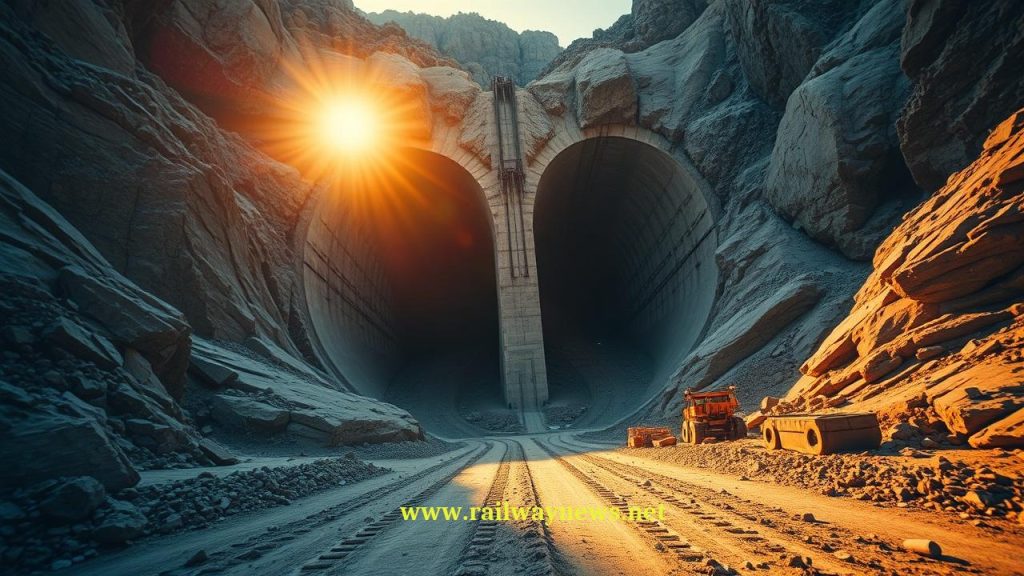
⚡ In Brief: Contractor Webuild has completed excavation for the 1.7 km Novi Ligure rail interconnection tunnels, a key milestone in Italy’s €13.5 billion Milan-Genoa high-capacity corridor project designed to link Ligurian ports with the country’s industrial north.
NOVI LIGURE, ITALY – The final rock face has been broken through on the twin 1.7 km tunnels for the Novi Ligure rail interconnection, marking the completion of excavation for this section. The milestone advances the larger Milan-Genoa high-capacity railway project, which has now reached approximately 96% of its total 87.7 km of excavation work. The overall corridor development involves a total investment exceeding €13.5 billion.
What Is the Full Scope of This Project?
The Novi Ligure interconnection is a technical hub within the Terzo Valico dei Giovi-Genoa Junction project, a new high-capacity rail line connecting the Port of Genoa with the networks towards Milan and Turin. The full project involves constructing approximately 90 km of tunnels, including the 27 km Valico Tunnel, which will be the longest underground railway line in Italy. The system is designed to separate freight and long-distance passenger services from local urban traffic, overcoming the limitations of the existing historical line and boosting capacity for the Ligurian port system.
Key Project Data
| Parameter | Value |
|---|---|
| Project / Contract Name | Milan-Genoa High-Capacity Railway (Novi Ligure Interconnection section) |
| Total Value | > €13.5 billion (for the entire corridor) |
| Parties Involved | Webuild (Contractor), Rete Ferroviaria Italiana (RFI, Client), FS Engineering (Engineering) |
| Timeline / Completion | Excavation complete by early 2025; full commissioning date not disclosed. |
| Country / Corridor | Italy / Genoa-Milan/Turin |
How Does This Compare to Similar Projects?
The project’s scale is comparable to other major European alpine tunneling works, many involving the same contractor. Webuild is a key partner in the Brenner Base Tunnel, a 64 km tunnel system connecting Italy and Austria, which is significantly longer than the 27 km Valico Tunnel in the Genoa project. This demonstrates Webuild’s extensive experience in managing complex geological conditions, including the gas and asbestos challenges overcome at Novi Ligure. While the Italian project focuses on a national logistics corridor, the Brenner project is a core component of the trans-European TEN-T network. The governance model also differs from other national approaches; for instance, the UK utilizes centralized legal procurement frameworks like RM6360 to manage risk and legal services for its major rail initiatives (Source: openaccessgovernment.org).
Editor’s Analysis
This milestone is a tangible sign of progress for one of Italy’s most critical strategic infrastructure projects, essential for shifting freight from road to rail and enhancing the competitiveness of its northern ports. The project’s success hinges on overcoming significant engineering challenges, a core competency of the contractors involved. However, the broader European investment landscape is seeing a capital shift towards technology-driven ventures, which could influence the long-term evolution of rail infrastructure beyond civil works (Source: Payload Space). Future-proofing these massive investments will require an equal focus on digitalization, signalling, and operational technology integration, not just the completion of tunnels and tracks.
FAQ
Q: What is the main purpose of the Novi Ligure interconnection?
A: Its primary purpose is to connect the new high-capacity line with the existing historical line near Novi Ligure. This allows freight and passenger trains to travel to and from Turin without interfering with local rail traffic.
Q: How long is the longest tunnel in the overall Milan-Genoa project?
A: The main tunnel, known as the Valico Tunnel, runs for 27 km underground. This will make it the longest underground railway line in Italy upon completion.
Q: Will this new line impact existing passenger services?
A: The project is designed to separate different types of rail traffic. By moving freight and long-distance trains to the new high-capacity line, it is expected to improve the reliability and capacity of local and regional passenger services on the existing network.

Railway infrastructure, rolling stock and transport technologies specialist focused on global rail industry developments, high-speed rail systems, signaling technologies and freight transportation. Covering railway investments, public transport modernization, rail operations and international mobility projects across Europe, Asia and North America.
RELATED POSTS
September 6, 2026 5:19 am
Hitachi delivered Taiwan's first N700ST high-speed train from Japan in...

September 5, 2026 4:19 pm
CPK launched formal tender talks with four consortia to design...

September 6, 2026 4:12 am
Alstom delivered the first of 100 new G Class trams...

September 5, 2026 7:14 pm
HS2 Ltd signed renegotiated civils contracts with EKFB and Align...
September 6, 2026 1:17 am
Hitachi Toshiba Supreme Consortium confirmed the first of 12 N700ST...
September 6, 2026 6:17 am
Hungary ordered a national ban on most freight trains from...