
Pacific Harbor Line Secures LA Rail Extension to December
Pacific Harbor Line secured an interim rail switching deal through December at the Port of Los Angeles after terminal throughput topped 2.9 million total TEUs.
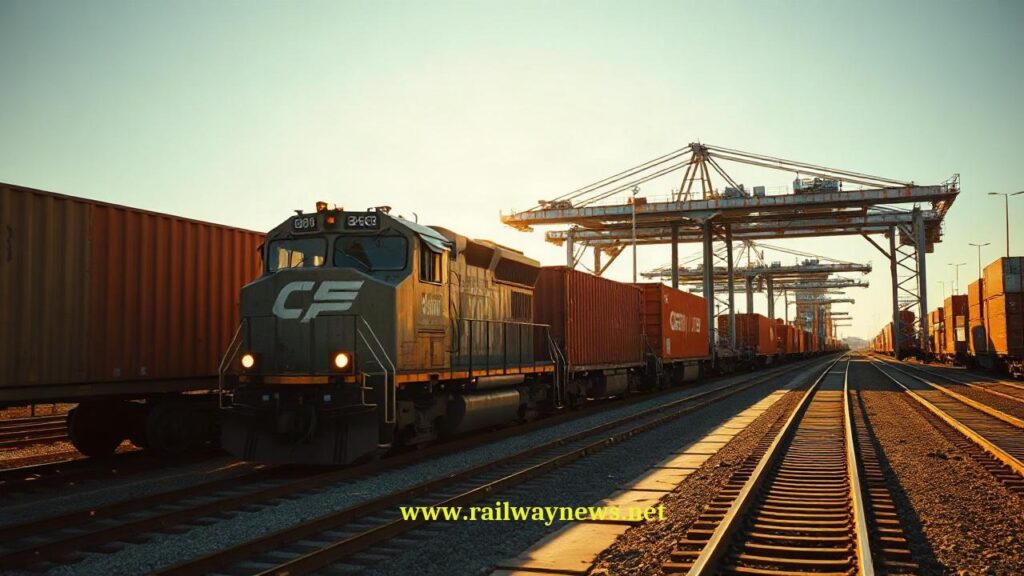
⚡ In Brief: The Port of Los Angeles handled 955,907 TEUs in August as port authorities evaluated competing switching bids between Pacific Harbor Line and Alameda Belt Line to manage terminal rail freight operations.
LOS ANGELES, UNITED STATES – The Port of Los Angeles processed 955,907 20-foot equivalent units (TEUs) in August, completing a three-month throughput record of over 2.9 million TEUs across the summer quarter. Terminal managers handled 500,302 loaded import TEUs as negotiations continued over the operating contract for the complex’s dedicated rail switching network. Incumbent operator Pacific Harbor Line secured an interim contract extension through December while competing bidder Alameda Belt Line seeks operating rights for the San Pedro Bay rail network.
What Does This Contract Cover?
The switching services contract governs dispatching, train classification, and track maintenance across the shared rail network serving marine terminals at the Ports of Los Angeles and Long Beach. Alameda Belt Line, a joint venture owned by Class I carriers Union Pacific and BNSF Railway, is negotiating with port authorities to assume rail switching duties across the complex (Source: FreightWaves, 2026). Pacific Harbor Line, a subsidiary of Anacostia Rail Holdings, currently operates the network under an extension expiring in December, handling terminal transfers for trains entering the 20-mile Alameda Corridor. During August, the rail-dependent port processed 500,302 loaded import TEUs, 115,561 loaded export TEUs, and 340,044 empty containers, bringing total summer traffic across June, July, and August to more than 2.9 million TEUs. Contract values and concession fee splits between the ports and the operating railroads were not disclosed during active procurement negotiations.
Key Contract Data
| Parameter | Value |
|---|---|
| Contract Name | San Pedro Bay Ports Rail Switching Operating Agreement |
| Total Value | Not disclosed |
| Parties Involved | Port of Los Angeles, Port of Long Beach, Pacific Harbor Line (Anacostia Rail Holdings), Alameda Belt Line (Union Pacific, BNSF) |
| Timeline / Completion | Interim extension expires December; procurement selection ongoing |
| Country / Corridor | United States / Alameda Corridor |
How Does This Compare to Similar Contracts?
Short-line switching operating concessions at major North American intermodal hubs differ significantly between neutral short-line operators and Class I carrier joint ventures. Pacific Harbor Line has operated the San Pedro Bay switching concession under a carrier-neutral model since 1998, whereas the proposed Alameda Belt Line structure would return dispatching authority directly to competing Class I operators Union Pacific and BNSF (Source: Port Technology, 2026). Outside traditional trackage rights agreements, alternative technology ventures are seeking regional market share; Los Angeles startup Parallel Systems raised $100 million in private funding to develop autonomous, battery-electric container railcars designed to move port freight directly onto regional lines and bypass highway routes (Source: Los Angeles Times, 2025). Independent market data indicates the broader rail freight market was valued at $370.0 billion in 2025 and is projected to reach $534.6 billion by 2034, growing at a 5.5% compound annual growth rate as intermodal gateway demand expands (Source: Market.us, 2025).
Editor’s Analysis
Transferring San Pedro Bay rail switching rights from an independent short line to an Alameda Belt Line joint venture would consolidate direct Class I operational control over terminal dwell times at the expense of carrier-neutral dispatching. Sustained volume pressure across the Alameda Corridor reflects wider market forecasts indicating steady compound annual intermodal expansion through 2034 (Source: Market.us, 2025). As monthly volumes routinely top 900,000 TEUs, port leadership must balance joint-line switching economies against open-access service guarantees for non-affiliated freight forwarders.
FAQ
Q: Who currently operates rail switching at the Port of Los Angeles?
A: Pacific Harbor Line, a subsidiary of Anacostia Rail Holdings, manages switching operations across both the Port of Los Angeles and Port of Long Beach. The dual-port authority extended Pacific Harbor Line’s operating agreement through December while contract negotiations continue.
Q: What is the financial value of the proposed Alameda Belt Line switching agreement?
A: The contract value has not been officially disclosed by port authorities or the bidding railroads. Commercial terms remain confidential while the competitive procurement process between Alameda Belt Line and Pacific Harbor Line is ongoing.
Q: Will the switching contract review disrupt intermodal freight movements?
A: Switching operations remain fully active under Pacific Harbor Line, which cleared a record 2.9 million TEUs between June and August without service stoppages. A transfer to Alameda Belt Line would alter terminal dispatching administration rather than physical mainline train access over the Alameda Corridor.

Railway infrastructure, rolling stock and transport technologies specialist focused on global rail industry developments, high-speed rail systems, signaling technologies and freight transportation. Covering railway investments, public transport modernization, rail operations and international mobility projects across Europe, Asia and North America.
RELATED POSTS

October 1, 2026 7:09 am
United States regulators confirmed a September 30 deadline for the...

October 1, 2026 12:13 am
Illinois approved $1.5 billion annually for the Northern Illinois Transit...

October 1, 2026 6:10 am
Amtrak approved a System Expansion Committee on July 30 to...
October 1, 2026 4:10 am
DART launched two public ridership dashboards in March 2026 to...
October 1, 2026 3:12 am
Greenbrier confirmed Brian Comstock as new president and CEO effective...
October 1, 2026 5:14 am
Siemens confirmed delivery of the first new S200 train to...