
Siemens Delivers First S200 Train In $435M Cleveland Order
Siemens confirmed delivery of the first new S200 train to Cleveland under a $435 million fleet contract to replace 74 legacy rail vehicles across three lines.
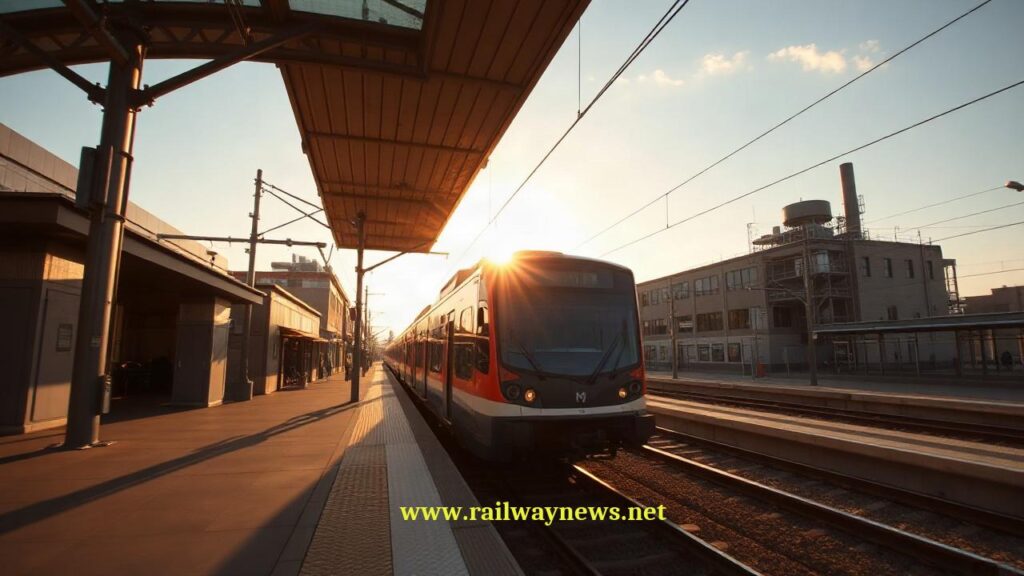
⚡ In Brief: The Greater Cleveland Regional Transit Authority has received its first Siemens S200 railcar under a $435 million capital program to replace 74 legacy transit vehicles across Cleveland, Ohio.
CLEVELAND, UNITED STATES – The Greater Cleveland Regional Transit Authority (GCRTA) has taken delivery of the first Siemens Model S200 trainset under a $435 million fleet renewal program. The delivery marks the agency’s first procurement of newly built rapid transit rolling stock since the 1980s. Testing and crew instruction will precede regular revenue operations across the system’s Red, Blue, and Green lines.
What Is the Full Scope of This Project?
The $435 million capital program replaces GCRTA’s combined legacy fleet of 74 railcars with 54 standardized Siemens S200 light-rail vehicles. The incoming trainsets will retire 40 heavy-rail vehicles and 34 light-rail vehicles that have exceeded 40 years of service, establishing a unified rolling stock platform across the entire Cleveland rail network. Each S200 car includes 52 seats, dedicated positions for four wheelchairs and two bicycles, automated infotainment hardware, and a dedicated operator cab climate system. The equipment incorporates cold-weather equipment such as heated windshields and overhead wire ice-cutting devices to maintain winter service reliability. Operating metrics project that the S200 fleet will extend mean distance between service failures from 10,000 miles to 80,000 miles, lowering annual maintenance overhead by roughly $7 million. Delivery records indicate initial dynamic testing began following delivery milestones tracked between late 2025 and mid-2026, leading into an extended commissioning phase before revenue service opens (Source: NEOtrans, 2026).
Key Project Data
| Parameter | Value |
|---|---|
| Project / Contract Name | GCRTA Railcar Fleet Replacement Program |
| Total Value | $435 million |
| Parties Involved | Greater Cleveland Regional Transit Authority (GCRTA), Siemens Mobility |
| Timeline / Completion | First car delivered 2025–2026; complete batch delivery schedule was not disclosed |
| Country / Corridor | United States / Cleveland Red, Blue, and Green Lines |
How Does This Compare to Similar Projects?
Cleveland’s transition to a single vehicle model reflects a wider North American push to replace life-expired passenger rail fleets with common-platform equipment. The North American rail market is projected to reach $8.90 billion by 2026, with the U.S. domestic segment accounting for $6.30 billion as operators address decades-old equipment backlogs (Source: Fortune Business Insights, 2024). Operational improvements targeted by GCRTA mirror broader regional performance standards; for instance, contracted operations managed by Alstom for Ontario’s Metrolinx achieved an on-time performance rate exceeding 97% across 117,020 GO rail trips and 56,494 UP Express trips during 2024–2025 (Source: Metrolinx, 2025). Independent verification of delivery sequencing indicates an eight-to-twelve month gap between vehicle arrival and fare-paying service to complete system-wide signalling integration (Source: NEOtrans, 2026). Direct per-car maintenance expenditure metrics from regional peers operating dual heavy- and light-rail legacy assets were not publicly available at time of publication.
Editor’s Analysis
Unifying distinct light-rail and heavy-rail operations onto the Siemens S200 platform eliminates the structural cost penalties of running parallel maintenance facilities, parts inventories, and training protocols. This standardization aligns with a broader North American passenger rail modernization drive that will expand regional capital asset value to $8.90 billion by 2026 (Source: Fortune Business Insights, 2024). Mid-sized U.S. transit agencies will likely treat GCRTA’s fleet convergence model as a template to mitigate volatile maintenance expenses on aging rapid transit infrastructure.
FAQ
Q: When will the new Siemens S200 trains enter passenger service in Cleveland?
A: Revenue service is scheduled to begin in summer 2027 following approximately twelve months of track qualification and personnel training. Testing on the GCRTA mainline begins immediately using the initial pilot car delivered from Siemens.
Q: How does the new fleet reduce maintenance costs for GCRTA?
A: The agency projects annual maintenance savings of $7 million as vehicle reliability rises from 10,000 miles to 80,000 miles between service failures. Fleet standardization also replaces two separate mechanical designs with a single platform across all lines.
Q: Has the full delivery timeline for all 54 vehicles been finalized?
A: This has not been officially confirmed. While the pilot vehicle has been transferred to Cleveland for dynamic runs, the detailed delivery sequence for the final production batch remains unannounced.

Railway infrastructure, rolling stock and transport technologies specialist focused on global rail industry developments, high-speed rail systems, signaling technologies and freight transportation. Covering railway investments, public transport modernization, rail operations and international mobility projects across Europe, Asia and North America.
RELATED POSTS

October 8, 2026 1:15 pm
Alstom secured a €1bn contract to build 13 automated trains,...

October 1, 2026 7:09 am
United States regulators confirmed a September 30 deadline for the...

October 8, 2026 12:18 pm
Siemens Mobility signed an agreement with VinSpeed to supply 350...

October 4, 2026 5:14 pm
Alstom secured a CA$4.7 billion order from VIA Rail Canada...

October 5, 2026 6:12 pm
AECOM and Jacobs secured a contract in September 2026 to...

October 1, 2026 12:13 am
Illinois approved $1.5 billion annually for the Northern Illinois Transit...