
Ottawa O-Train East Extension: Track Laying Begins
The O-Train East Extension marks a pivotal phase in Ottawa’s ambitious Stage 2 LRT project, signaling the commencement of crucial track installation that will transform urban transit accessibility for over 100,000 residents.
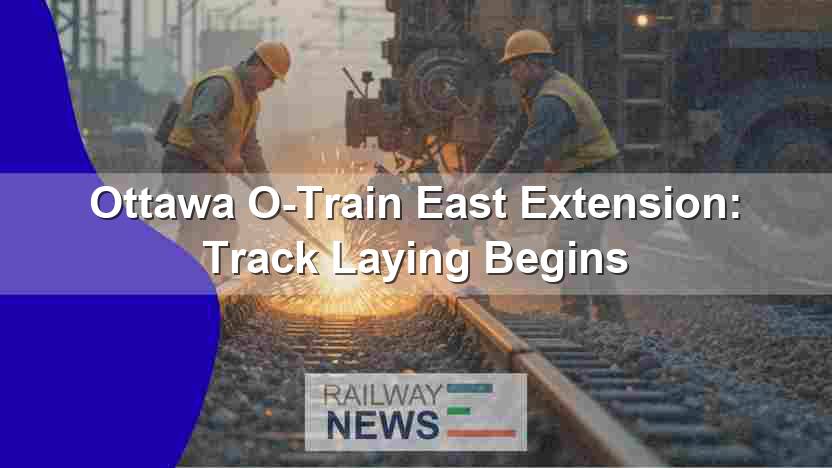
This article explores the significant milestone of track installation commencement for the O-Train East Extension in Ottawa, Canada. This project represents a crucial component of the city’s ambitious Stage 2 Light Rail Transit (LRT) expansion, a $3.63 billion (C$4.66 billion) undertaking. The expansion is not merely about adding kilometers of track and stations; it’s about fundamentally reshaping Ottawa’s transit landscape, impacting its economic development, urban planning, and the daily lives of its residents. The project’s complexity, encompassing intricate engineering, logistical challenges, and substantial financial investment, will be examined in detail. Additionally, the article will analyze the broader implications of such large-scale transit projects, considering their impact on community development, environmental sustainability, and the future of urban mobility in Canadian cities. The success of this project will serve as a case study for future LRT expansions across North America, influencing decision-making and planning for similar initiatives.
The O-Train East Extension: A Key Component of Ottawa’s Stage 2 LRT
The O-Train East Extension, a 12.5km addition to Ottawa’s existing LRT network, is a pivotal part of the city’s Stage 2 LRT project. This extension will connect the existing system at Blair Road to Trim Road, incorporating five new stations and significantly improving transit accessibility for the rapidly growing communities of Orléans, Blackburn Hamlet, and Beacon Hill. The commencement of track laying, involving approximately 32,000 concrete ties, signals a crucial transition from planning and design to the physical construction phase. This phase is both complex and time-sensitive, demanding precise coordination between various contractors and stakeholders to ensure timely completion and adherence to stringent safety standards. The project’s success depends on meticulous planning and execution, factors critical for managing the considerable logistical challenges inherent in urban rail construction.
Engineering and Construction Challenges
The construction of the O-Train East Extension presents several significant engineering and logistical challenges. Laying 32,000 concrete ties across 12.5km requires precise surveying and alignment to ensure optimal track geometry and safe train operation. The process must minimize disruption to existing infrastructure and traffic flow, demanding careful planning and coordination with other ongoing projects within the city. Managing the environmental impact of construction, such as minimizing noise and air pollution, is crucial. Moreover, the project’s success hinges on the timely procurement and delivery of materials, skilled labor, and efficient management of the construction workforce. The integration of new stations with existing urban fabric necessitates detailed site planning, adherence to building codes, and seamless integration with surrounding infrastructure.
Funding and Stakeholder Collaboration
The Stage 2 LRT project, including the O-Train East Extension, enjoys tripartite funding from the federal government, the Province of Ontario, and the City of Ottawa. This collaborative funding model highlights the project’s significance for the region’s economic development and transportation infrastructure. The shared responsibility underscores the recognition of LRT’s importance in fostering sustainable urban growth and improving the quality of life for residents. Effective collaboration amongst these stakeholders is paramount for project success. This includes transparent communication, efficient decision-making, and the ability to resolve potential conflicts promptly. Regular progress meetings, robust communication channels, and a well-defined dispute resolution mechanism are all integral components of a collaborative project management approach.
Impact and Future Implications
The completed O-Train East Extension will provide substantial benefits to Ottawa residents. It will offer a convenient and efficient transit option for residents in the eastern part of the city, reducing reliance on private vehicles and mitigating traffic congestion. This will lead to improved air quality and a reduction in greenhouse gas emissions, contributing to a more sustainable urban environment. The improved connectivity will also boost economic activity in the served communities, facilitating access to employment centers, shopping areas, and educational institutions. Additionally, the successful completion of the O-Train East Extension will serve as a valuable case study for future LRT projects, informing infrastructure development and planning in other Canadian cities and beyond. The lessons learned regarding project management, stakeholder collaboration, and mitigation of construction challenges will prove invaluable for future endeavors.
Conclusions
The commencement of track installation for the O-Train East Extension marks a significant milestone in Ottawa’s ambitious Stage 2 LRT project. This $3.63 billion (C$4.66 billion) endeavor showcases a substantial commitment to improving public transportation in the city. The project’s complexity, encompassing intricate engineering challenges, meticulous logistical planning, and effective stakeholder collaboration, exemplifies the scale and ambition of modern urban rail expansion. The extension’s 12.5km route, incorporating five new stations, will dramatically improve transit accessibility for the growing communities of Orléans, Blackburn Hamlet, and Beacon Hill. Beyond immediate benefits, the project’s success will serve as a model for future LRT projects across Canada and North America. The seamless integration of various funding partners – the federal government, the Province of Ontario, and the City of Ottawa – signifies a shared vision for sustainable urban development and improved quality of life. The lessons learned throughout the construction process, from managing complex engineering challenges to fostering effective stakeholder collaboration, will be invaluable for future large-scale infrastructure initiatives. The long-term impact of the O-Train East Extension will extend beyond improved transportation options, fostering economic growth, environmental sustainability, and a more vibrant and connected urban environment for Ottawa residents. The success of this project reinforces the crucial role of public transit in shaping the future of sustainable urban development.

Railway infrastructure, rolling stock and transport technologies specialist focused on global rail industry developments, high-speed rail systems, signaling technologies and freight transportation. Covering railway investments, public transport modernization, rail operations and international mobility projects across Europe, Asia and North America.
RELATED POSTS

October 8, 2026 1:15 pm
Alstom secured a €1bn contract to build 13 automated trains,...

October 1, 2026 7:09 am
United States regulators confirmed a September 30 deadline for the...

October 8, 2026 12:18 pm
Siemens Mobility signed an agreement with VinSpeed to supply 350...

October 4, 2026 5:14 pm
Alstom secured a CA$4.7 billion order from VIA Rail Canada...

October 5, 2026 6:12 pm
AECOM and Jacobs secured a contract in September 2026 to...

October 4, 2026 11:08 pm
Sound Transit confirmed the September 30 opening of Seattle Pinehurst...