
Oregon Container Terminal Revived: BNSF, UP Rail Hub Secured
Oregon Container Terminal launches with Harbor Industrial, featuring BNSF and UP on-dock rail. This revitalizes a key intermodal hub, ensuring vital freight access.
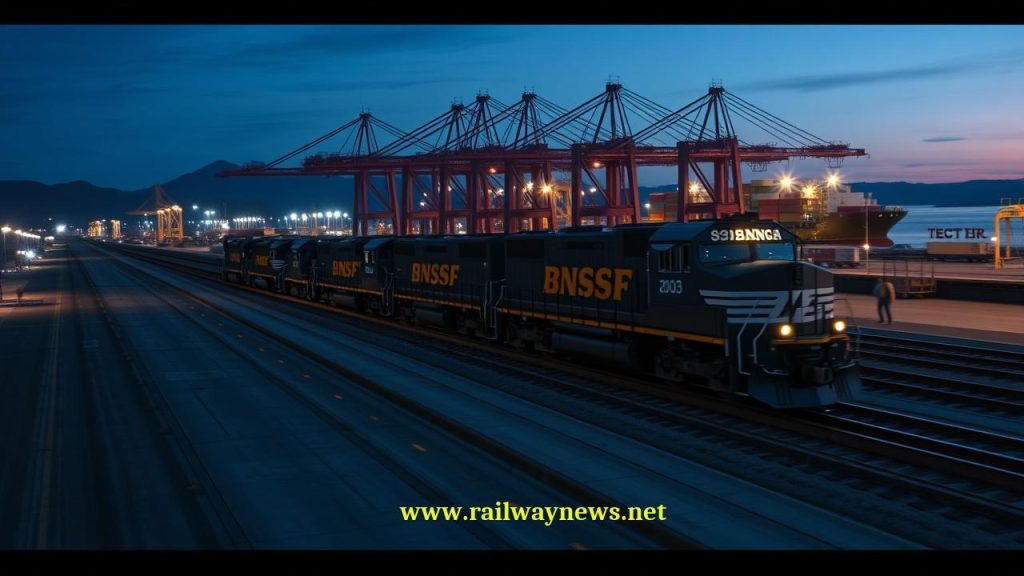
PORTLAND, OR — Harbor Industrial Services has officially commenced operations at the Port of Portland’s Terminal 6, rebranding the facility as the Oregon Container Terminal (OCT) and ending years of uncertainty for regional shippers. The move, effective January 1, 2026, revitalizes the state’s only container terminal, a 419-acre facility featuring a critical eight-track on-dock railyard served by both BNSF and Union Pacific.
| Category | Details |
|---|---|
| Terminal Name | Oregon Container Terminal (OCT) |
| Operator | Harbor Industrial Services |
| Operational Start | January 1, 2026 (Intermodal); January 7, 2026 (Full Service) |
| Key Infrastructure | 419 acres, 5 ship berths, 8-track on-dock rail yard |
| Class I Rail Service | BNSF Railway, Union Pacific Railroad |
Main Body:
In a pivotal development for Pacific Northwest logistics, Harbor Industrial Services has taken full operational control of the Port of Portland’s container terminal under a new seven-year contract. The facility, now named the Oregon Container Terminal (OCT), began intermodal container services on January 1, 2026, with a formal launch of vessel, rail, and break bulk services scheduled for January 7. This transition marks a new chapter for the terminal, which will be a crucial gateway for Oregon, Southern Washington, and Idaho’s agriculture, manufacturing, technology, and retail sectors.
The OCT’s infrastructure is central to its strategic importance. The expansive 419-acre site includes five deep-water berths, but for the rail industry, the highlight is the eight-track on-dock rail yard. This facility provides direct and efficient interchange with Class I carriers BNSF Railway and Union Pacific, minimizing drayage costs and transit times for inland shippers. As the OCT begins its new era, the move comes at a time when competing ports are also investing heavily in modernization. For instance, nearby Port of Seattle enhanced its shore power capabilities in 2025, and globally, the Port of Rotterdam is constructing a massive shore power system, signaling a strong industry trend towards sustainable and efficient infrastructure upgrades that the OCT will now be better positioned to pursue.
The new operating agreement resolves a protracted period of instability that threatened the very existence of container shipping in Portland. Port officials had been preparing to cease container operations in late 2025 before the new contract with Harbor Industrial was approved in September of that year. Harbor Industrial is not new to the facility, having provided stevedore and labor intermediary services since 2018. However, this new agreement elevates the company to the role of sole operator, providing the long-term stability needed to attract and retain shipping lines and restore confidence in the crucial trade gateway.
Key Takeaways
- Service Stability: The seven-year contract with Harbor Industrial Services secures the future of Oregon’s only container terminal, averting a planned shutdown.
- On-Dock Rail Advantage: Direct service from BNSF and Union Pacific at the terminal’s eight-track yard is a major competitive advantage for intermodal freight throughout the region.
- New Brand, New Beginning: The rebranding to Oregon Container Terminal (OCT) signals a fresh start aimed at rebuilding market confidence and attracting new vessel services.
Editor’s Analysis
The revival of Terminal 6 as the Oregon Container Terminal is more than a local victory; it’s a significant stabilization event for the entire Pacific Northwest rail-intermodal network. For years, the uncertainty in Portland has forced shippers to truck containers to the congested ports of Seattle and Tacoma, adding cost, emissions, and strain on regional infrastructure. By ensuring the viability of a major port with direct BNSF and UP on-dock access, this move reinforces a critical rail corridor for agricultural and manufacturing exports from the American interior. It demonstrates that mid-size ports with strong rail connectivity are indispensable assets in creating a more resilient and efficient national supply chain, providing a much-needed alternative to the mega-ports and proving the symbiotic relationship between maritime and rail operations.
Frequently Asked Questions
What is the Oregon Container Terminal (OCT)?
The Oregon Container Terminal (OCT) is the new name for the Port of Portland’s Terminal 6. It is the only container terminal in Oregon and is now fully operated by Harbor Industrial Services as of January 2026.
Which major railroads serve the OCT?
The terminal features an eight-track on-dock rail yard with direct service from two Class I railroads: BNSF Railway and Union Pacific Railroad, providing extensive access to North American markets.
Why is this new operating agreement significant?
This agreement is significant because it provides long-term operational stability for the terminal, preventing its potential closure. It secures a vital trade gateway for shippers in Oregon, Southern Washington, and Idaho, and reinforces a key intermodal node in the Pacific Northwest.

Railway infrastructure, rolling stock and transport technologies specialist focused on global rail industry developments, high-speed rail systems, signaling technologies and freight transportation. Covering railway investments, public transport modernization, rail operations and international mobility projects across Europe, Asia and North America.
RELATED POSTS

October 1, 2026 7:09 am
United States regulators confirmed a September 30 deadline for the...

October 8, 2026 1:15 pm
Alstom secured a €1bn contract to build 13 automated trains,...

October 4, 2026 5:14 pm
Alstom secured a CA$4.7 billion order from VIA Rail Canada...

October 1, 2026 12:13 am
Illinois approved $1.5 billion annually for the Northern Illinois Transit...

October 6, 2026 2:14 am
Union Pacific launched export rail shipments with Ferromex to deliver...

October 1, 2026 6:10 am
Amtrak approved a System Expansion Committee on July 30 to...