
ÖBB Cuts Graffiti Damage 51% to €2.2 Million for 2025
Austrian Federal Railways (ÖBB) expanded its security network in Austria, reducing graffiti damage 51% to €2.2 million for 2025.
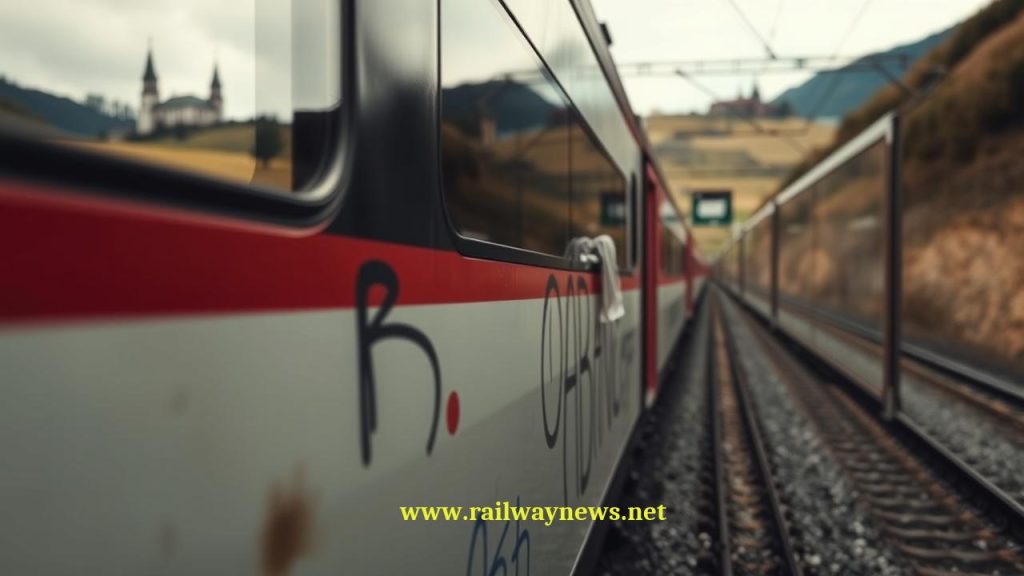
⚡ In Brief: Austrian Federal Railways (ÖBB) reduced graffiti-related damages to EUR 2.2 million in 2025, a 51% decrease from the previous year, by implementing a security strategy that resulted in smaller, less costly acts of vandalism despite a rise in total incidents.
VIENNA, AUSTRIA – Austrian Federal Railways (ÖBB) has reported a significant reduction in graffiti-related costs for 2025, with damages totaling EUR 2.2 million. This represents a 51% decrease from the EUR 4.5 million recorded in 2024. The cost reduction was achieved despite a 5.5% increase in the number of incidents, which rose to 2,859.
What Happened and What Is the Scale of Impact?
The operator’s security strategy successfully reduced the severity and scale of individual vandalism acts. The total surface area requiring cleaning on trains fell by 28%, from 52,418 square meters in 2024 to 37,701 square meters in 2025. ÖBB attributes this to an expanded surveillance network and faster response times from security personnel, which limits the time available for extensive graffiti. The cost of the security measures themselves was not disclosed in the report.
Key Incident Data
| Parameter | Value |
|---|---|
| Incident Type | Vandalism (Graffiti) |
| Total Value | EUR 2.2 million (Direct cost of damage in 2025) |
| Parties Involved | Austrian Federal Railways (ÖBB), Austrian Police |
| Timeline / Completion | Calendar Year 2025 |
| Country / Corridor | Austria (Nationwide Network) |
How Does This Compare to Similar Incidents on This Network?
Comparable data for annual graffiti removal costs from other major European national rail operators was not publicly available at the time of publication. The year-over-year data from ÖBB itself provides the most direct comparison, showing a EUR 2.3 million net reduction in damage costs. This contrasts with general trends of rising operational and maintenance expenditures across the sector. Without figures from operators like Deutsche Bahn or SBB, a direct international benchmark for the effectiveness of ÖBB’s strategy cannot be established.
Editor’s Analysis
ÖBB’s results demonstrate a successful strategic shift from reactive cleaning to proactive prevention and mitigation. The data suggests that investing in security measures to reduce the *severity* of incidents can yield a greater financial return than focusing solely on reducing incident *frequency*. While the cost of implementing the enhanced security is unknown, the 51% reduction in damages presents a strong case for this model, which could serve as a benchmark for other urban and national rail operators facing persistent vandalism. This focus on operational efficiency aligns with broader industry trends where operators seek cost-saving measures amid large-scale capital investments, such as those seen in North American high-speed rail projects. (Source: Alto, Sound Transit).
FAQ
Q: Why did ÖBB’s graffiti costs decrease if the number of incidents increased?
A: The costs decreased because ÖBB’s security strategy, including enhanced surveillance and faster response, resulted in smaller and less complex graffiti. This reduced the surface area needing cleaning by 28%, making each incident less expensive to resolve.
Q: How much money did ÖBB save on graffiti removal in 2025 compared to 2024?
A: ÖBB saved EUR 2.3 million in 2025. The total cost of damage dropped from EUR 4.5 million in 2024 to EUR 2.2 million in 2025.
Q: What is the impact of graffiti on railway operations?
A: Beyond aesthetic damage, graffiti requires trains to be taken out of service for cleaning, which can reduce network capacity and lead to cancellations. It can also obscure critical safety markings and negatively affect passengers’ perception of safety.

Railway infrastructure, rolling stock and transport technologies specialist focused on global rail industry developments, high-speed rail systems, signaling technologies and freight transportation. Covering railway investments, public transport modernization, rail operations and international mobility projects across Europe, Asia and North America.
RELATED POSTS

October 8, 2026 1:15 pm
Alstom secured a €1bn contract to build 13 automated trains,...

October 1, 2026 7:09 am
United States regulators confirmed a September 30 deadline for the...

October 8, 2026 12:18 pm
Siemens Mobility signed an agreement with VinSpeed to supply 350...

October 4, 2026 5:14 pm
Alstom secured a CA$4.7 billion order from VIA Rail Canada...

October 5, 2026 6:12 pm
AECOM and Jacobs secured a contract in September 2026 to...

October 1, 2026 12:13 am
Illinois approved $1.5 billion annually for the Northern Illinois Transit...