
NSW Rail Upgrade: Boosting Freight Capacity
The New South Wales government’s significant infrastructure investment in two key freight rail projects—Botany Rail Duplication and Cabramatta Loop—is aimed at addressing the growing demand for cargo handling at Port Botany, reducing road congestion, minimizing transportation delays, and enhancing overall freight efficiency.
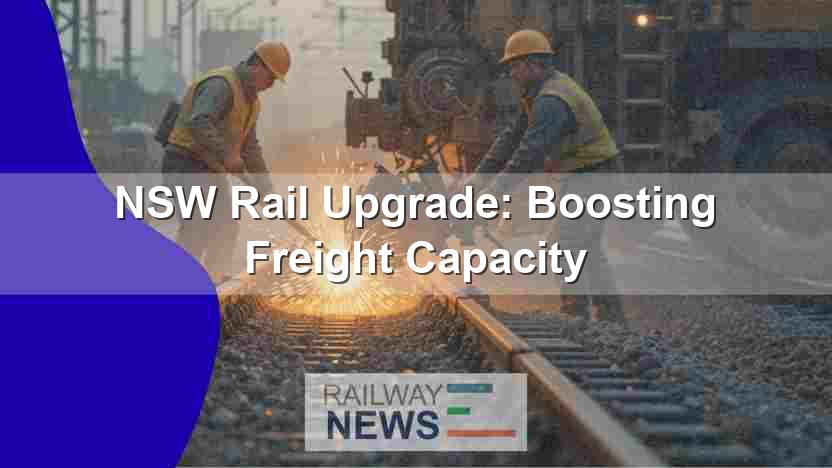
This article analyzes the significant infrastructure investment undertaken by the New South Wales (NSW) government, focusing on two key freight rail projects: the Botany Rail Duplication and the Cabramatta Loop projects. These projects represent a crucial step towards addressing the growing freight transportation demands within the state, particularly in the Sydney metropolitan area. The increasing volume of cargo handled by Port Botany, the state’s largest container port, necessitates a substantial upgrade to the existing rail network. Failure to adequately address this growing demand would lead to increased road congestion, significant economic losses due to transportation delays, and heightened environmental concerns associated with increased truck traffic. The analysis will examine the rationale behind these investments, their projected impact on freight efficiency and road traffic, the economic benefits, and the overall strategic implications for NSW’s transportation infrastructure.
Botany Rail Duplication: Addressing Port Botany’s Capacity Constraints
The duplication of the single freight rail track between Mascot and Botany is paramount to handling the projected 77% increase in freight volume at Port Botany by 2036, from 14.4 million tonnes in 2016 to 25.5 million tonnes. This significant expansion in cargo necessitates a corresponding increase in rail capacity to avoid bottlenecks and delays. Duplicating the track will allow for a substantial increase in the number of freight trains operating along this crucial corridor. The project’s success hinges on meticulous planning and execution to minimize disruptions during construction and ensure seamless integration with existing infrastructure. Each additional freight train utilizing this upgraded line has the potential to remove up to 54 trucks from Sydney’s congested roads, directly impacting traffic flow and reducing transportation times.
Cabramatta Loop Project: Enhancing Network Efficiency
The construction of a new passing loop on the freight line between Cabramatta and Warwick Farm stations is designed to enhance the overall efficiency of the rail network. Passing loops allow trains to overtake slower-moving trains, minimizing delays and optimizing the flow of freight traffic. This project, in conjunction with the Botany Rail Duplication, forms a detailed strategy to improve rail network performance and reduce the reliance on road transport. The strategic placement of this passing loop is crucial; its location has been meticulously selected to maximize its impact on the overall network efficiency, minimizing delays and maximizing throughput. This seemingly smaller project plays a critical role in the broader plan to alleviate congestion and increase the overall capacity of the rail freight system.
Economic and Social Benefits: Job Creation and Economic Stimulus
Beyond the improvement in freight transport, these projects deliver significant economic and social benefits. The NSW government estimates that the combined projects will inject approximately A$400 million (approximately US$260 million) into the local economy and create around 500 local jobs during the construction phase. This injection of capital into the local economy stimulates growth, supports local businesses, and contributes to a more robust and resilient regional economy. The increased efficiency in freight transport also translates into cost savings for businesses, which can ultimately benefit consumers through more competitive pricing. The reduction in road congestion, a significant benefit, improves quality of life for residents and reduces the environmental impact of freight transport.
Conclusion: A Vision for Sustainable Freight Transportation
The NSW government’s approval of the Botany Rail Duplication and Cabramatta Loop projects marks a significant investment in the future of freight transportation within the state. These projects address the pressing need for increased rail capacity to meet the growing demands of Port Botany and, consequently, the broader Sydney metropolitan area. The projects are not merely infrastructure upgrades; they represent a strategic shift toward a more efficient, sustainable, and economically beneficial freight transportation system. By reducing reliance on road transport, these projects directly contribute to reducing traffic congestion, improving air quality, and lessening the environmental impact of freight movement. The estimated A$400 million economic stimulus and 500 jobs created during construction highlight the broader socio-economic benefits. The successful completion of these projects, scheduled for mid-2023 (Cabramatta Loop) and late-2024 (Botany Rail Duplication), will significantly improve the efficiency and capacity of NSW’s freight rail network, setting a precedent for future infrastructure development and sustainable transportation solutions. The projected increase in freight capacity, coupled with the economic and environmental benefits, positions NSW as a leader in implementing forward-thinking solutions to manage the challenges of a rapidly growing freight sector. The success of these projects will depend on effective project management, careful coordination with other stakeholders, and ongoing monitoring to ensure their long-term effectiveness and contribution to the state’s economic growth and sustainability.

Railway infrastructure, rolling stock and transport technologies specialist focused on global rail industry developments, high-speed rail systems, signaling technologies and freight transportation. Covering railway investments, public transport modernization, rail operations and international mobility projects across Europe, Asia and North America.
RELATED POSTS

October 8, 2026 1:15 pm
Alstom secured a €1bn contract to build 13 automated trains,...

October 1, 2026 7:09 am
United States regulators confirmed a September 30 deadline for the...

October 8, 2026 12:18 pm
Siemens Mobility signed an agreement with VinSpeed to supply 350...

October 4, 2026 5:14 pm
Alstom secured a CA$4.7 billion order from VIA Rail Canada...

October 5, 2026 6:12 pm
AECOM and Jacobs secured a contract in September 2026 to...

October 4, 2026 11:08 pm
Sound Transit confirmed the September 30 opening of Seattle Pinehurst...