
Norway’s $2B Rail Upgrade: Alstom Coradia Nordic Trains
This article explores how Alstom has secured a substantial $2.05 billion contract with Norske Tog (NT) to deliver up to 200 Coradia Nordic regional trains, marking a pivotal investment in Norway’s railway modernization and enhancing passenger capacity while integrating advanced technologies for efficient rail operations.
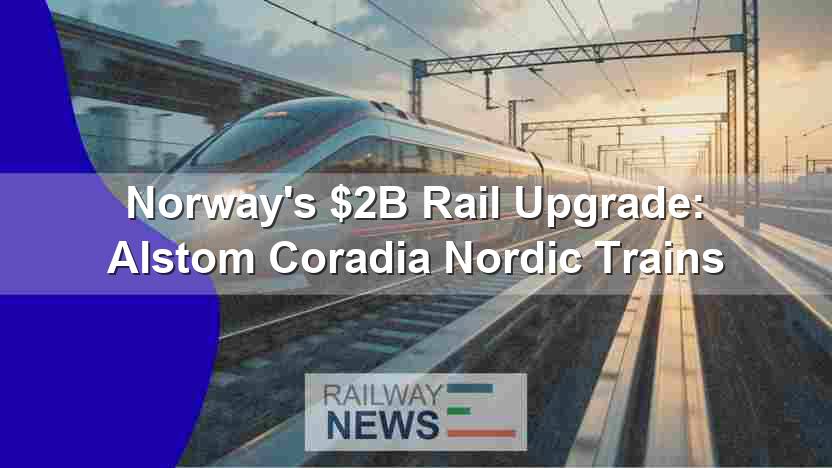
This article examines the significant contract awarded to Alstom by Norske Tog (NT), the Norwegian national railway infrastructure manager, for the delivery of up to 200 Coradia Nordic regional trains. This substantial agreement, valued at $2.05 billion (€1.8 billion), represents a considerable investment in modernizing Norway’s railway system and enhancing its capacity. The project goes beyond simple train procurement; it encompasses a wide range of aspects, including advanced technological integration, adaptation to challenging environmental conditions, and long-term maintenance considerations. We will delve into the technical specifications of the trains, the strategic implications of this contract for both Alstom and the Norwegian railway network, and the broader context of sustainable and efficient rail transportation in the region. The analysis will also consider the logistical challenges inherent in such a large-scale project, including manufacturing, assembly, testing, and deployment across the Norwegian rail network. Finally, the article will explore the long-term impacts of this investment on passenger experience, network efficiency, and the future of railway technology in Norway and beyond.
Coradia Nordic Train Specifications and Technological Advancements
The Coradia Nordic trains, boasting a maximum speed of 160 km/h, are specifically customized for the Norwegian climate and rail infrastructure. Each six-car trainset will accommodate 778 passengers – a significant increase (nearly 40%) over the capacity of the trains they replace. This increased capacity is crucial for addressing the growing passenger demand on busy lines in the Oslo and Viken regions. The trains are equipped with an advanced odometry system designed to function reliably in harsh winter conditions. Additionally, the integration of the European Train Control System (ETCS) signaling solution ensures interoperability and enhances safety. The use of ETCS is a key element in improving the efficiency and safety of the Norwegian railway system, allowing for higher speeds and more frequent services. The robust design and advanced technological features demonstrate a commitment to reliable and efficient rail operations in a challenging environment.
Strategic Implications for Alstom and the Norwegian Rail Network
For Alstom, this contract reinforces its position as a leading provider of rolling stock in the Nordic region. The order for up to 200 trains represents a significant boost to the company’s order book and underscores its ability to deliver complex, large-scale projects. The project also highlights Alstom’s expertise in adapting its products to meet specific regional requirements. The assembly of the trains at Alstom’s facility in Salzgitter, Germany, combined with on-site work in Norway for project management, testing, and training, underscores a collaborative approach that leverages both international expertise and local workforce development. For Norske Tog, the investment signals a commitment to upgrading its fleet and improving the overall efficiency and passenger experience of its rail network. This modernization is essential to support economic growth and sustainability goals in Norway.
Project Management and Logistical Challenges
Successfully delivering 200 trains presents considerable logistical challenges. The project involves careful coordination across various stages, from manufacturing in Salzgitter to final assembly, testing, and deployment across the Norwegian railway network. Project management needs to address potential delays, ensuring that the delivery schedule is met and that all technical specifications are adhered to. This includes managing the supply chain, ensuring the availability of necessary components, and coordinating the activities of diverse teams across different geographical locations. Effective communication and risk mitigation strategies will be crucial to the successful completion of this ambitious project.
Sustainability and Long-Term Impacts
While the article does not explicitly detail the environmental impact, the use of electric locomotives and the focus on increased capacity strongly suggest an underlying commitment to sustainability. Electric trains inherently reduce greenhouse gas emissions compared to diesel-powered alternatives, contributing to Norway’s broader environmental goals. Increased capacity leads to less congestion, improved efficiency, and a reduction in overall energy consumption per passenger. The long-term impacts of this project include improved passenger comfort, increased network capacity, and a more sustainable and efficient rail system. This investment not only addresses current passenger needs but also lays the foundation for future growth and development of Norway’s railway infrastructure.
Conclusion
The Alstom contract to supply up to 200 Coradia Nordic trains to Norske Tog represents a significant milestone in the modernization of Norway’s railway network. This $2.05 billion (€1.8 billion) investment highlights the importance of strategic infrastructure projects in supporting economic growth and enhancing the passenger experience. The project’s scope goes beyond simply delivering trains; it includes the integration of advanced technologies like ETCS (European Train Control System) and specialized adaptations for the Norwegian climate. The logistical complexities of such a large-scale undertaking underscore the need for robust project management and international collaboration. The long-term impact extends beyond immediate capacity improvements; it encompasses a commitment to sustainability through the use of electric trains and contributes to building a more efficient and environmentally friendly rail system. This project serves as a prime example of the crucial role of modern railway technology in supporting a nation’s economic and environmental goals. The increased capacity provided by these trains will directly alleviate congestion and improve the travel experience for commuters in the Oslo and Viken regions. The successful implementation of this project will have far-reaching consequences, establishing a benchmark for future large-scale railway infrastructure development projects, both in Norway and internationally.

Railway infrastructure, rolling stock and transport technologies specialist focused on global rail industry developments, high-speed rail systems, signaling technologies and freight transportation. Covering railway investments, public transport modernization, rail operations and international mobility projects across Europe, Asia and North America.
RELATED POSTS

October 8, 2026 1:15 pm
Alstom secured a €1bn contract to build 13 automated trains,...

October 1, 2026 7:09 am
United States regulators confirmed a September 30 deadline for the...

October 8, 2026 12:18 pm
Siemens Mobility signed an agreement with VinSpeed to supply 350...

October 4, 2026 5:14 pm
Alstom secured a CA$4.7 billion order from VIA Rail Canada...

October 5, 2026 6:12 pm
AECOM and Jacobs secured a contract in September 2026 to...

October 4, 2026 11:08 pm
Sound Transit confirmed the September 30 opening of Seattle Pinehurst...