
Northumberland Line Reopens: A Rail Revolution
The successful reopening of the Northumberland Line in Northeast England represents a significant investment of $300 million to restore vital transport links, exemplifying sustainable railway infrastructure development focusing on modern operations.
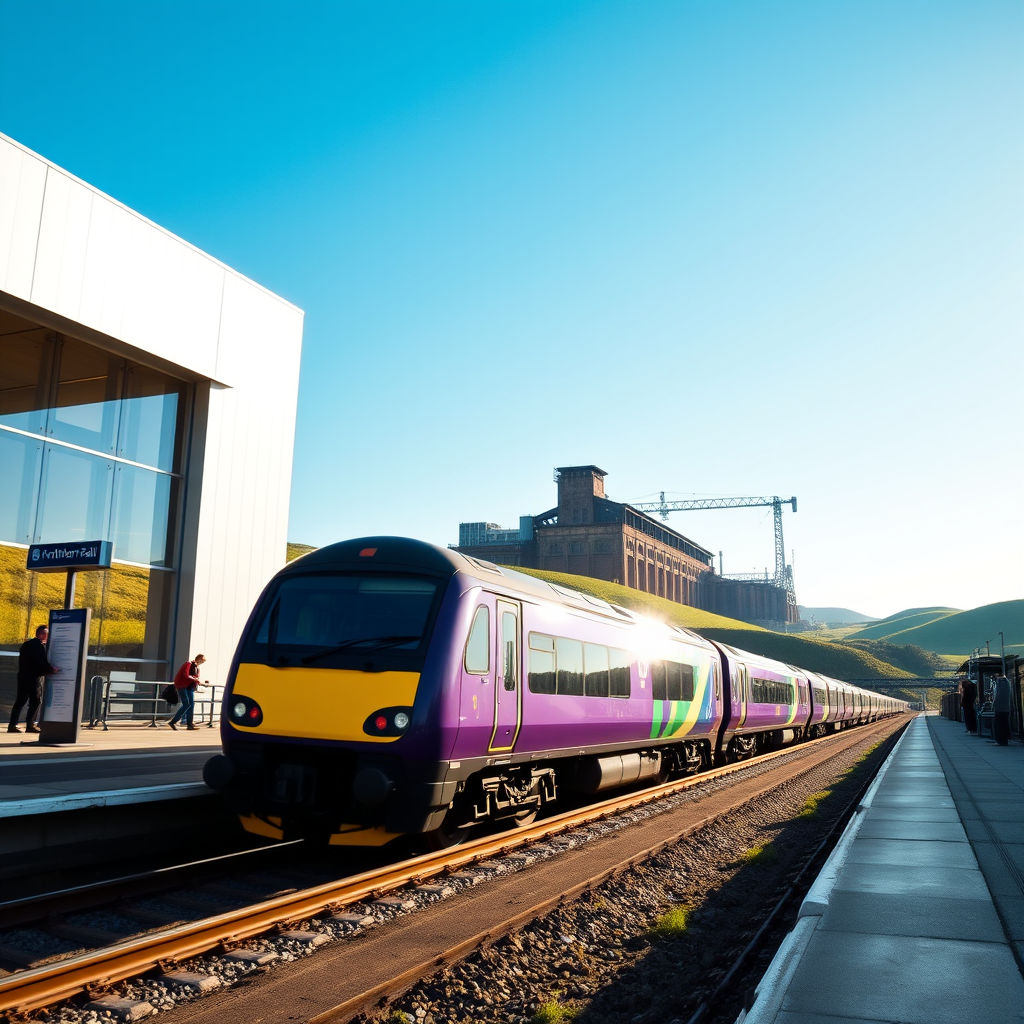
This article explores the significant reopening of the Northumberland Line in Northeast England, a passenger rail line dormant for sixty years. The project, a collaborative effort involving the Department for Transport (DfT), Network Rail, Northumberland County Council, and Northern Rail (TOC), represents a substantial investment of $300 million. This revitalization not only restores vital transport links but also exemplifies a broader trend in railway infrastructure development, focusing on sustainable practices and efficient operations. The successful test run of a Class 158 train signifies a pivotal step toward the December 2024 launch of passenger services, connecting Ashington to the Tyne and Wear Metro system via new stations at Blyth and Bedlington. The project’s success offers valuable insights into the challenges and rewards of reopening closed lines, particularly considering the integration of legacy infrastructure with modern operational standards and technological advancements. This analysis explores the historical context, technical aspects, and future implications of this significant rail project.
The Northumberland Line: A Historical Perspective
The Northumberland Line, originally part of the Blyth and Tyne Railway (established in 1853), served a crucial role in transporting coal from the Ashington mining region to Newcastle’s port and other industrial centers in Northumberland. Its transformation into a passenger line, including electrification in the early 20th century, reflects the evolving transportation needs of the region. However, the rise of private car ownership in the 1960s led to declining passenger numbers, ultimately resulting in the closure of northern sections under the infamous Beeching cuts (a controversial railway network restructuring program in the UK). While freight services continued, the absence of passenger services underscored a missed opportunity for sustainable transportation. The current reopening signifies not only a correction of past policy but also an investment in a more environmentally-conscious future.
Reopening the Line: Engineering and Operational Challenges
The $300 million investment reflects the complexity of restoring a line closed for six decades. The project involved significant infrastructure upgrades, including track renewal, signaling improvements, and the construction of new stations at Blyth and Bedlington. Integrating the Northumberland Line with the existing Tyne and Wear Metro system required careful coordination and the adoption of a unified fare system (a pay-as-you-go system negotiated with Nexus, the Metro operator). The successful test run, involving a Class 158 diesel multiple unit (DMU) and detailed driver training, highlights the importance of rigorous safety protocols and operational readiness before passenger services commence. The planned two-hourly service (Monday to Saturday) and hourly Sunday service demonstrate a considered approach to initially managing demand and assessing operational efficiency.
Sustainability and Modernization
While the current DMUs are diesel-powered, the project’s commitment to integrating with the Tyne and Wear Metro, a system with existing electrification, suggests future electrification potential for the Northumberland Line. This aligns with broader sustainability goals within the UK railway sector, transitioning toward cleaner energy sources and reducing carbon emissions. The project represents an opportunity to showcase best practices in sustainable railway development, including responsible sourcing of construction materials and minimizing environmental disruption during the construction phase. The integration of modern signaling and train control systems (potentially encompassing centralized train control (CTC) in the future) contributes to improved operational efficiency and safety.
Economic and Social Impact
The reopening of the Northumberland Line promises significant economic and social benefits to the region. Improved transport links enhance accessibility to employment opportunities, education, and healthcare services, particularly in areas previously underserved by public transport. The new stations will act as catalysts for local regeneration, stimulating economic activity and creating jobs. The integration with the Tyne and Wear Metro provides a seamless journey, improving connectivity within the wider urban region. This project serves as a model for revitalizing underutilized rail infrastructure, demonstrating the potential of railway investment to stimulate economic growth and improve quality of life.
Conclusions
The reopening of the Northumberland Line represents a remarkable achievement, demonstrating the viability of restoring dormant rail lines and their significant contribution to sustainable transportation and regional development. The successful test run signifies the culmination of years of planning, engineering, and collaboration between various stakeholders. The integration of the line with the Tyne and Wear Metro, utilizing a unified pay-as-you-go fare system, enhances connectivity and accessibility, particularly for those in the communities of Ashington, Blyth, and Bedlington. The project’s commitment to operational safety, demonstrated by extensive driver training programs, underscores the priority placed on providing reliable and affordable passenger services. The potential for future electrification reflects a broader industry shift towards environmentally friendly practices, showcasing the Northumberland Line as a case study for sustainable railway development. Beyond its immediate impact, the project holds valuable lessons for similar rail revitalization endeavors, proving that with careful planning, effective partnerships, and substantial investment, dormant rail infrastructure can be successfully reopened to serve the needs of present and future generations, contributing to economic growth and enhanced quality of life.

Railway infrastructure, rolling stock and transport technologies specialist focused on global rail industry developments, high-speed rail systems, signaling technologies and freight transportation. Covering railway investments, public transport modernization, rail operations and international mobility projects across Europe, Asia and North America.
RELATED POSTS

October 5, 2026 6:12 pm
AECOM and Jacobs secured a contract in September 2026 to...

October 4, 2026 11:08 pm
Sound Transit confirmed the September 30 opening of Seattle Pinehurst...
October 6, 2026 9:17 am
Illinois approved $1.1M in state funds to upgrade two McHenry...
October 6, 2026 12:16 am
FTA awarded $233 million in grants to eight US rail...
October 1, 2026 10:14 am
HS2 installed a 55-metre steel span in Birmingham, completing phase...
October 5, 2026 3:13 pm
DART launched a 90-day fare enforcement pilot across 5 light-rail...