
Northland Line Upgrade: 2026 Construction Update
NZ’s Northland Line railway upgrade boosts freight capacity, improving regional connectivity and economic growth via track, bridge, and terminal improvements.
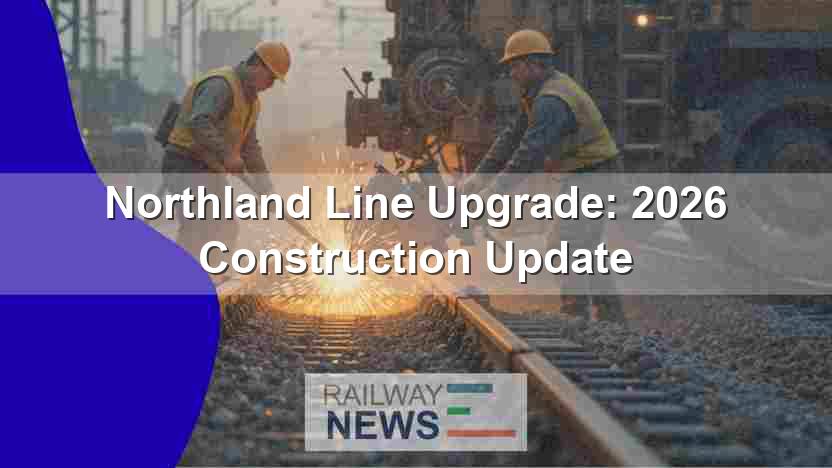
This project profile details the detailed infrastructure upgrade of New Zealand’s Northland Line, a critical freight corridor. The engineering-led initiative addresses historical infrastructure deficiencies through extensive track renewal, bridge replacement, tunnel modifications, and the development of new intermodal facilities. The primary objective is to enhance operational reliability, increase freight capacity for hi-cube containers, and integrate the Northland region more effectively with the national transport network.
| Attribute | Details |
|---|---|
| Project Name | Northland Line Upgrade Project |
| Location | Northland Region, New Zealand (Swanson to Otiria) |
| Route Length | Approx. 180 km |
| Estimated Cost | Over NZD $246 million (Provincial Growth Fund) |
| Status | Under Construction / Phased Implementation |
| Key Contractors | KiwiRail (Project Management), United Civil Construction (Bridges), Clements Contractors (Ballast), Busck Prestressed Concrete (Sleepers) |
Technical Specifications
The upgrade is a multifaceted civil engineering undertaking. In the Swanson to Whangarei section, works include the replacement of 54 km of track, installation of 50,000 new concrete sleepers, and laying of approximately 50,000 m³ of new ballast. Five aging steel and timber bridges are being replaced with modern concrete structures designed for increased axle loads. Geotechnical stability is being addressed through the enhancement of 950 culverts and the stabilization of nine critical embankments. Further north, the project involves reactivating the mothballed 60 km section between Kauri and Otiria, which requires replacing 8 km of track, 20,000 sleepers, and 15,000 m³ of ballast.
A critical engineering challenge is the modification of 13 tunnels to achieve clearance for hi-cube shipping containers. This requires lowering the track level within the tunnels, a process involving the excavation and replacement of approximately 5 km of track and ballast. A major component of the project is the construction of a new rail-road intermodal terminal at Otiria. This facility is designed with a 4,000 m² hardstand, expandable to 15,000 m², and a projected handling capacity of up to 60,000 container movements per year. The project also includes funding for land acquisition and geotechnical studies for a proposed spur line to connect the main line with the deepwater port at Northport/Marsden Point, a strategic link intended to facilitate a significant modal shift of freight from road to rail.
Key Takeaways
- Enhanced Freight Capacity & Resilience: The project directly addresses infrastructure bottlenecks by upgrading tunnels for hi-cube containers and replacing aging bridges, significantly improving the line’s reliability and reducing service disruptions from derailments or flooding.
- Stimulating Regional Economic Growth: The new Otiria intermodal terminal and the future Marsden Point spur line will connect Northland’s export-focused industries (such as forestry and agriculture) directly to the national rail network and a deepwater port, lowering transport costs and boosting trade.
- Promoting Sustainable Transport: By increasing the efficiency and capacity of the rail line, the upgrade is designed to shift a significant volume of freight from road to rail, leading to reduced road congestion, lower carbon emissions, and decreased road maintenance costs.
Frequently Asked Questions (FAQ)
When will the Northland Line Upgrade be completed?
The Northland Line Upgrade is being delivered in phases. Major track and structural works between Swanson and Otiria are scheduled for completion in the near term, while the proposed Marsden Point spur line represents a longer-term strategic development for New Zealand’s rail network.
Who is building the Northland Line Upgrade?
The project is managed by KiwiRail, New Zealand’s national railway operator. Key construction and supply partners include United Civil Construction for bridge replacements, Clements Contractors for ballast supply, and Busck Prestressed Concrete for the manufacture of concrete sleepers.

Railway infrastructure, rolling stock and transport technologies specialist focused on global rail industry developments, high-speed rail systems, signaling technologies and freight transportation. Covering railway investments, public transport modernization, rail operations and international mobility projects across Europe, Asia and North America.