
North American Rail Traffic: Growth and Challenges
Rail Traffic Dynamics in the United States: Despite modest overall traffic growth of 0.7% for carloads and intermodal units, freight railroads transported a total of 488,709 carloads and intermodal units during the week ending May 24th, with notable fluctuations across various commodity groups, including coal, miscellaneous carloads, petroleum products, chemicals, and forest products.
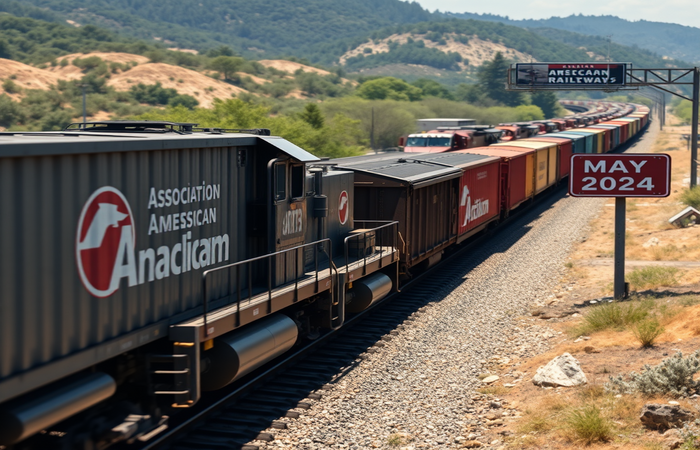
Rail Traffic in North America: A Mixed Bag
The North American freight rail industry is showing signs of both growth and contraction, according to the latest data released by the Association of American Railroads (AAR) for the week ending May 24th. Overall traffic, encompassing both carloads and intermodal units, saw a modest increase of 0.7% compared to the same period in the previous year. However, this seemingly positive figure masks underlying complexities, with varying performances across different commodity groups and regional variations. While some sectors experienced significant gains, others faced declines, painting a nuanced picture of the industry’s current state. This analysis will delve deeper into the specific commodity groups, examine the performance of the U.S., Canadian, and Mexican railroads, and provide insights into the factors driving these trends. Understanding these dynamics is crucial for stakeholders within the rail industry, including railway operators, shippers, and investors, to navigate the evolving landscape and make informed decisions. The data offers a glimpse into the economic health of various sectors and highlights the challenges and opportunities facing the freight rail system in North America.
Rail Traffic Dynamics in the United States
In the United States, freight railroads transported a total of 488,709 carloads and intermodal units during the week ending May 24th. Carloads, representing traditional freight shipments, saw a noticeable increase of 3.8% to 226,091. This growth was partially offset by a decrease in intermodal volume, which includes containers and trailers, down 1.8% to 262,618 units. The data indicates a shift in the modes of transport, with more goods being shipped via traditional carloads. Within the carload sector, several commodity groups experienced notable fluctuations. Coal shipments saw a significant surge of 12.1%, reaching 56,416 carloads, likely reflecting seasonal energy demands or market shifts. Miscellaneous carloads also saw strong growth, up 19.3%, indicating increased activity in a diverse range of sectors. Nonmetallic minerals, essential for construction and manufacturing, increased by 3.5%. Conversely, some commodity groups faced headwinds. Petroleum and petroleum products decreased by 6.9%, suggesting potential shifts in energy production or distribution. Chemical shipments declined by 1.1%, and forest products decreased by 2.9%, indicating potential slowdowns in those industries. This data provides important insights for companies in understanding industry trends.
Regional Performance: Canada and Mexico
The performance of railroads in Canada and Mexico during the same week adds further context to the overall North American rail traffic picture. Canadian railroads demonstrated consistent growth, with carloads up 2.9% to 87,174 and intermodal units up 2.6% to 72,688. This positive performance suggests a robust economic environment or efficient operational practices. Mexican railroads exhibited even more impressive gains. Carloads surged by 26.3% to 17,201, and intermodal units increased by 4.5% to 10,039. This substantial growth in Mexico could be attributed to factors such as increased manufacturing output, the expansion of trade routes, or infrastructure improvements that improve the efficiency of freight transport. The contrasting performances between the three countries highlight the varying economic conditions and specific market dynamics within each region. The data show the importance of rail transport.
Factors Influencing Rail Traffic
Several factors can influence the fluctuations in rail traffic. Economic indicators such as Gross Domestic Product (GDP) growth, industrial production, and consumer spending play a critical role in the demand for freight transportation. Seasonal variations, such as increased coal shipments during the winter months for heating, also impact traffic patterns. The price of commodities, energy market dynamics, and supply chain disruptions can also affect the movement of goods by rail. Additionally, investments in rail infrastructure, operational efficiencies, and technological advancements can influence the capacity and competitiveness of rail transport. For example, investments in Positive Train Control (PTC) systems, designed to enhance safety and optimize train movements, can improve overall efficiency. Additionally, changes in trade policies, such as tariffs or trade agreements, can impact the volume of goods transported across borders. Monitoring these factors is crucial for rail operators and industry stakeholders to anticipate changes in demand and adapt their strategies accordingly.
Conclusion: A Complex Outlook for North American Rail
To summarize, the North American freight rail industry presents a mixed outlook based on the data from the week ending May 24th. While overall traffic saw a modest increase, the underlying trends reveal a complex landscape. The U.S. experienced growth in carloads but a decline in intermodal volume. Canada and Mexico demonstrated consistent growth across both carloads and intermodal units, indicating more positive economic conditions or operational efficiencies. The varying performances among different commodity groups highlight the sensitivity of rail traffic to specific sector dynamics and economic indicators. The surge in coal shipments, offset by declines in other sectors, points to shifting energy demands and market conditions.
Looking ahead, the rail industry must navigate ongoing economic uncertainties, supply chain disruptions, and the need for infrastructure investments. The industry’s ability to adapt to changing market conditions, optimize operational efficiencies, and embrace technological advancements, like the use of artificial intelligence (AI) for predictive maintenance and traffic management, will be critical for sustained growth. Monitoring economic indicators, trade policies, and commodity prices will be crucial for anticipating shifts in demand and adjusting strategies. The success of rail operators in North America will depend on their ability to address the current challenges and capitalize on the opportunities that lie ahead.
**News Date:** May 24th, 2024
**Country:** United States, Canada, Mexico
**Short Summary about Companies**
The news article discusses freight rail traffic in the United States, Canada, and Mexico. While it doesn’t directly name specific companies, it refers to the Association of American Railroads (AAR) for data, which is an industry trade group.

Railway infrastructure, rolling stock and transport technologies specialist focused on global rail industry developments, high-speed rail systems, signaling technologies and freight transportation. Covering railway investments, public transport modernization, rail operations and international mobility projects across Europe, Asia and North America.
RELATED POSTS

October 1, 2026 7:09 am
United States regulators confirmed a September 30 deadline for the...

October 1, 2026 12:13 am
Illinois approved $1.5 billion annually for the Northern Illinois Transit...

October 6, 2026 2:14 am
Union Pacific launched export rail shipments with Ferromex to deliver...

October 1, 2026 6:10 am
Amtrak approved a System Expansion Committee on July 30 to...

October 6, 2026 12:16 am
FTA awarded $233 million in grants to eight US rail...

October 5, 2026 1:13 pm
New York MTA confirmed a late 2026 DEIS release for...