
NJ Transit’s $669M Rail Car Deal: Bombardier’s Multilevel III Win
NJ Transit’s $669 million Bombardier contract delivers 113 advanced Multilevel III rail cars, boosting passenger experience and setting a new standard for rail modernization. Discover how!
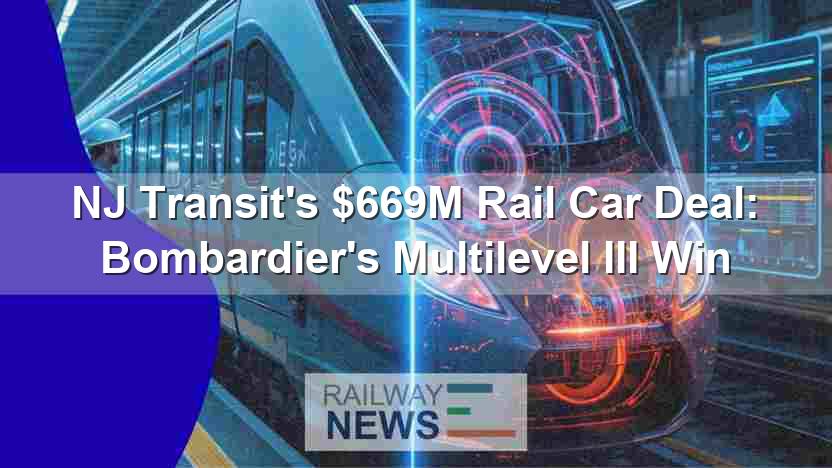
This article explores the significant $669 million contract awarded to Bombardier Transportation by New Jersey Transit (NJ Transit) for the supply of 113 Multilevel III passenger rail cars. This agreement represents a substantial investment in upgrading NJ Transit’s fleet and improving passenger experience. The contract’s importance extends beyond the immediate delivery of rolling stock; it highlights the ongoing evolution of passenger rail technology, the crucial role of private-sector partnerships in public transportation, and the complex challenges involved in modernizing aging rail infrastructure. We will explore the technological advancements incorporated into the Multilevel III cars, the strategic implications of this deal for both Bombardier and NJ Transit, and the broader context of rail modernization efforts in the United States. Further, we will examine the contract’s potential to serve as a model for future rail procurement initiatives across the nation, considering the included option for an additional 886 cars. This significant expansion of the initial contract underscores the potential long-term impact on NJ Transit’s operations and the future of passenger rail in the region.
Technological Advancements in the Multilevel III Cars
The Multilevel III cars represent a significant leap forward in passenger rail technology. Key features include advanced passenger amenities like color infotainment screens providing real-time information, USB charging ports, and a modernized, accessible restroom design with motorized doors. Safety features are paramount, with the incorporation of an onboard video surveillance system and Positive Train Control (PTC) – a crucial safety system that automatically slows or stops trains to prevent accidents. The design also prioritizes accessibility, featuring wider vestibules to improve wheelchair access and designated bicycle racks. The use of LED lighting with automatic brightness control adds to both passenger comfort and energy efficiency. The inclusion of power cars capable of replacing locomotives allows for increased operational flexibility and potentially cost savings for NJ Transit.
Strategic Implications for Bombardier and NJ Transit
For Bombardier, this contract reinforces its position as a leading supplier of passenger rail vehicles in the North American market. The potential for an additional 886 cars represents a substantial long-term revenue stream and showcases the company’s ability to deliver complex, technologically advanced rolling stock. For NJ Transit, the acquisition is a critical step in modernizing its aging fleet. The Multilevel III cars will enhance passenger comfort and safety, improve operational efficiency, and increase the overall appeal of rail travel within the New Jersey region. The interoperability with existing Multilevel I and II cars ensures seamless integration into the existing network. The contract also represents a commitment to investing in infrastructure, enhancing the reliability and attractiveness of public transportation within the state.
Interoperability and Fleet Modernization
The contract emphasizes the importance of interoperability in modern rail systems. The design ensures that the Multilevel III cars are fully compatible with NJ Transit’s existing Multilevel I and II cars, preventing fragmentation of the fleet and allowing for efficient scheduling and operations. This underlines a key principle in effective rail network management: maximizing the utilization of existing infrastructure and assets. The decision to invest in a large-scale fleet upgrade, rather than piecemeal replacements, demonstrates NJ Transit’s strategic vision for a modernized and efficient rail network. This detailed approach to fleet renewal is critical for long-term sustainability and operational effectiveness.
Bombardier’s Long-Standing Partnership with NJ Transit
This contract builds upon Bombardier’s long-standing relationship with NJ Transit, spanning over four decades. This history demonstrates a proven track record of successful collaboration, highlighting the benefits of long-term partnerships in the rail industry. The familiarity with NJ Transit’s operational requirements, combined with Bombardier’s expertise in rolling stock design and manufacturing, facilitates a smoother procurement and integration process. This continuity contributes significantly to the efficiency and cost-effectiveness of the project.
Conclusion
The Bombardier contract for the supply of 113 Multilevel III passenger rail cars to NJ Transit represents a significant milestone in passenger rail modernization. The technological advancements incorporated into these cars, including enhanced passenger amenities, advanced safety features, and improved accessibility, demonstrate a commitment to providing a superior travel experience. The contract highlights the strategic importance of private-sector partnerships in delivering complex infrastructure projects and showcases the significant benefits of long-term collaboration between manufacturers and transit authorities. The emphasis on interoperability ensures seamless integration into existing networks, enhancing operational efficiency and maximizing the utilization of existing infrastructure. Beyond the immediate benefits for NJ Transit, the project serves as a potential model for other transit agencies seeking to modernize their fleets and improve passenger services. The included option for up to 886 additional cars indicates a significant, long-term commitment to upgrading New Jersey’s rail infrastructure, improving the transportation experience for the residents of the state and furthering economic development within the region. This strategic investment underscores the importance of continued investment in public transportation as a vital component of modern urban and regional planning. The success of this project could have a ripple effect on other state and national rail initiatives, serving as a benchmark for future procurement strategies and technological innovation in the passenger rail sector. Finally, the contract exemplifies the growing demand for sophisticated, reliable, and passenger-friendly rolling stock in the evolving landscape of the North American rail industry.

Railway infrastructure, rolling stock and transport technologies specialist focused on global rail industry developments, high-speed rail systems, signaling technologies and freight transportation. Covering railway investments, public transport modernization, rail operations and international mobility projects across Europe, Asia and North America.
RELATED POSTS

October 8, 2026 1:15 pm
Alstom secured a €1bn contract to build 13 automated trains,...

October 1, 2026 7:09 am
United States regulators confirmed a September 30 deadline for the...

October 8, 2026 12:18 pm
Siemens Mobility signed an agreement with VinSpeed to supply 350...

October 4, 2026 5:14 pm
Alstom secured a CA$4.7 billion order from VIA Rail Canada...

October 5, 2026 6:12 pm
AECOM and Jacobs secured a contract in September 2026 to...

October 1, 2026 12:13 am
Illinois approved $1.5 billion annually for the Northern Illinois Transit...