
Nexrail Targets German Rail Market With Vossloh Hybrid Order
NEXRAIL orders 20 Vossloh DE18 Smart Hybrid locomotives, expanding its fleet to 50, unlocking the German market and boosting low-emission rail freight solutions.
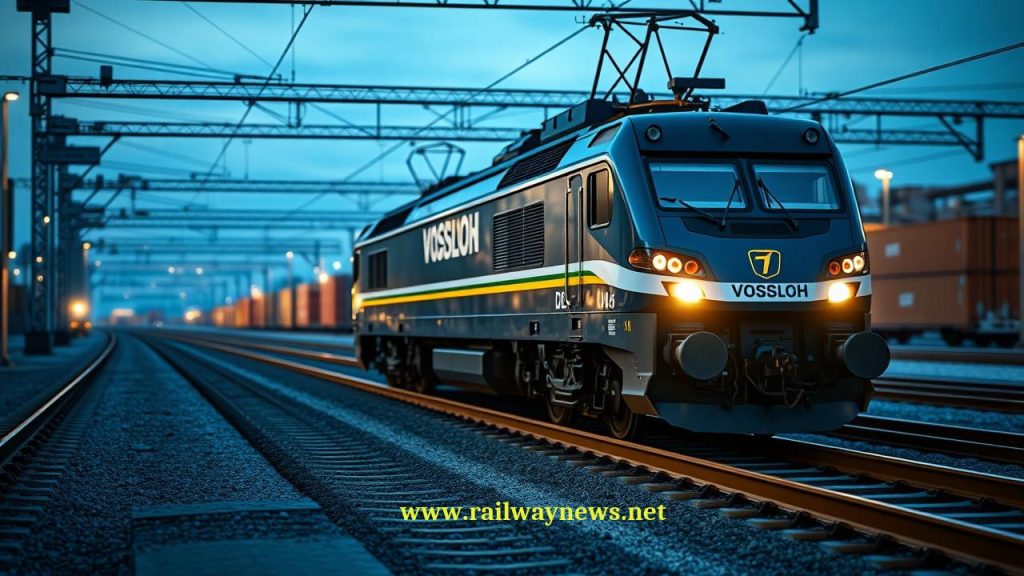
BRUSSELS – European locomotive leasing company NEXRAIL has placed a significant follow-on order with Vossloh Rolling Stock for 20 DE18 Stage V SmartHybrid locomotives, expanding its low-emission fleet to 50 units. The new batch, scheduled for delivery in 2027, will feature crucial upgrades including ETCS Level 2 and German PZB systems, unlocking access to the German rail freight market and ensuring compliance with evolving European standards.
| Category | Details |
|---|---|
| Purchaser / Operator | NEXRAIL |
| Manufacturer | Vossloh Rolling Stock |
| Order Details | 20 x DE18 Stage V SmartHybrid Locomotives |
| Total Fleet Size | 50 units upon delivery |
| Key Technology Upgrades | ETCS Level 2 (BL3.6), German PZB, 106 kWh battery |
| Expanded Homologation | Germany (added to existing France, Belgium, Luxembourg) |
| Delivery Schedule | Commencing in 2027 |
In a strategic move to bolster its modern traction offerings, NEXRAIL has solidified its partnership with Vossloh Rolling Stock through a new agreement signed this week. The order for 20 additional DE18 Smart Hybrid locomotives underscores the growing demand for flexible, low-emission solutions for rail freight, particularly on non-electrified or partially electrified corridors. Upon completion of the delivery in 2027, NEXRAIL’s entire 50-strong fleet of DE18s will be equipped with an expanded homologation package covering France, Belgium, Luxembourg, and now, critically, Germany. Luuk von Meijenfeldt, CEO of NEXRAIL, highlighted the importance of this expansion, stating, ‘’We are pleased that we can continue to service our clients in Western Europe, and now also in Germany, with new-build, low-emission hybrid locomotives. The investments in infrastructure, especially in Germany, require modern rolling stock.’’
The Vossloh DE18 is a four-axle mid-cab locomotive engineered for versatility. At its core is a powerful 1,800 kW diesel engine compliant with the stringent EU Stage V emission standards. This is augmented by a 106 kWh traction battery, which enables the “Smart Hybrid” functionality. This system allows for more than one hour of completely emission-free and low-noise operation at low speeds, ideal for shunting in depots or moving through urban areas. The battery also functions as an advanced start-stop system, which Vossloh reports can reduce fuel consumption by 15% to 40%, depending on the operational profile. Critically, the 2027 models will be equipped with ETCS Level 2 (Baseline 3.6), a non-negotiable upgrade for operators in Belgium, where the network is mandated to switch to ETCS-only operations by the end of that year. The addition of the German PZB signalling system and a dedicated cabin camera for enhanced visibility further future-proofs the platform.
This order is timed to coincide with major rail infrastructure investments across Europe, particularly in Germany, where a recent jump in factory orders for transport equipment signals a robust industrial outlook. By securing homologation for Europe’s largest rail freight market, NEXRAIL positions itself to capture significant new business. The locomotive’s performance has already been validated by existing customers like HSL Belgium. Bart Smout, Managing Director of HSL Belgium, commented on its operational benefits, noting, ‘’The DE18SH has provided us with a reliable and flexible solution… allowing us to handle our initial movements more independently and efficiently. It has also helped reduce energy consumption when hauling heavy trains.’’ This endorsement highlights the platform’s ability to deliver both environmental and economic advantages to freight operators.
Key Takeaways
- Strategic Fleet Expansion: The order increases NEXRAIL’s DE18 Smart Hybrid fleet to 50, establishing it as a major provider of modern, low-emission locomotives in Western Europe.
- German Market Entry: New homologation including German PZB opens up Europe’s largest freight market, aligning with Germany’s significant infrastructure investment plans.
- Future-Proof Technology: The inclusion of ETCS Level 2 (BL3.6) is essential for continued operations in Belgium post-2027 and ensures interoperability across key European corridors.
Editor’s Analysis
This move by NEXRAIL is more than a simple fleet expansion; it’s a clear indicator of the evolving business model for European rail freight. Locomotive leasing companies are increasingly acting as technology accelerators for the industry. By shouldering the capital expenditure and technical risk of investing in complex multi-system locomotives, they enable freight operators to access modern, compliant, and greener rolling stock without a prohibitive upfront cost. This order perfectly encapsulates the twin pressures facing the sector: the push for decarbonization, addressed by the hybrid technology, and the mandatory transition to digital signalling (ETCS). NEXRAIL is betting that providing a single, versatile asset that solves both problems across multiple countries is the key to success in a fragmented but modernizing European rail landscape.
Frequently Asked Questions
What is the total size of NEXRAIL’s DE18 Smart Hybrid fleet following this order?
Upon the scheduled delivery in 2027, NEXRAIL’s DE18 Smart Hybrid fleet will consist of 50 locomotives.
Why is the ETCS Level 2 upgrade so important for these locomotives?
The upgrade to ETCS Level 2 (Baseline 3.6) is critical because the Belgian rail network is mandated to transition to an ETCS-only system by the end of 2027. This upgrade ensures the locomotives will remain fully operational in Belgium and interoperable on other major European lines.
What are the main environmental benefits of the DE18 Smart Hybrid locomotive?
The locomotive’s hybrid system significantly reduces environmental impact by cutting fuel consumption between 15% and 40%. Its 106 kWh battery also allows for over an hour of zero-emission, low-noise electric operation, which is ideal for use in depots, ports, and residential areas.

Railway infrastructure, rolling stock and transport technologies specialist focused on global rail industry developments, high-speed rail systems, signaling technologies and freight transportation. Covering railway investments, public transport modernization, rail operations and international mobility projects across Europe, Asia and North America.
RELATED POSTS

October 8, 2026 1:15 pm
Alstom secured a €1bn contract to build 13 automated trains,...

October 4, 2026 5:14 pm
Alstom secured a CA$4.7 billion order from VIA Rail Canada...
October 9, 2026 3:11 pm
Wabtec secured a $700 million service deal in Guinea to...
October 1, 2026 3:12 am
Greenbrier confirmed Brian Comstock as new president and CEO effective...
October 1, 2026 8:12 am
Knorr-Bremse expanded its UK rail adhesion trial on Chiltern Railways...
October 9, 2026 6:15 am
Transflo launched a 40 railcar transload terminal in Petersburg, Virginia,...