
Rail First Acquired: A$425M Australian Rail Investment
The acquisition of Rail First by DIF Capital Partners and Amber Infrastructure Group represents a substantial investment in Australia’s rail freight sector, highlighting the growing importance of efficient freight transport solutions and strategic infrastructure projects like Inland Rail.
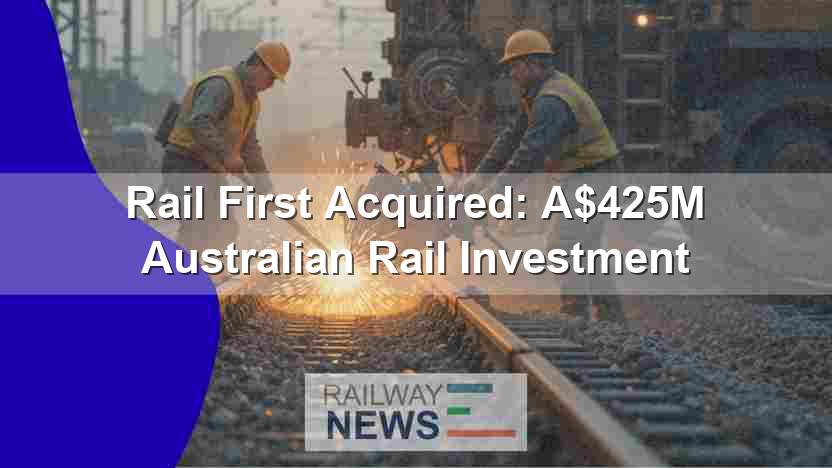
The Australian rail freight leasing market has witnessed a significant development with the acquisition of Rail First by DIF Capital Partners (DIF) and Amber Infrastructure Group. This strategic move, valued at A$425 million ($288.6 million USD), signifies a substantial investment in the future of Australian rail infrastructure and highlights the growing importance of efficient freight transport solutions. This article will delve into the key aspects of this acquisition, examining the rationale behind the investment, the strategic advantages for the acquirers and Rail First, and the potential implications for the broader Australian rail freight sector. We will explore Rail First’s business model, the role of long-term infrastructure projects like Inland Rail, and the integration of Environmental, Social, and Governance (ESG) considerations into the company’s operational strategy. Finally, we will analyze the projected benefits and challenges associated with this transaction and its likely impact on the Australian economy.
Rail First’s Business Model and Market Position
Rail First operates as a leasing company, providing rolling stock (locomotives, intermodal and hopper wagons) and associated maintenance services to blue-chip clients in the Australian freight industry. Their typical lease terms range from three to five years, establishing a predictable revenue stream and fostering strong customer relationships. This model effectively mitigates the high capital expenditure associated with owning and maintaining a large fleet of rolling stock, making it an attractive option for freight operators. The company’s success is directly tied to the health of the Australian rail freight sector, making the strategic assessment of this sector paramount to understanding this acquisition.
The Role of Long-Term Infrastructure Projects
The Australian government’s commitment to major infrastructure projects, such as the Inland Rail project connecting Melbourne and Brisbane, provides a significant tailwind for Rail First. The Inland Rail project, once operational, will significantly increase the demand for freight rail services, creating substantial growth opportunities for leasing companies like Rail First. This expansion of the rail network is expected to improve efficiency and reduce transportation costs, directly benefiting Rail First’s client base and potentially increasing the demand for their leasing services. The success of the Inland Rail project directly impacts the valuation and future performance of this acquisition.
ESG Integration and Sustainable Growth
The acquisition highlights a growing trend in the infrastructure sector towards incorporating Environmental, Social, and Governance (ESG) factors into investment decisions. Rail First’s “proven ESG track record” and commitment to lower emission intensity transport services align with the broader global focus on sustainable development. This commitment demonstrates a forward-thinking approach, attracting investors who prioritize environmental responsibility and social impact alongside financial returns. The integration of ESG principles into Rail First’s operations likely positions the company for future growth in a market increasingly conscious of sustainability considerations. The incorporation of ESG principles could also attract additional investment.
The Acquisition and its Implications
The partnership between DIF and Amber Infrastructure Group brings together significant financial resources and expertise in infrastructure investments. DIF’s global experience, particularly in rail and infrastructure projects, combined with Amber’s expertise, positions Rail First for enhanced growth and expansion. This acquisition is expected to provide Rail First with the financial backing necessary to capitalize on the opportunities presented by the Inland Rail project and the growing demand for efficient freight transport solutions. The acquisition is subject to approval from Australia’s Foreign Investment Review Board (FIRB), a standard procedure for foreign investment in Australia. The acquisition’s success is contingent on the successful integration of the two companies and the effective execution of a well-defined growth strategy.
Conclusions
The acquisition of Rail First by DIF Capital Partners and Amber Infrastructure Group represents a significant investment in the Australian rail freight sector. The transaction, valued at A$425 million, reflects the confidence these firms have in the long-term growth prospects of the Australian rail freight market, driven by major infrastructure projects like the Inland Rail. Rail First’s business model, centered on providing rolling stock leasing and maintenance services, is well-positioned to benefit from this growth. The inclusion of ESG considerations in Rail First’s operational strategy further underscores the long-term vision of the acquirers and aligns the company with the increasing global focus on sustainable development. The successful completion of this acquisition, pending FIRB approval, is expected to enhance Rail First’s capacity for growth, allowing the company to expand its fleet, improve its services, and ultimately contribute to the efficiency and sustainability of the Australian freight transport system. The deal successfully brings together strong financial backing with established expertise in rail infrastructure, paving the way for significant future expansion and strengthening Australia’s rail freight capabilities. The success of the partnership will depend on effective integration, skillful management of growth opportunities, and the successful navigation of regulatory and market dynamics within the Australian rail sector. This acquisition serves as a powerful example of private sector investment fostering critical infrastructure development and sustainable growth in the Australian economy. It highlights the increasing importance of rail freight in a broader context of sustainable transportation solutions and underlines the confidence in the long-term potential of the Australian rail network.

Railway infrastructure, rolling stock and transport technologies specialist focused on global rail industry developments, high-speed rail systems, signaling technologies and freight transportation. Covering railway investments, public transport modernization, rail operations and international mobility projects across Europe, Asia and North America.
RELATED POSTS

September 5, 2026 4:19 pm
CPK launched formal tender talks with four consortia to design...

September 5, 2026 7:14 pm
HS2 Ltd signed renegotiated civils contracts with EKFB and Align...

September 6, 2026 4:12 am
Alstom delivered the first of 100 new G Class trams...
September 6, 2026 8:17 am
DB InfraGO reopened the Nuremberg-Regensburg line in Bavaria on 31...
September 5, 2026 6:17 pm
Universal Signalling won a deal to install its U-Cross system...
September 6, 2026 12:20 pm
Indian Railways ordered a probe after a fire destroyed 2...