
Network Rail: Geofencing Safety Boost in Bristol & Swindon
Network Rail’s Western route adopts geofencing tech for enhanced track worker safety. The system, using real-time location monitoring, aims to prevent incidents.
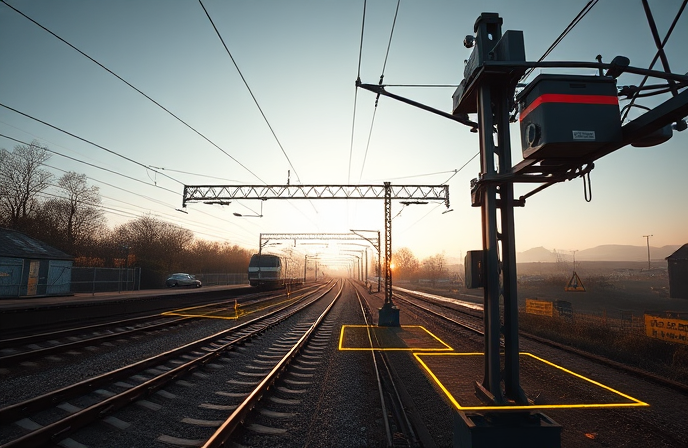
Network Rail Western Route Adopts Geofencing Technology to Enhance Track Safety
Network Rail’s Western route is implementing innovative geofencing technology from Tended to bolster safety protocols for track workers. This initiative, rolling out across key locations in Bristol and Swindon, represents a significant step in Network Rail’s ongoing commitment to reducing on-track risks. The deployment, which began recently, leverages digitally-defined safe zones, or geofences, to monitor worker locations in real time and trigger alerts when safety perimeters are breached. This article will explore the technology, the practical implications of its implementation, and the broader context within Network Rail’s infrastructure renewal and safety improvement plans. The “who” involves Network Rail and Tended; the “what” is the adoption of geofencing; the “when” is now, with the initial rollout underway; the “where” is Bristol and Swindon, specifically targeting overhead line equipment (OLE) and track teams; the “why” is to mitigate risks and improve worker safety; and the “how” is through the use of location-based technology and integrated workflows.
Innovations in Track Maintenance Safety
The core of this initiative revolves around Tended’s geofencing technology, which uses wearable devices to pinpoint the precise location of track workers. These devices, boasting centimeter-level accuracy, establish a digital perimeter, or “geofence,” around designated work areas. The system continuously monitors workers’ positions and triggers alerts if a worker moves outside of the defined boundaries. This functionality is particularly crucial in high-risk environments, such as areas near live OLE and open lines, where the potential for near misses is significant. This advanced early warning system significantly reduces the risk of incidents by enhancing real-time situational awareness for both workers and site management. Additionally, the technology aids in the correct placement of protection equipment, including possession limit boards and worksite markers, helping to reduce the risk of errors and increase the overall efficiency of track maintenance procedures. This innovative approach not only improves safety but also streamlines workflows by providing better visibility across worksites.
Addressing Lessons Learned: The Challow Incident and Beyond
A key driver for the adoption of this technology is the imperative to learn from past incidents and prevent future occurrences. The 2022 Challow incident, where a passenger train struck a hand trolley left on the line, highlighted the critical need for improved situational awareness and accountability within work zones. Tended’s system aims to address such risks directly by providing real-time monitoring of work zones and immediately alerting relevant personnel to potential hazards, even if they seem seemingly small. By integrating these real-time alerts into existing workflows, the technology allows site managers to monitor and intervene, reducing risks before they have the chance to become a more severe problem. This emphasis on proactive risk mitigation is crucial to enhancing Network Rail’s safety culture, and the system will assist in maintaining accountability and improving overall operational efficiency.
Seamless Integration and Enhanced Workforce Training
A critical component of the rollout strategy is the seamless integration of Tended’s technology into existing operational workflows. Tended is working closely with the Western route team to ensure minimal disruption to day-to-day activities. This approach includes regular site visits and support sessions to facilitate the embedding of geofencing practices into standard procedures. This method contrasts with traditional technology rollouts and ensures that the workforce is fully trained and comfortable with the new tools and technologies. The company aims to provide the best possible support to make sure that the workers fully comprehend the new methods. Ash Bayley, Client Implementation Manager at Tended, highlighted the aim of embedding geofencing into routine practice. This commitment ensures that the technology is used effectively and contributes to a stronger safety culture.
Strategic Investment and Industry-Wide Impact
The Western route’s adoption of Tended’s technology is directly aligned with Network Rail’s Control Period 7 (CP7) plan, which allocates £3.3 billion for infrastructure renewal and safety improvements across the route. This investment underscores Network Rail’s commitment to ongoing enhancement of workforce safety. Nick Galliott, Planning and Line Block SME for the Western Workforce Safety Team, emphasized the significance of this collaboration with Tended and welcomed the new approach to technology rollouts. The successful deployment of this technology in the Wales and Borders region further supports the adoption of these systems. The industry is already seeing the benefits of the technology, and the Western route will be able to take advantage of these already proven successes.
Conclusion
The implementation of Tended’s geofencing technology on Network Rail’s Western route marks a significant advancement in track worker safety, providing real-time location monitoring and proactive alerts to mitigate on-track risks. The system’s ability to identify and alert on potential hazards by setting up geofences, as well as aiding the proper placement of trackside equipment, represents a detailed approach to safety improvement. The integration of this new technology, alongside an emphasis on training and seamless operational procedures, is critical to effective implementation. The successful application of this technology should provide industry-wide encouragement for the future. By focusing on proactive risk management and incorporating lessons learned from past incidents, Network Rail is actively working to create a safer environment for its workforce. The ongoing investment in such technologies, and their clear alignment with long-term infrastructure plans, highlights the industry’s commitment to reducing accidents and improving operational efficiencies. The future outlook for these safety-focused technologies is promising, with the potential for broader applications across the UK rail network and beyond.

Railway infrastructure, rolling stock and transport technologies specialist focused on global rail industry developments, high-speed rail systems, signaling technologies and freight transportation. Covering railway investments, public transport modernization, rail operations and international mobility projects across Europe, Asia and North America.
RELATED POSTS

October 1, 2026 7:09 am
United States regulators confirmed a September 30 deadline for the...

October 8, 2026 1:15 pm
Alstom secured a €1bn contract to build 13 automated trains,...

October 4, 2026 5:14 pm
Alstom secured a CA$4.7 billion order from VIA Rail Canada...

October 1, 2026 12:13 am
Illinois approved $1.5 billion annually for the Northern Illinois Transit...

October 6, 2026 2:14 am
Union Pacific launched export rail shipments with Ferromex to deliver...

October 1, 2026 6:10 am
Amtrak approved a System Expansion Committee on July 30 to...