
MTA Launches R262 Subway Car Procurement Up To 2,390 Units New York
New York’s MTA launched its largest procurement for up to 2,390 R262 subway cars, with proposals due September 2026.
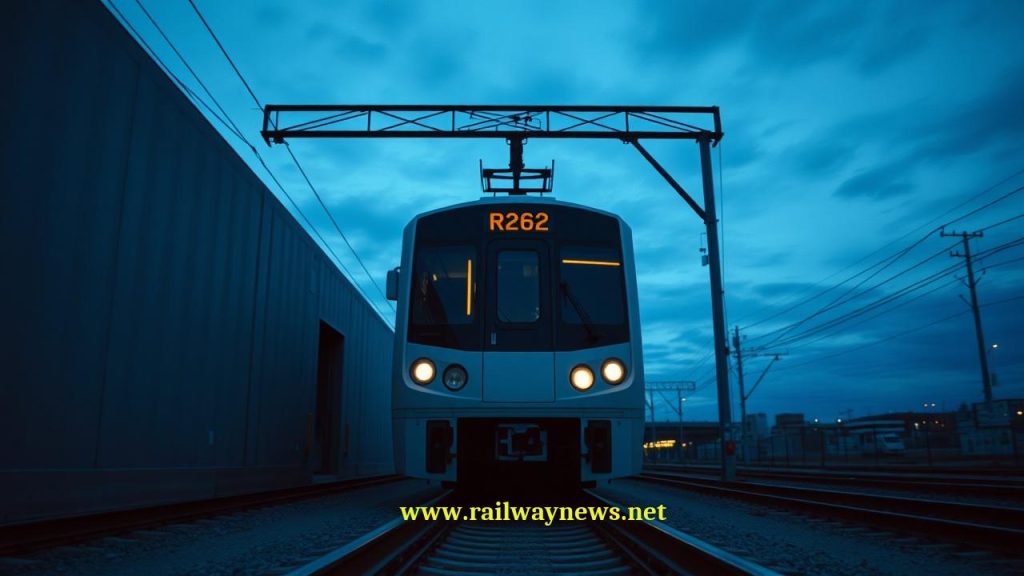
⚡ In Brief: New York’s Metropolitan Transportation Authority (MTA) has issued a request for proposals for its largest-ever procurement, seeking up to 2,390 new R262 subway cars to replace aging fleets on multiple numbered lines beginning with a firm order for 1,140 units.
NEW YORK, USA – The Metropolitan Transportation Authority (MTA) has launched a Request for Proposals (RFP) for the largest single rolling stock contract in its history. The procurement covers a base order of 1,140 new subway cars, with an option for an additional 1,250 units. Proposals from manufacturers are due by September 8, 2026, with a contract award anticipated in early 2028.
What Does This Contract Cover?
The procurement is for the new R262 model fleet, intended to substantially increase reliability and modernize the passenger experience. The base order of 1,140 cars will replace the entire R62 and R62A fleets currently operating on lines 1, 3, and 6. If the MTA exercises the full option for 1,250 additional cars, they will replace the R142 and R142A trains on lines 2, 4, and 5, ultimately replacing up to 36.4% of the MTA’s total subway fleet.
Key Contract Data
| Parameter | Value |
|---|---|
| Contract Name | R262 Subway Car Procurement |
| Total Value | Not disclosed; part of a $12B fleet replacement plan within the 2025-2029 Capital Program. |
| Parties Involved | Metropolitan Transportation Authority (MTA) and prospective bidders |
| Timeline / Completion | Proposals due Sep 8, 2026; Contract award expected early 2028 |
| Country / Corridor | USA / New York City Subway Lines 1, 3, 6 (base) & 2, 4, 5 (option) |
How Does This Compare to Similar Contracts?
The scale of this 2,390-car procurement makes it the largest contemporary rolling stock order in the United States, surpassing fleet replacement programs in Chicago and Boston. While the MTA’s investment focuses on modernizing its existing network, other major US transit agencies are directing similarly large budgets toward system expansion. For example, Metro Los Angeles is advancing its K Line extension at an estimated cost of $11 billion to $15 billion, while Sound Transit in Seattle is simultaneously planning major expansions and seeking to reduce project costs by up to $2.6 billion. (Source: Los Angeles Times, 2026; Komo News, 2026). This highlights a strategic divergence, with the MTA prioritizing state-of-good-repair and fleet reliability over network growth.
Editor’s Analysis
This record-setting tender signals the MTA’s strategic pivot toward maximizing asset performance and managing lifecycle costs, a move institutionalized by the creation of a dedicated Rolling Stock Program office. The stringent reliability requirement—a 125% increase in Mean Distance Between Failures—underscores a focus on operational efficiency over simple expansion. While other US cities pursue costly greenfield projects, the MTA’s approach of reinvesting in its core infrastructure, backed by new revenue streams like congestion pricing, reflects a global trend among legacy transit systems to improve service quality on existing high-capacity corridors.
FAQ
Q: Which subway lines will get the new cars first?
A: The base order of 1,140 new cars is designated to replace the fleets on lines 1, 3, and 6. The optional order of 1,250 cars would then be used for lines 2, 4, and 5.
Q: What new features will the R262 cars have?
A: The R262 fleet is specified to include modern features such as clearer audio systems, updated braking technology, and the potential for an open gangway design, which allows passengers to move freely between cars.
Q: How is this massive purchase being funded?
A: Funding will come from the MTA’s 2025–2029 Capital Plan, which leverages funds from the prior 2020–2024 plan. A significant portion of this capital revenue is supported by the city’s congestion pricing program.

Railway infrastructure, rolling stock and transport technologies specialist focused on global rail industry developments, high-speed rail systems, signaling technologies and freight transportation. Covering railway investments, public transport modernization, rail operations and international mobility projects across Europe, Asia and North America.
RELATED POSTS

October 8, 2026 1:15 pm
Alstom secured a €1bn contract to build 13 automated trains,...

October 1, 2026 7:09 am
United States regulators confirmed a September 30 deadline for the...

October 8, 2026 12:18 pm
Siemens Mobility signed an agreement with VinSpeed to supply 350...

October 4, 2026 5:14 pm
Alstom secured a CA$4.7 billion order from VIA Rail Canada...

October 5, 2026 6:12 pm
AECOM and Jacobs secured a contract in September 2026 to...

October 1, 2026 12:13 am
Illinois approved $1.5 billion annually for the Northern Illinois Transit...