
Modernizing Rail Rolling Stock: Essential Guide
Upgrade aging railway rolling stock for enhanced safety, efficiency, and sustainability. Discover how strategic modernization, predictive maintenance, and skilled workforce management optimize your network’s future!
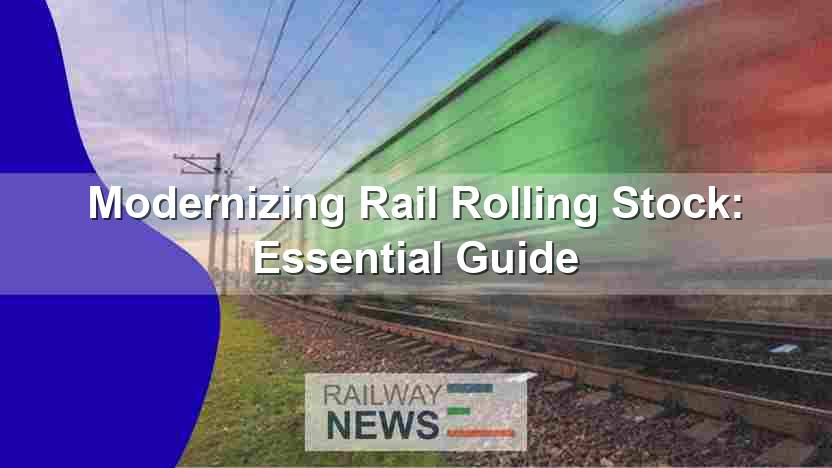
The global railway network relies heavily on its rolling stock, the trains and other vehicles that transport passengers and freight. As fleets age, maintaining operational efficiency and ensuring passenger safety become increasingly complex challenges. This article explores the multifaceted strategies involved in modernizing aging railway rolling stock, focusing on cost-effective solutions, technological advancements, and the vital role of lifecycle management. We will delve into the economic implications of refurbishment versus replacement, examine the integration of cutting-edge technologies like improved signaling systems and advanced train control, and discuss the importance of a detailed maintenance strategy to extend the operational lifespan of existing assets. Additionally, we will consider the environmental benefits of modernization and the crucial role of skilled labor in carrying out these complex projects. The successful modernization of aging rolling stock is paramount to maintaining a reliable, efficient, and sustainable railway system for the future. This necessitates a holistic approach combining strategic planning, technological innovation, and skilled workforce management.
Lifecycle Management and Economic Considerations
Effective lifecycle management (LCM) is crucial for optimizing the operational life and minimizing the overall cost of railway rolling stock. A strategic LCM plan encompasses predictive maintenance, incorporating data analytics to anticipate potential failures and schedule maintenance proactively, reducing unscheduled downtime and maximizing operational availability. This strategy contrasts sharply with reactive maintenance, which only addresses issues after they occur, often leading to higher costs and longer periods of service disruption. The decision between refurbishing existing rolling stock or replacing it entirely is a complex economic one, demanding careful evaluation of factors such as the remaining lifespan of the existing assets, the cost of refurbishment against the cost of new rolling stock, and the potential for incorporating new technologies during a refurbishment project. A thorough cost-benefit analysis should consider not just initial investment but also ongoing maintenance, operating costs, and potential revenue increases from improved service. For example, upgrading to modern signaling systems can significantly increase train capacity and reduce delays, leading to substantial long-term financial gains.
Technological Advancements in Rolling Stock Modernization
Modernizing aging rolling stock involves integrating various technological advancements to enhance safety, performance, and efficiency. Upgrading signaling systems to modern Automatic Train Protection (ATP) systems is a critical aspect. ATP systems enhance safety by automatically preventing collisions and reducing the risk of human error. Similarly, incorporating advanced train control systems, such as Communication-Based Train Control (CBTC), optimizes train scheduling, increases capacity, and reduces energy consumption. The integration of sophisticated onboard diagnostics, coupled with predictive maintenance strategies, enables early detection of potential failures, thereby preventing major disruptions and reducing maintenance costs. Moreover, improving passenger comfort and accessibility through modernizing interiors, installing climate control systems, and incorporating accessibility features for passengers with disabilities adds value and enhances ridership.
Environmental Sustainability and the Modernization Process
The modernization of rolling stock should not only focus on economic and operational improvements but also on environmental sustainability. Refurbishing existing rolling stock, rather than replacing it entirely, is a more environmentally responsible approach, significantly reducing the carbon footprint associated with manufacturing new equipment and disposing of old assets. The integration of energy-efficient technologies such as regenerative braking systems and lightweight materials further contributes to minimizing the environmental impact of railway operations. These initiatives align with the growing global emphasis on reducing greenhouse gas emissions and promoting sustainable transportation solutions. Additionally, investments in modern, efficient rolling stock contribute to decreased noise pollution along rail corridors, improving the quality of life for communities adjacent to railway lines.
The Skilled Workforce: A Crucial Element in Successful Modernization
The successful implementation of any rolling stock modernization program depends critically on a skilled and well-trained workforce. The complexity of modern railway systems demands specialized expertise in various disciplines, including mechanical engineering, electrical engineering, software development, and project management. Investing in training programs and apprenticeship schemes to develop and retain this essential expertise is crucial. Proper training ensures that technicians possess the skills to safely and efficiently maintain and upgrade complex systems, minimizing the risk of errors and ensuring the long-term reliability of the modernized rolling stock. Examples of complex modernization projects include the Talgo Series 7 train conversion, which requires specialized knowledge and skilled labor to integrate new technologies while preserving the integrity of the existing rolling stock. The availability of a qualified workforce is pivotal to the success of large-scale projects of this kind. A well-trained workforce also facilitates effective knowledge transfer, ensuring that the expertise required to maintain and operate the modernized rolling stock is sustained over the long term.
You might be interested in:
Last June 2019, we covered the Hong Kong MTR’s response to a signalling system malfunction. Click here to read – HK MTR Tuen Ma Line: Testing Resumes After Review
Conclusion
Modernizing aging railway rolling stock is a multifaceted undertaking that demands a strategic approach encompassing lifecycle management, technological innovation, environmental sustainability, and a highly skilled workforce. Effective lifecycle management, encompassing predictive maintenance and data-driven decision-making, is key to optimizing the operational life and minimizing the overall cost of rolling stock. The integration of advanced technologies, such as ATP and CBTC systems, is crucial for enhancing safety, efficiency, and capacity. Moreover, a commitment to environmental sustainability, achieved through refurbishment, energy-efficient technologies, and reduced noise pollution, aligns with global efforts to create more environmentally friendly transportation systems. Finally, the success of any modernization program hinges on a skilled and well-trained workforce capable of maintaining and upgrading complex railway systems. The Talgo Series 7 train conversion exemplifies the complexities and skill requirements associated with modernizing aging railway rolling stock. By strategically integrating these elements, railway operators can ensure the long-term reliability, efficiency, and safety of their networks, contributing to a more sustainable and efficient transportation future. Failure to address the modernization of aging fleets can lead to increased operational costs, safety risks, and reduced capacity, ultimately hindering the ability of railways to meet the growing demands of passenger and freight transportation in the coming decades. A proactive and well-planned approach is essential for ensuring the long-term viability and competitiveness of railway systems worldwide.

Railway infrastructure, rolling stock and transport technologies specialist focused on global rail industry developments, high-speed rail systems, signaling technologies and freight transportation. Covering railway investments, public transport modernization, rail operations and international mobility projects across Europe, Asia and North America.
RELATED POSTS

October 8, 2026 1:15 pm
Alstom secured a €1bn contract to build 13 automated trains,...

October 1, 2026 7:09 am
United States regulators confirmed a September 30 deadline for the...

October 4, 2026 5:14 pm
Alstom secured a CA$4.7 billion order from VIA Rail Canada...

October 1, 2026 12:13 am
Illinois approved $1.5 billion annually for the Northern Illinois Transit...
October 5, 2026 1:13 pm
New York MTA confirmed a late 2026 DEIS release for...
October 6, 2026 9:17 am
Illinois approved $1.1M in state funds to upgrade two McHenry...