
Metro de Madrid Invests €16M 9000-Series Overhaul Madrid
Metro de Madrid invested nearly €16 million in a three-year contract to overhaul 13 9000-series trains, extending their operational life in Madrid, Spain.
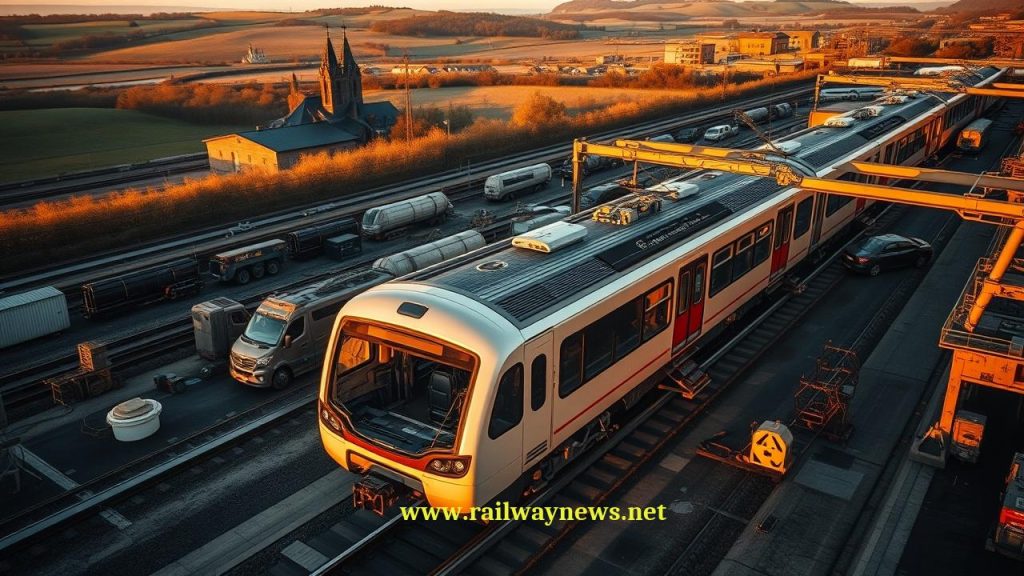
⚡ In Brief: Metro de Madrid will invest nearly €16 million over three years for the major overhaul of 13 of its 9000-series trains, a contract valued at approximately €1.23 million per unit to extend the fleet’s operational life and ensure service reliability.
MADRID, SPAIN – Metro de Madrid has allocated nearly €16 million for a three-year contract to perform long-cycle maintenance on 13 of its 9000-series trains. The work constitutes a major overhaul, performed approximately every seven years, to maintain the fleet’s condition. This investment is part of a broader city initiative to modernize its public transport system.
What Does This Contract Cover?
The contract funds a detailed overhaul of 13 metro trains, a process involving complete disassembly for inspection, repair, and replacement of key components. This long-cycle maintenance is designed to extend the service life of the rolling stock and ensure maximum operational guarantees upon return to service. The agreement also includes provisions for ad-hoc wheel maintenance, technical assistance, and other extraordinary interventions, with some work to be performed at external facilities to manage increasing overhaul demand. The name of the company awarded the contract was not disclosed in the announcement.
Key Contract Data
| Parameter | Value |
|---|---|
| Contract Name | 9000-Series Long-Cycle Maintenance Overhaul |
| Total Value | Approx. EUR 16 million (~EUR 1.23 million per train) |
| Parties Involved | Metro de Madrid, Contractor (Not disclosed) |
| Timeline / Completion | 3 years |
| Country / Corridor | Madrid, Spain |
How Does This Compare to Similar Contracts?
The investment of approximately €1.23 million per train for a major overhaul highlights a focus on asset life extension. For context on public spending in the city, Madrid’s government recently allocated a significantly larger sum of nearly €7 billion over four years to address its housing crisis, framing this maintenance contract as a targeted, operational expenditure rather than a major capital project (Source: The Herald-Review). Globally, rail investment priorities vary; for instance, Chicago’s Red Line extension is receiving nearly $2 billion in federal funding for new infrastructure, underscoring a focus on network expansion in some US cities (Source: AOL.com).
Editor’s Analysis
This contract signifies a strategic focus on maintaining a state of good repair for existing assets rather than prioritizing new fleet acquisition. By acknowledging the need to use external facilities, Metro de Madrid is adapting its maintenance strategy to manage a maturing fleet without disrupting service availability. This approach reflects a broader industry trend where operators must balance investment in legacy systems with funding for new expansion projects, a challenge amplified by post-pandemic ridership uncertainties (Source: Axios).
FAQ
Q: What is a long-cycle maintenance overhaul?
A: It is one of the most extensive forms of technical maintenance, performed on a train approximately every seven years. The process involves completely disassembling the vehicle to inspect, repair, or replace all major components before reassembly.
Q: How much does this overhaul cost per train?
A: The contract allocates nearly €16 million for 13 trains, which calculates to an approximate cost of €1.23 million per train for this major overhaul.
Q: Will this maintenance work affect metro services for passengers?
A: The stated goal is to perform the overhauls without compromising service quality standards. By planning for an increasing number of overhauls and using external facilities, the operator aims to keep the maximum number of trains available for daily service.

Railway infrastructure, rolling stock and transport technologies specialist focused on global rail industry developments, high-speed rail systems, signaling technologies and freight transportation. Covering railway investments, public transport modernization, rail operations and international mobility projects across Europe, Asia and North America.
RELATED POSTS

October 8, 2026 1:15 pm
Alstom secured a €1bn contract to build 13 automated trains,...

October 4, 2026 5:14 pm
Alstom secured a CA$4.7 billion order from VIA Rail Canada...

October 5, 2026 6:12 pm
AECOM and Jacobs secured a contract in September 2026 to...

October 1, 2026 12:13 am
Illinois approved $1.5 billion annually for the Northern Illinois Transit...

October 4, 2026 11:08 pm
Sound Transit confirmed the September 30 opening of Seattle Pinehurst...
October 5, 2026 1:13 pm
New York MTA confirmed a late 2026 DEIS release for...