
Melbourne Rail Derailment: Impact & Infrastructure Repair Efforts
Melbourne rail lines halted after Clifton Hill derailment. Five carriages derailed, impacting Hurstbridge and Mernda lines. Services won’t resume until Monday.
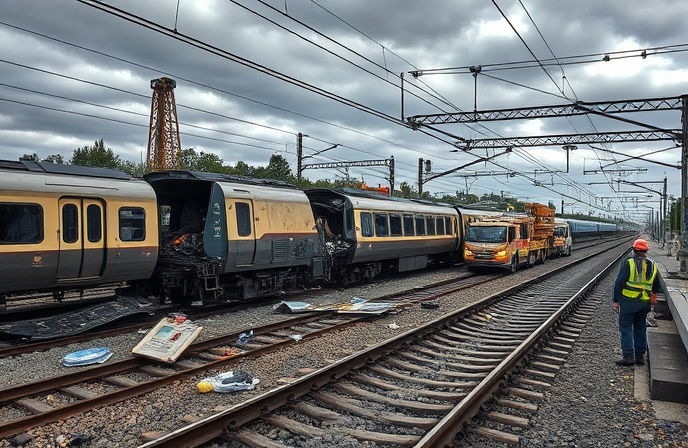
Clifton Hill Derailment Halts Melbourne Rail Lines, Investigations Underway
A significant disruption to Melbourne’s metropolitan rail network is underway following a derailment at Clifton Hill station on Sunday. The incident, which involved five carriages of a passenger train, has led to the suspension of services on both the Hurstbridge and Mernda lines. While the final carriage has now been removed, commuters face continued inconvenience with services not expected to resume until Monday, July 22nd. The cause of the derailment remains unknown, and investigations are ongoing. The incident occurred at approximately 6:00 PM on Sunday, as the train was approaching Clifton Hill station. Fortunately, there were no reported injuries among the 55 passengers on board. This article will explore the immediate impact, the ongoing recovery efforts, and the potential implications for Melbourne’s rail network.
Immediate Impact and Response
The derailment at Clifton Hill immediately triggered a large-scale response. Emergency services were quick to attend the scene, ensuring the safety of all passengers. The primary focus then shifted to assessing the damage and implementing alternative transport arrangements. While the derailed carriages have been removed, significant damage was inflicted upon the track infrastructure, including the rails and the overhead line equipment (OLE). This OLE damage is critical as it supplies power to the electric trains via the catenary system. Metro Trains Melbourne, the operator, initiated a detailed investigation to determine the root cause of the incident. Concurrently, they deployed replacement bus services to mitigate passenger disruption on the affected lines.
Replacement Service Operations and Passenger Information
To maintain essential transport links, bus replacements are in place for the Hurstbridge and Mernda lines, which will operate until the last service on Sunday, July 20th. The bus services have been structured to facilitate passengers to and from Parliament station in the city, while excluding direct access to Flinders Street, Southern Cross, Flagstaff, or Melbourne Central. Passengers traveling into the city will need to alight at Parliament station to access connecting services, and the reverse applies for outbound journeys. This operational adjustment demonstrates a commitment to keeping the network operating, albeit at a reduced capacity, while urgent repairs and investigations are conducted. The inconvenience for passengers is considerable, however, given the severity of the incident, the available options minimize further disruption.
Infrastructure Damage and Repair Efforts
The Clifton Hill derailment has exposed significant damage to vital railway infrastructure. The immediate priority is to repair the track and restore power to enable the trains to operate. This involves both track repairs and the rewiring and reinstatement of the OLE. The damage assessment will identify the extent of required track repairs and provide essential information that is crucial for the investigation. The complexities of the site mean that the repairs and the safety checks required will require significant time, hence the extended suspension of services. The commitment to detailed repairs emphasizes the importance of ensuring the safety and reliability of the rail network for future operations.
Investigations and the Search for Cause
Determining the root cause of the derailment is paramount. A thorough investigation is being conducted to ascertain all factors that led to the incident. This investigation will include examination of the rolling stock, the track condition, signalling systems, and operational procedures. The process may involve forensic analysis, specialist engineering reviews, and potentially, the retrieval of data from the train’s event recorders (often known as “black boxes”). The findings of the investigation will be crucial for identifying any required changes to operating protocols, maintenance practices, or infrastructure improvements. It is expected that the investigation results will also be presented to the relevant rail safety regulator.
Conclusion
The derailment at Clifton Hill has created a major disruption on Melbourne’s rail network. While passenger safety was prioritised, the incident has highlighted the vulnerability of infrastructure and the need for careful maintenance and operational vigilance. The extended service disruption, the deployment of replacement buses, and the complex repairs demonstrate the significant scale of the incident. The investigation will be essential to determine the cause and implement recommendations to prevent a recurrence, providing valuable insights into railway safety protocols and maintenance standards. The industry will be closely watching the findings, as they will influence future operations and potentially lead to infrastructure investment to mitigate risks. It will further solidify the importance of maintaining a robust and reliable rail network for commuters.

Railway infrastructure, rolling stock and transport technologies specialist focused on global rail industry developments, high-speed rail systems, signaling technologies and freight transportation. Covering railway investments, public transport modernization, rail operations and international mobility projects across Europe, Asia and North America.
RELATED POSTS

October 4, 2026 5:14 pm
Alstom secured a CA$4.7 billion order from VIA Rail Canada...
October 6, 2026 9:17 am
Illinois approved $1.1M in state funds to upgrade two McHenry...
October 9, 2026 3:11 pm
Wabtec secured a $700 million service deal in Guinea to...
October 1, 2026 3:12 am
Greenbrier confirmed Brian Comstock as new president and CEO effective...
October 1, 2026 8:12 am
Knorr-Bremse expanded its UK rail adhesion trial on Chiltern Railways...
October 9, 2026 6:15 am
Transflo launched a 40 railcar transload terminal in Petersburg, Virginia,...