
Melbourne Intermodal: Shaping Australia’s Rail Freight Future
Melbourne Intermodal Terminal, a key Australian freight hub, optimizes rail and road transport, streamlining supply chains and reducing costs.
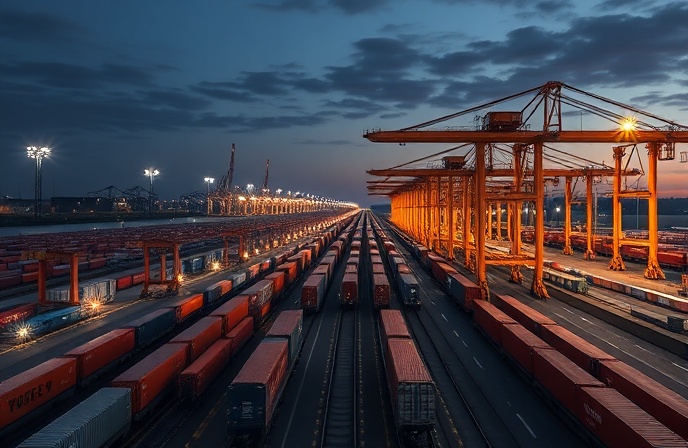
Melbourne Intermodal Terminal: A Critical Hub for Australia’s Freight Future
Australia’s freight landscape is undergoing a significant transformation, driven by increasing demand and the need for greater efficiency. At the heart of this evolution lies infrastructure, and the Melbourne Intermodal Terminal plays a crucial role. This strategically located facility aims to streamline freight movements, connecting rail with road transport seamlessly. This article explores the vital aspects of the Melbourne Intermodal Terminal, exploring its current capabilities, the challenges it faces, and its potential to reshape Australia’s supply chain. Who will benefit? The entire Australian economy! What are the key benefits? Reduced congestion and transportation costs. Where is it located? Primarily in Melbourne. Why is it necessary? To streamline and accelerate goods movement, and How does it work? It will be detailed in the following sections. The primary focus of this article will be to explore the significance of the Melbourne Intermodal Terminal in Australia’s freight future, analyze the current state of its operations, and project the long-term implications for the industry.
Optimizing Rail Freight Efficiency: The Melbourne Intermodal Terminal’s Operational Model
The Melbourne Intermodal Terminal operates on a principle of efficient cargo transfer, utilizing a combination of advanced technologies and strategic design. The terminal is designed to handle a high volume of containers, both import and export. Its layout minimizes dwell times, speeding up the handling of goods and minimizing the time containers spend in the terminal. Automated systems, including advanced crane technology and sophisticated tracking systems, allow for high throughput of containers. This efficiency is vital to reduce transport costs and improve the competitiveness of rail freight. A key feature includes the facilitation of “last mile” delivery connections to reach commercial and industrial hubs. The terminal’s ability to accommodate double-stacked trains is crucial, allowing for greater capacity per train and enhancing overall efficiency. The terminal’s close proximity to major road networks is also key to successful operation.
Infrastructure and Connectivity: Links to Australia’s Freight Network
The success of the Melbourne Intermodal Terminal hinges on its connectivity to the broader national freight network. Investment in track upgrades and new rail lines is paramount. These improvements ensure that freight can be moved quickly and reliably from the terminal to various destinations across the country. Connections to key ports are vital, particularly Port of Melbourne, Australia’s busiest container port. This link allows for seamless movement of goods between sea and rail. The Australian Rail Track Corporation (ARTC) plays a vital role in managing and upgrading the national rail network, facilitating efficient transport. Additionally, the terminal benefits from integration with existing rail corridors, enabling access to interstate freight routes. Continuous investment in infrastructure is required to maximize the terminal’s effectiveness and optimize rail’s share of freight transport.
Challenges and Opportunities: Addressing Capacity and Future Growth
The Melbourne Intermodal Terminal faces a number of challenges, particularly in regards to capacity. Growing freight demand necessitates careful planning to avoid congestion and bottlenecks. Ensuring sufficient land for expansion is a key consideration, allowing for future growth. The integration of advanced technologies, such as automated container handling systems, will be crucial. Additionally, coordination between various stakeholders, including terminal operators, rail freight companies, and government agencies, is essential for efficient operation. The opportunities for growth are significant. The shift towards rail is being driven by environmental concerns, reducing road congestion, and decreasing transportation costs. A well-managed and expanded Melbourne Intermodal Terminal can become a vital catalyst for promoting sustainable and efficient freight transport.
Conclusion
To summarize, the Melbourne Intermodal Terminal stands as a critical infrastructure asset, poised to reshape Australia’s freight landscape. The efficiency gains offered by the terminal, coupled with strategic network connections and increasing demands, place it in a pivotal position. Industry implications include reduced transportation costs, decreased road congestion, and improved overall supply chain efficiency. The Australian government and relevant rail sector stakeholders must work in close concert to ensure optimal utilization and future expansion. The future of rail freight in Australia is closely tied to the success of the Melbourne Intermodal Terminal, and similar intermodal facilities across the country. Continued investment, technological innovation, and collaborative partnerships will be key to realizing its full potential and securing a sustainable and efficient freight future. The terminal’s significance to the overall industry is paramount, setting the stage for increased investment into rail infrastructure. Further studies and analysis on the expansion of the terminal’s capabilities should be undertaken to solidify its role as a leading freight hub.

Railway infrastructure, rolling stock and transport technologies specialist focused on global rail industry developments, high-speed rail systems, signaling technologies and freight transportation. Covering railway investments, public transport modernization, rail operations and international mobility projects across Europe, Asia and North America.
RELATED POSTS

October 8, 2026 1:15 pm
Alstom secured a €1bn contract to build 13 automated trains,...

October 1, 2026 7:09 am
United States regulators confirmed a September 30 deadline for the...

October 4, 2026 5:14 pm
Alstom secured a CA$4.7 billion order from VIA Rail Canada...

October 5, 2026 6:12 pm
AECOM and Jacobs secured a contract in September 2026 to...

October 1, 2026 12:13 am
Illinois approved $1.5 billion annually for the Northern Illinois Transit...

October 4, 2026 11:08 pm
Sound Transit confirmed the September 30 opening of Seattle Pinehurst...