
MBTA’s 2025: South Coast Rail Launches, Subway Speeds Restored
MBTA’s 2025: South Coast Rail launched, reconnecting communities after 65 years. Subway speeds restored, signaling a vital infrastructure upgrade for Boston.
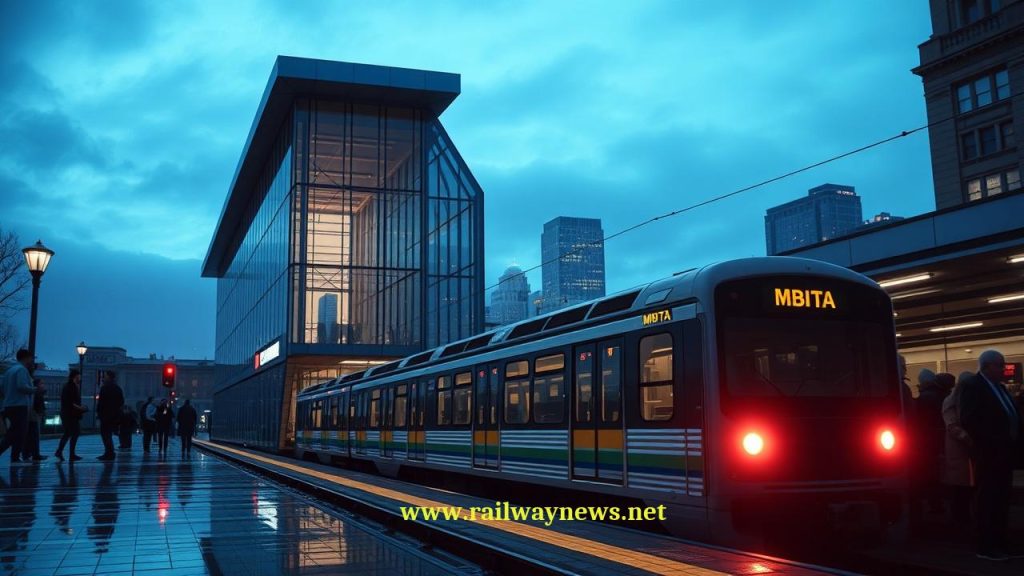
Boston’s MBTA has marked 2025 as a landmark year of recovery and expansion, highlighted by the launch of the long-awaited South Coast Rail service and the restoration of full-speed operations on its core subway lines. These achievements position the agency as a key player in a broader renaissance of American passenger rail, which is seeing significant investment in both new routes and the modernization of legacy infrastructure.
| Category | Details |
|---|---|
| Major Project | South Coast Rail Service Launch |
| Launch Date | March 2025 |
| Service Area | Taunton, Freetown, New Bedford, Middleboro, Fall River (Southeastern Massachusetts) |
| Key Milestone | Restored passenger rail to the region for the first time in 65 years |
| Project Cost | Official final cost not yet fully disclosed |
The Massachusetts Bay Transportation Authority (MBTA) executed a series of significant service improvements throughout 2025, signaling a strategic push towards enhancing network reliability and reach. The centerpiece of this effort was the March inauguration of the South Coast Rail service, a major commuter-rail extension that reconnected the cities of Taunton, Freetown, New Bedford, and Fall River to Boston by passenger train for the first time in over six decades. Concurrently, the agency addressed critical state-of-good-repair needs, restoring full operating speeds to the Red Line in March and the Orange Line in August after extensive track rehabilitation. These infrastructure wins were complemented by passenger-focused enhancements, including the extension of weekend service by one hour across all subway lines.
While the South Coast Rail expansion focuses on extending conventional commuter rail, it unfolds against a national backdrop of advancing rail technology. Across the country, operators like Amtrak are introducing their next-generation Acela and Airo trainsets on key corridors, promising higher speeds and improved passenger amenities. The MBTA’s 2025 initiatives, however, were heavily concentrated on foundational improvements. This includes the installation of new derailment prevention equipment on the light-rail Green Line, a critical safety upgrade for the system’s oldest and most complex line. These targeted investments in core infrastructure aim to build a more resilient network capable of supporting future modernization efforts.
The MBTA’s operational overhaul in 2025 also reflects broader trends in North American public transit. The agency’s move to begin issuing citations for fare evasion and simultaneously expand its reduced-fare program mirrors strategies seen in other large systems, such as New York’s MTA, which is transitioning to its tap-and-ride OMNY system while making its 7-day fare-capping permanent. By hiring over 1,900 new employees, the MBTA is tackling the staffing shortages that have plagued the industry post-pandemic. This holistic approach—combining network expansion, infrastructure renewal, and operational modernization—was showcased when Boston hosted the American Public Transportation Association’s (APTA) annual TRANSform Conference in September, positioning the city as a case study in transit recovery.
Key Takeaways
- Network Expansion: The South Coast Rail project successfully re-established a vital economic link between Southeastern Massachusetts and Boston after a 65-year hiatus.
- Core System Reliability: Restoring full-speed travel on the Red and Orange lines marks a critical step in overcoming years of deferred maintenance and improving daily commutes for hundreds of thousands of riders.
- Strategic Modernization: The MBTA is pursuing a multi-faceted strategy that includes infrastructure upgrades, workforce expansion, and fare policy reforms, aligning with best practices across the U.S. rail sector.
Editor’s Analysis
The MBTA’s progress in 2025 is a significant indicator for the global rail industry, demonstrating a successful model for revitalizing a mature, legacy transit system. While new high-speed projects often capture headlines, Boston’s dual-track approach of aggressive state-of-good-repair work combined with strategic network expansion offers a more pragmatic and replicable blueprint for metropolitan areas worldwide. By tackling deep-rooted maintenance backlogs on its core subway while simultaneously delivering a generational expansion project, the MBTA proves that investing in the reliability of the existing network is the essential foundation upon which future growth can be built. This balanced strategy of “fix-it-first” and targeted expansion is a crucial lesson for any city grappling with aging infrastructure and growing public demand.
Frequently Asked Questions
What is the South Coast Rail project?
The South Coast Rail project is a new MBTA commuter-rail line that launched in March 2025. It provides passenger rail service to the Massachusetts cities of Taunton, Freetown, New Bedford, Middleboro, and Fall River for the first time in 65 years, connecting them directly to Boston.
Which MBTA subway lines were restored to full speed in 2025?
The MBTA restored full-speed service on the Red Line in March 2025 and the Orange Line in August 2025. This followed the completion of major track maintenance and rehabilitation projects designed to eliminate long-standing speed restrictions.
How is the MBTA modernizing its operational policies?
In 2025, the MBTA began a detailed operational overhaul that included hiring over 1,900 new employees, starting to issue citations for fare evasion to improve revenue collection, and expanding its reduced-fare program to improve accessibility. These efforts align with national trends to enhance financial sustainability and equity.

Railway infrastructure, rolling stock and transport technologies specialist focused on global rail industry developments, high-speed rail systems, signaling technologies and freight transportation. Covering railway investments, public transport modernization, rail operations and international mobility projects across Europe, Asia and North America.
RELATED POSTS

October 1, 2026 7:09 am
United States regulators confirmed a September 30 deadline for the...

October 8, 2026 1:15 pm
Alstom secured a €1bn contract to build 13 automated trains,...

October 4, 2026 5:14 pm
Alstom secured a CA$4.7 billion order from VIA Rail Canada...

October 1, 2026 12:13 am
Illinois approved $1.5 billion annually for the Northern Illinois Transit...

October 6, 2026 2:14 am
Union Pacific launched export rail shipments with Ferromex to deliver...

October 1, 2026 6:10 am
Amtrak approved a System Expansion Committee on July 30 to...