UPDATED
Last Updated: 2026-11-26
Last Updated: 2026-11-26
As of November 26, 2026, the Manila rail network incorporates 67 unique stations spread across light rail and subway infrastructure. Managed collaboratively by Light Rail Manila Corporation, Metro Rail Transit Corporation, and Light Rail Transit Authority, the city's corridors provide urban mobility via distinct operational routes and developing extensions.
Total Unique Stations
67
67
Operational Lines
3
3
Construction Lines
2
2
Data Date
2026-11-26
2026-11-26
🔍 Click to enlarge
Manila Metro Map Layout and Corridor Overview
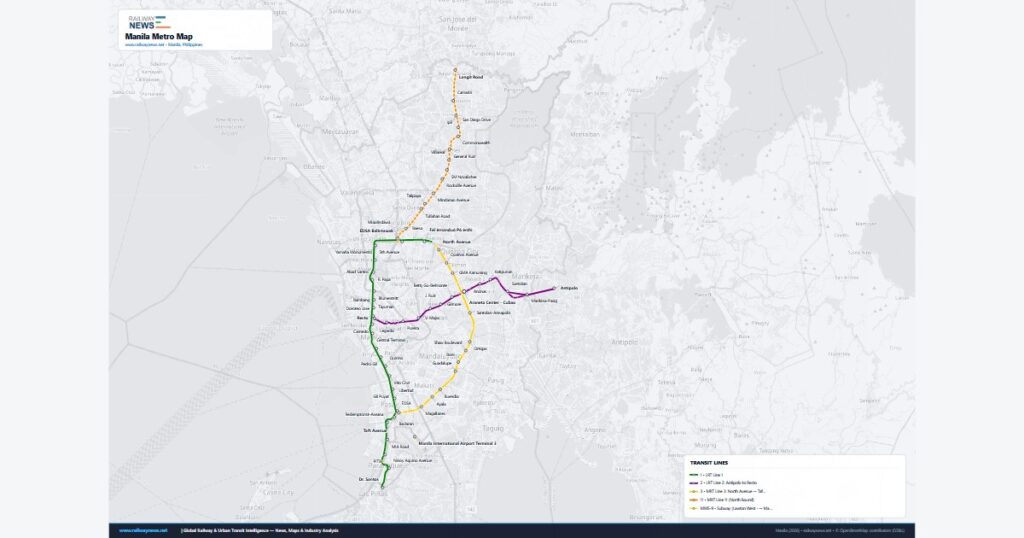
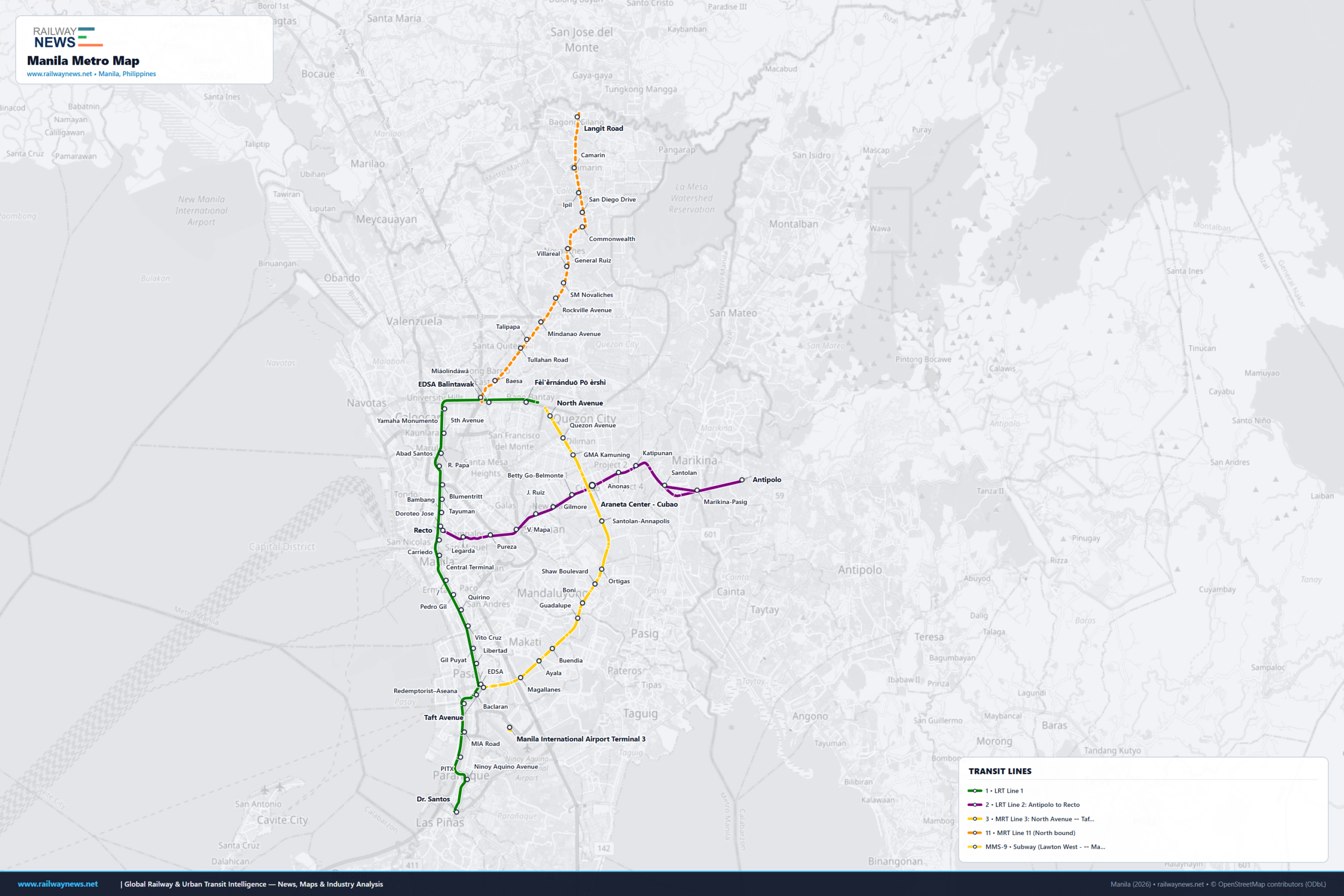
The Manila Metro Map outlines a multi-operator network consisting of operational light rail routes and subway services. Line 1 runs along the Dr. Santos to Fèi'ěrnánduō Pō èrshì axis with 25 stops under Light Rail Manila Corporation. Line 3 connects North Avenue and Taft Avenue across 13 stops managed by Metro Rail Transit Corporation. Line 2 functions as a subway corridor connecting Antipolo and Recto with 13 stops under the Light Rail Transit Authority. Additionally, future expansion is planned with Line 11 from EDSA Balintawak to Langit Road, and construction is underway on the Manila International Airport Terminal 3 to NAIA Terminal 3 subway segment.
Manila Operational Transit Lines
| Code | Route (A ↔ B) | Mode | Status | Stations | Operator |
|---|---|---|---|---|---|
| 1 | Dr. Santos ↔ Fèi'ěrnánduō Pō èrshì | Light rail | Operational | 25 | Light Rail Manila Corporation |
| 3 | North Avenue ↔ Taft Avenue | Light rail | Operational | 13 | Metro Rail Transit Corporation |
| 2 | Antipolo ↔ Recto | Subway | Operational | 13 | Light Rail Transit Authority |
Manila Under Construction & Planned Lines
| Code | Route (A ↔ B) | Mode | Status | Stations | Operator |
|---|---|---|---|---|---|
| 11 | EDSA Balintawak ↔ Langit Road | Light rail | Planned | 14 | Light Rail Manila Corporation / Metro Rail Transit Corporation / Light Rail Transit Authority |
| MMS-9 | Manila International Airport Terminal 3 ↔ NAIA Terminal 3 | Subway | Under Construction | 2 | Metro Manila Subway |
💡 Did You Know?
- As of November 26, 2026, the Manila network comprises a total of 67 unique stations across its operational and developing corridors.
- Line 1 is the longest route on the network with 25 stops stretching from Dr. Santos to Fèi'ěrnánduō Pō èrshì.
Key Stations & Transfer Nodes
Dr. Santos
Serves as the southern terminal for Line 1, operating as a light rail station.
North Avenue
Functions as the northern terminal for Line 3 within the light rail network.
Antipolo
Acts as the eastern terminal for Line 2 operating on subway infrastructure.
Recto
Marks the western terminal point for the Line 2 subway route.
Frequently Asked Questions
How many stations and lines are on the Manila Metro Map?
As of November 26, 2026, the network features 67 unique stations across 3 operational lines and additional lines under construction or proposal.
Which operators manage the Manila rail network?
The network is operated by Light Rail Manila Corporation, Metro Rail Transit Corporation, and Light Rail Transit Authority.
What are the terminal stations for Line 2?
Line 2 runs between Antipolo in the east and Recto in the west.
Is there a subway connection to the airport in Manila?
Yes, the Manila International Airport Terminal 3 to NAIA Terminal 3 subway segment (MMS-9) is currently under construction.