
Lumo Confirms Toilet Fault Caused 58-Min Delay at Motherwell
Lumo confirmed a toilet fault delayed its 06:11 London Euston to Stirling service by 58 minutes on 1 August 2025, forcing termination at Motherwell in Scotland.
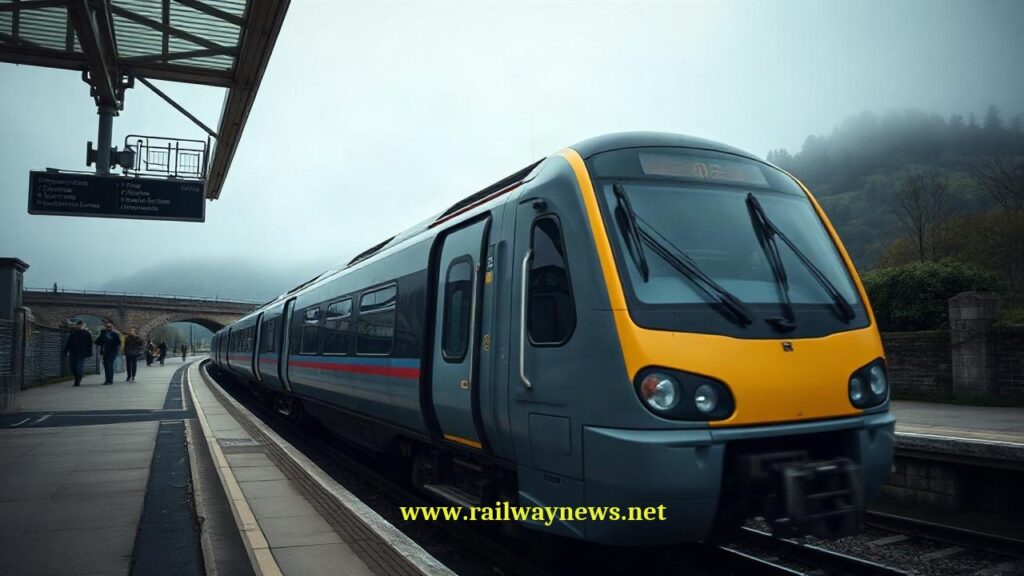
⚡ In Brief: Lumo, a FirstGroup-owned open-access operator, ran London Euston–Stirling services with all onboard toilets out of order, forcing extended platform stops at Preston and a 58-minute delay on a 1 August 2025 departure that terminated at Motherwell.
London, United Kingdom – Lumo ran at least one West Coast Main Line service on 1 August 2025 with every onboard toilet out of order, delaying the 06:11 departure from London Euston by 58 minutes and terminating it at Motherwell instead of Stirling. The FirstGroup-owned open-access operator has extended station stops, including at Preston, so passengers can use platform facilities across a roughly 670 km route that can exceed five and a half hours. Lumo said it is working with Alstom, which refurbished its Class 222 Meridian diesel fleet, to fix the fault.
What Happened and What Is the Scale of Impact?
A complete loss of onboard toilet availability is affecting some Lumo West Coast Main Line services, with 100% of lavatories unusable on the affected train sets. The route runs from London Euston to Stirling in central Scotland, a distance of approximately 670 km and a scheduled journey time of more than five and a half hours. Lumo acknowledged “a fault” with the trains’ toilet facilities in a social media post on 1 August 2025 and said it is working with Alstom, the company that refurbished the Class 222 Meridian diesel multiple units for the operator. The mitigation measure is unusual: stops at stations such as Preston have been extended so passengers can disembark and use platform toilets. The 06:11 London Euston service on Friday 1 August finished its run at Motherwell in North Lanarkshire, 58 minutes down, without reaching its intended destination. Under British law, rail operators are not obliged to provide toilets on board trains, so the failure sits outside any statutory minimum provision requirement. Neither Lumo nor FirstGroup has published the number of affected services, the number of affected train sets, or the cost of the repair programme.
Key Incident Data
| Parameter | Value |
|---|---|
| Incident Type | Total onboard toilet failure across affected train sets, forcing extended station dwell times so passengers can use platform facilities |
| Total Value | Not disclosed — no repair cost, compensation total or revenue impact published by Lumo or FirstGroup |
| Parties Involved | Lumo (operator, FirstGroup-owned, open access); Alstom (refurbisher and fleet support); passengers on London Euston–Stirling services |
| Timeline / Completion | Fault acknowledged 1 August 2025; resolution date not disclosed |
| Country / Corridor | United Kingdom — West Coast Main Line, London Euston to Stirling, via Preston and Motherwell |
| Rolling Stock | Refurbished Class 222 Meridian diesel multiple units, the same type operated by East Midlands Railway |
| Recorded Delay | 58 minutes on the 06:11 London Euston departure of 1 August 2025, terminated at Motherwell |
| Statutory Duty | British law does not require operators to provide onboard toilets |
| Funding Model | Open access — Lumo sets its own fares, carries full commercial risk and receives no public subsidy; excluded from the UK government’s franchise repatriation programme |
How Does This Compare to Similar Incidents on This Network?
Lumo’s toilet failure is not isolated to one operator: East Midlands Railway, which runs the same Class 222 Meridian type, has reported its own onboard toilet reliability problems, meaning the same rolling stock family has produced comparable faults under two separate operators. The Class 222 Meridian was built by Bombardier Transportation, whose rail business Alstom acquired in January 2021 — which is why Alstom, rather than Bombardier, now supports and refurbishes the fleet (Source: Alstom, 2021). Alstom has separately reported record order intake while acknowledging issues with some train contracts, indicating that fleet-support problems are surfacing alongside a commercial upswing at the manufacturer (Source: RailwayPro, 2025). Independent verification reporting confirms the extended Preston stops and the Alstom workstream, expanding the primary source with the 1 August 2025 social media acknowledgement date. None of the primary or verification material discloses how many Class 222 units in Lumo’s West Coast fleet are affected, whether the Office of Rail and Road has been notified, or the value of any passenger compensation already paid. For scale context, global high-speed rail investment rose 24% in 2025, with Europe accounting for 22% of worldwide rail modernisation projects and Asia-Pacific 63% (Source: Market Research Future, 2025) — a spending environment in which availability failures carry reputational weight out of proportion to their repair cost. Demand-side pressure is also rising: Tri-Rail in Florida recorded its highest annual passenger journeys in 2025, surpassing its 2019 peak (Source: RailMarket, 2025).
Editor’s Analysis
Lumo’s exposure is structural rather than accidental: as an open-access operator carrying full commercial risk on a five-and-a-half-hour intercity run, it absorbs the revenue and reputation damage of a toilet failure that a subsidised franchise would partly socialise. The fact that the same Class 222 toilet fault has appeared at East Midlands Railway points to a fleet-level reliability question for Alstom’s refurbishment and support pipeline, not a single-operator maintenance lapse. With global high-speed rail investment up 24% in 2025 and Europe holding 22% of modernisation activity (Source: Market Research Future, 2025), component reliability on refurbished fleets is becoming a competitive differentiator as much as a technical issue.
FAQ
Q: Why are Lumo trains running without working toilets?
A: Lumo has acknowledged “a fault” with the onboard toilet facilities across affected services and says it is working with Alstom, which refurbished its Class 222 Meridian fleet, to resolve it. The operator has not published a root-cause finding or confirmed whether the fault is mechanical, plumbing-related or software-linked.
Q: How long is the Lumo London Euston to Stirling journey, and what happens if the toilets fail?
A: The route covers approximately 670 km and can take over five and a half hours, which is why the operator has extended stops at stations such as Preston to give passengers access to platform toilets. On 1 August 2025 the 06:11 London Euston service ran 58 minutes late and terminated at Motherwell rather than completing its run.
Q: Are UK train operators legally required to provide working toilets?
A: No — British law does not oblige rail operators to provide toilets on board trains at all, so running with all lavatories out of order does not breach a statutory provision duty. Whether the Office of Rail and Road has opened any assessment of these Lumo services has not been officially confirmed.
Q: Will affected Lumo passengers receive compensation?
A: Lumo has not disclosed how many passengers were affected or the total compensation paid, and no figure for repair or disruption costs has been released by the operator or by FirstGroup. Delay compensation on a 58-minute delay would fall to be assessed under the operator’s own published passenger policy rather than a franchise commitment.

Railway infrastructure, rolling stock and transport technologies specialist focused on global rail industry developments, high-speed rail systems, signaling technologies and freight transportation. Covering railway investments, public transport modernization, rail operations and international mobility projects across Europe, Asia and North America.
RELATED POSTS

October 8, 2026 1:15 pm
Alstom secured a €1bn contract to build 13 automated trains,...

October 1, 2026 7:09 am
United States regulators confirmed a September 30 deadline for the...

October 8, 2026 12:18 pm
Siemens Mobility signed an agreement with VinSpeed to supply 350...

October 4, 2026 5:14 pm
Alstom secured a CA$4.7 billion order from VIA Rail Canada...

October 5, 2026 6:12 pm
AECOM and Jacobs secured a contract in September 2026 to...

October 1, 2026 12:13 am
Illinois approved $1.5 billion annually for the Northern Illinois Transit...