
Austria’s Lower Inn Valley Railway Opens, Boosting High-Speed Rail
Austria’s Lower Inn Valley Railway Line, a crucial TEN-T project, opens, boosting Alpine rail capacity and connectivity. High-speed rail reduces road traffic and improves journey times.
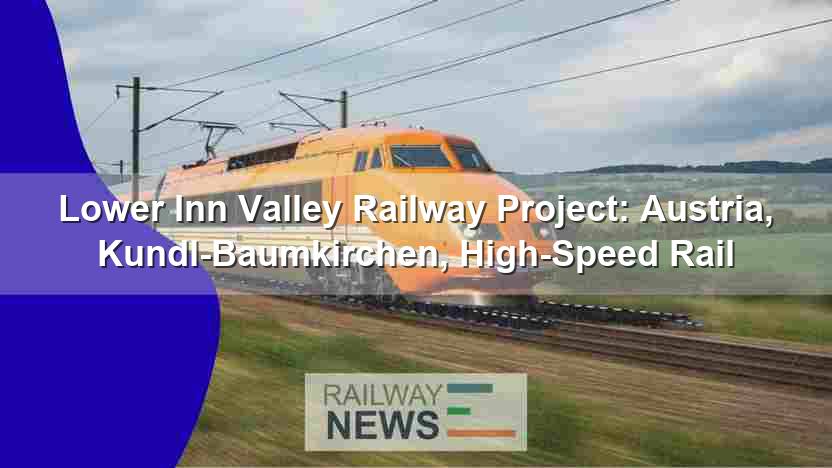
This article explores the engineering and logistical complexities of the Lower Inn Valley Railway Line, a crucial component of the Trans-European Transport Network (TEN-T). The project, a significant undertaking within the European Union’s (EU) infrastructure development strategy, aimed to alleviate congestion on existing rail lines, improve north-south connectivity through the Alps, and reduce reliance on road transport. This involved constructing a high-speed double-track railway, predominantly underground, connecting Kundl and Baumkirchen in Austria. The project’s success hinges on its ability to enhance transport capacity, reduce journey times, and mitigate the environmental impact of Alpine transportation. This analysis explores the project’s scope, construction methodologies, technological advancements implemented, and its overall contribution to the European rail network.
Project Overview and Objectives
The Lower Inn Valley Railway Line (LIVRL) is a high-speed, double-track railway line primarily constructed underground. This €2.3 billion ($3 billion USD) project forms a key part of the TEN-T high-capacity rail axis between Berlin and Palermo. Its main objective was to significantly reduce the strain on the existing, heavily congested railway line between Munich and Innsbruck, which carries approximately 330 trains daily. By increasing capacity and offering a faster route, the LIVRL aims to facilitate smoother movement of both passenger and freight traffic, enhancing cross-border connectivity within the EU. Moreover, the project seeks to divert traffic from roads, reducing the environmental impact of transportation in the environmentally sensitive Alpine region. The anticipated increase in train frequency to 600 trains daily upon completion of the Brenner Base Tunnel (BBT) underscores the line’s pivotal role in the future of Alpine rail transport.
Construction and Engineering Challenges
Construction of the LIVRL presented significant engineering challenges. Approximately 32km of the 40km line traverses various tunnels, necessitating the use of diverse tunnelling techniques. These include subaqueous open-cut works, compressed air and jet-piled supported open-face tunnel excavations, long drill and blast methods, and top-heading. The project also involved the construction of numerous subsurface structures, such as U-boxes (prefabricated concrete structures used in underground construction). To minimize noise pollution, a specialized mass-spring system was implemented along the route. The considerable scale of the undertaking is reflected in the materials used: 142,000m of rail track, 71,000m of slab track, 35km of water supply lines, and 1,130km of cabling.
Signalling and Control Systems
The LIVRL is equipped with state-of-the-art European Train Control System (ETCS) Level 2, a sophisticated signaling system enhancing safety and operational efficiency. Four interlocking systems manage both the new and existing lines, all remotely controlled from an operations control center in Innsbruck. This centralized control system allows for optimized train scheduling and traffic management, ensuring smooth operations and reducing potential delays. The implementation of ETCS is in line with the EU’s broader strategy to modernize its railway signaling infrastructure, fostering interoperability across national borders.
Project Finance and Partnerships
The substantial cost of the project (€2.3 billion) was financed through a combination of EU funding, loans from the European Investment Bank (EIB), and national investment. The EU’s TEN-T budget contributed approximately €140 million ($183.5 million USD), while the EIB provided a loan of €1 billion ($1.3 billion USD). ÖBB Infrastruktur (Austrian Federal Railways) served as the project owner, appointing ARGE ALPTRANSIT ENERGIE, a joint venture between Rhomberg Bahntechnik and DB Bahnbau, as the general contractor. ARGE ALPTRANSIT ENERGIE managed design, planning, and coordination. Actes Bernard was responsible for the design of the overhead line systems.
Project Summary Table:
| Parameter | Value |
|---|---|
| Project Name | Lower Inn Valley Railway Line (LIVRL) |
| Type of Project | High-speed, double-track railway line |
| Connection | Kundl and Baumkirchen, Austria |
| Length | 40km (32km underground) |
| Total Investment | €2.3 billion ($3 billion USD) |
| EU Funding (TEN-T) | €140 million ($183.5 million USD) |
| EIB Loan | €1 billion ($1.3 billion USD) |
| General Contractor | ARGE ALPTRANSIT ENERGIE (Rhomberg Bahntechnik & DB Bahnbau) |
| Overhead Line Design | Actes Bernard |
| Signalling System | ETCS Level 2 |
Conclusions
The Lower Inn Valley Railway Line stands as a testament to the significant engineering capabilities and investment required to build modern high-speed rail infrastructure within a challenging geographical context. The project successfully addressed the critical need to increase rail capacity in the busy Alpine corridor, achieving a significant boost in transportation efficiency. The implementation of advanced signaling technology, like ETCS Level 2, showcases a commitment to safety and operational optimization, aligning with broader European rail modernization efforts. The project’s success is also a demonstration of effective public-private partnerships, leveraging both EU funding and private sector expertise. The LIVRL’s positive impact on reducing road traffic, and therefore the region’s environmental footprint, demonstrates a forward-thinking approach to sustainable transportation. The project’s contribution extends beyond merely linking two points, it is a critical component of broader European rail networks and a key part of the TEN-T strategy, boosting economic activity and fostering better cross-border connectivity. The project serves as a benchmark for future high-speed rail projects, illustrating the importance of careful planning, sophisticated engineering solutions, and significant financial commitment. The project’s long-term benefits, encompassing improved transport efficiency, reduced environmental impact, and enhanced cross-border connections, firmly establish its significance as a model for future rail development in challenging terrains.
Company Information:
- ÖBB Infrastruktur (Austrian Federal Railways): The Austrian national railway infrastructure manager.
- ARGE ALPTRANSIT ENERGIE: A joint venture between Rhomberg Bahntechnik and DB Bahnbau, specializing in railway construction and infrastructure projects.
- Rhomberg Bahntechnik: A leading Austrian company specializing in railway construction and maintenance.
- DB Bahnbau: The infrastructure construction arm of Deutsche Bahn (DB), Germany’s national railway company.
- Actes Bernard: A company specializing in the design and implementation of overhead line systems for railways.
- European Investment Bank (EIB): The European Union’s long-term lending institution.

Railway infrastructure, rolling stock and transport technologies specialist focused on global rail industry developments, high-speed rail systems, signaling technologies and freight transportation. Covering railway investments, public transport modernization, rail operations and international mobility projects across Europe, Asia and North America.