
London to Toronto GO Train: A New Era in Transit
The GO Train’s launch of a new service connecting London, Ontario, to Toronto marks a significant expansion of Ontario’s transportation infrastructure, aiming to enhance accessibility and stimulate economic growth in Southwestern Ontario through improved regional connectivity.
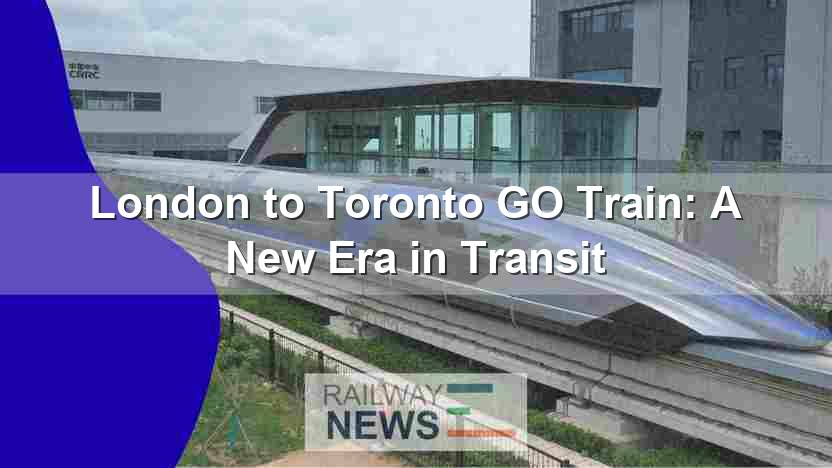
This article examines the significant expansion of the GO Transit (Greater Ontario Passenger Transportation) rail network with the launch of a new service connecting London, Ontario, to Toronto. This marks a pivotal moment in Ontario’s transportation infrastructure, aiming to improve accessibility, alleviate congestion, and stimulate economic growth in Southwestern Ontario. The introduction of this new route, initially operating as a pilot program, represents a considerable investment in intercity rail travel and a commitment to enhancing regional connectivity. We will delve into the operational aspects of this new service, analyzing its schedule, route, and potential future developments. Further, we’ll explore the broader implications of this expansion, considering its impact on local communities, the potential for future service enhancements, and the collaborative efforts involved in bringing this project to fruition. Finally, we will assess the challenges and opportunities presented by this ambitious undertaking and speculate on its long-term prospects for the region’s transportation landscape.
The Inaugural London-Toronto GO Train Service
On October 18, 2021, Metrolinx, Ontario’s regional transportation agency, launched the first-ever direct GO train service between London and Toronto. This four-hour journey significantly reduces travel time compared to alternative modes of transportation and offers a convenient alternative to driving. The initial service comprises one weekday morning train from London to Toronto and one evening return trip. This pilot project aims to gauge ridership and operational feasibility before potential expansion to a more detailed schedule.
Route and Operational Details
The eastbound (London to Toronto) trains utilize the Kitchener Line, incorporating new stops in Stratford and St. Marys. These trains operate as an all-stops service from London to Bramalea GO station before transitioning to an express service to Union Station in Toronto. Conversely, the westbound (Toronto to London) trains operate as an express service from Union Station to Bramalea GO, then transition to an all-stops service to London. This approach balances travel time with the need to serve intermediate communities along the route. The strategic use of express sections minimizes overall journey time, a crucial factor in attracting commuters.
Collaboration and Future Expansion
The success of this project relies heavily on collaboration between various stakeholders. Metrolinx is working closely with VIA Rail (Canada’s national passenger rail service) and CN (Canadian National Railway) – the freight railway company that owns and operates much of the track infrastructure – to coordinate schedules and ensure efficient track usage. The Ontario government has voiced its intention to explore opportunities to increase the speed and frequency of service in the future. This includes potential investments in infrastructure upgrades to allow for higher train speeds and more frequent departures. The ultimate aim is to create a highly efficient and reliable intercity passenger rail service that caters to the growing transportation needs of Southwestern Ontario.
Impact and Long-Term Prospects
The extension of GO Transit service to London represents a significant investment in the economic and social well-being of Southwestern Ontario. Improved accessibility will enhance commuting opportunities for residents, facilitating access to jobs, education, and healthcare in Toronto and beyond. Additionally, the new service is expected to reduce highway congestion and lower carbon emissions by providing a sustainable transportation alternative. The project has the potential to stimulate economic growth by attracting businesses and tourists to the region. The success of this pilot program will pave the way for future expansion, potentially including weekend services and increased frequency, further establishing the London-Toronto route as a viable and attractive transportation option.
Conclusions
The launch of the GO train service between London and Toronto marks a significant milestone in Ontario’s transportation infrastructure development. This initiative, a collaborative effort between Metrolinx, VIA Rail, and CN, aims to improve regional connectivity, reduce traffic congestion, and boost economic growth in Southwestern Ontario. The initial pilot program, with its carefully planned route and schedule (including express and all-stops segments), offers a convenient and time-efficient travel option for commuters. The success of this project hinges on several factors, including effective collaboration between stakeholders, continuous monitoring of ridership patterns, and the potential for future infrastructure upgrades. The project’s ultimate success will be measured not only by ridership figures but also by its impact on regional economic development, improved accessibility for communities along the route, and the reduction of traffic congestion and carbon emissions. Continued investment in infrastructure and service improvements will be critical to realizing the project’s long-term potential, transforming the London-Toronto corridor into a vibrant and efficient transportation hub.

Railway infrastructure, rolling stock and transport technologies specialist focused on global rail industry developments, high-speed rail systems, signaling technologies and freight transportation. Covering railway investments, public transport modernization, rail operations and international mobility projects across Europe, Asia and North America.
RELATED POSTS

October 8, 2026 1:15 pm
Alstom secured a €1bn contract to build 13 automated trains,...

October 1, 2026 7:09 am
United States regulators confirmed a September 30 deadline for the...

October 8, 2026 12:18 pm
Siemens Mobility signed an agreement with VinSpeed to supply 350...

October 4, 2026 5:14 pm
Alstom secured a CA$4.7 billion order from VIA Rail Canada...

October 5, 2026 6:12 pm
AECOM and Jacobs secured a contract in September 2026 to...

October 4, 2026 11:08 pm
Sound Transit confirmed the September 30 opening of Seattle Pinehurst...