
LNER: UK Rail Franchising Case Study
The East Coast Main Line’s re-nationalisation: a cautionary tale of rail franchising. Learn how financial woes led to a government takeover and what it means for the future of UK rail.
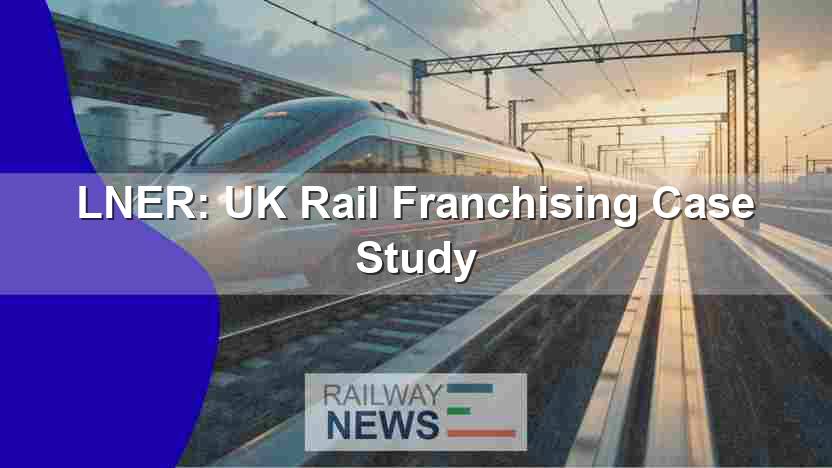
The UK’s railway network has a long and complex history of public and private ownership. This article examines the 2018 re-nationalisation of the East Coast Main Line (ECML) (London King’s Cross to Edinburgh), analyzing the factors leading to the termination of the Virgin Trains East Coast (VTEC) franchise and the subsequent establishment of London North Eastern Railway (LNER) as the operator of last resort. We will explore the financial challenges faced by the private sector in operating the line, the implications for passenger services, and the broader context of the UK’s evolving railway franchising model. The analysis will delve into the reasons behind the failure of the VTEC franchise, examining operational issues and the wider economic environment affecting the profitability of rail franchises. We will also assess the government’s decision-making process and the long-term consequences of this re-nationalisation for both the ECML and the national rail network as a whole.
The Financial Troubles of Virgin Trains East Coast
Virgin Trains East Coast, a joint venture between Stagecoach and Virgin Group, secured the ECML franchise in 2015 with a £3.3 billion contract to operate the line until 2023. However, within a few years, the venture encountered significant financial difficulties. The company reported substantial losses, estimated at around £200 million, stemming from a combination of factors. These included unexpected increases in operational costs, including maintenance and staff wages, and a shortfall in projected passenger revenue. The unexpected rise in costs alongside the lower than anticipated revenues directly contributed to the franchise’s financial instability. The business model assumed growth which didn’t occur. This highlighted the inherent risks associated with long-term franchise agreements based on optimistic revenue projections, especially when external factors, like economic downturns, are not fully accounted for.
Passenger Satisfaction and Service Continuity
Despite the financial woes of VTEC, passenger satisfaction on the ECML remained relatively high, nearing 92%. This underscores the importance of separating the performance of the service from the financial viability of the operator. The government’s decision to re-nationalise prioritized the maintenance of passenger services and timetable consistency. The transition to LNER, the operator of last resort, was designed to be seamless, ensuring minimal disruption to passengers. This showcased the government’s commitment to service continuity as a top priority, even amidst challenges related to franchise performance.
The Government’s Response and the Creation of LNER
The UK government’s response to VTEC’s financial problems involved the creation of LNER. This was intended as a temporary measure, aiming to stabilize operations and prevent service interruptions. A new board was established to oversee LNER’s operations, comprising members from the train operating team, Network Rail (the company that owns and maintains the rail infrastructure), and independent experts. This approach aimed to combine operational expertise with impartial oversight, establishing a framework focused on improved financial performance and efficient management.
The Broader Implications for UK Rail Franchising
The ECML re-nationalisation served as a significant event in the ongoing debate surrounding the UK’s rail franchising model. The episode highlighted the inherent risks associated with long-term, performance-based contracts, particularly in the face of unpredictable economic conditions and operational challenges. The decision to re-nationalize, for the third time since 2007, raised questions about the long-term effectiveness and sustainability of private sector involvement in running the nation’s railways. It prompted discussions regarding the optimal balance between public and private sector involvement, the need for more flexible and robust franchise agreements, and the potential for alternative models of railway operation.
Conclusions
The re-nationalisation of the East Coast Main Line in 2018 provides a valuable case study in the complexities of UK rail franchising. The financial difficulties encountered by Virgin Trains East Coast, despite high passenger satisfaction, underscored the inherent risks associated with the private sector’s involvement in operating the route. While the company’s difficulties arose from a confluence of issues, including optimistic revenue projections and unforeseen cost increases, it highlighted the limitations of the prevailing franchise model. The government’s swift response, establishing LNER as the operator of last resort, effectively maintained service continuity and minimized disruption to passengers. However, the decision to re-nationalize the line, for a third time, also prompted critical reflection on the broader implications for the future of rail franchising in the UK. The episode demonstrates the need for more resilient and adaptable franchise agreements, capable of handling both anticipated and unforeseen economic and operational challenges. A thorough evaluation of the balance between private sector competition and public control is essential, to design a railway network operation model best suited for the long-term needs of both the industry and the travelling public. The future of UK rail will require a nuanced approach, carefully considering factors such as efficiency, financial stability, and, crucially, passenger satisfaction, to create a railway system that is both viable and truly serves the national interest.

Railway infrastructure, rolling stock and transport technologies specialist focused on global rail industry developments, high-speed rail systems, signaling technologies and freight transportation. Covering railway investments, public transport modernization, rail operations and international mobility projects across Europe, Asia and North America.
RELATED POSTS

October 1, 2026 7:09 am
United States regulators confirmed a September 30 deadline for the...

October 1, 2026 12:13 am
Illinois approved $1.5 billion annually for the Northern Illinois Transit...

October 1, 2026 6:10 am
Amtrak approved a System Expansion Committee on July 30 to...
October 1, 2026 4:10 am
DART launched two public ridership dashboards in March 2026 to...
October 1, 2026 3:12 am
Greenbrier confirmed Brian Comstock as new president and CEO effective...
October 1, 2026 5:14 am
Siemens confirmed delivery of the first new S200 train to...